
In today’s roundup of indie games, we check out Abathor, Hegzis and Chasmal Fear – a trio of titles that spans a wide variety of genres between roguelite platforming, puzzle games and sci-fi survival horror and first person shooting. Read on for the reviews.
Abathor review (PS5)
Abathor, which launched on PC before it hit consoles, drops players into a cursed version of Atlantis, where four heroes rise to face the wrath of the gods. With its sharp pixel art and brutal difficulty, it delivers an experience that feels straight out of the arcades of the 80s and 90s – and that’s very much by design. It embraces that old-school spirit through short but punishing levels filled with traps, relentless enemies, and massive bosses that often require multiple attempts to conquer as you learn their routines. The structure suits the roguelite format well, with over 50 bite-sized stages to conquer and a nice rhythm of trial, error, and eventual triumph.
What sets the game apart from other retro-inspired titles is its emphasis on local co-op. Up to four players can jump in, helping or hindering each other as they race for treasure and divine favor. The competitive edge adds a twist that keeps each run fresh, especially with players fighting over loot that directly affects their standing with the gods. Unfortunately, the lack of online multiplayer is a missed opportunity – the kind of chaotic fun Abathor offers would have been even more appealing with broader access to co-op partners, though it’s a blast locally as well.

Gameplay on PS5 feels tight and responsive, with smooth controls that handle the precision platforming well. However, chaotic battles can become visually overwhelming, especially when visual effects and a ton of enemies flood the screen at once. This isn’t helped by the minimal narrative delivery, which leans more on atmospheric world-building than on structured storytelling. Still, the soundtrack punches above its weight, bringing energy and tension to each new area with over 40 tracks that mix orchestral and synth elements.
While Abathor isn’t for the faint of heart, it succeeds in delivering a satisfying retro action experience for those who enjoy a serious challenge. Its roguelite progression leans more on skill and a learning curve than on upgrades, which may not appeal to everyone, but its tight design and engaging co-op make it a strong option for genre fans.
Hegzis review (PS5)
Hegzis brings a fresh twist to the puzzle genre with its hex-based grid system, offering a strategic experience that balances relaxing visuals with gameplay that quickly reveals hidden depth. On PlayStation 5, it presents itself with vibrant yet minimalistic stages that shift thematically across serene environments like beaches and forests, but the real focus is on the way hexagonal pieces interact. Completing lines in any direction is simple at first, but the game steadily demands more thought as the grid fills up.
The core mechanics are satisfying, especially with the ability to rotate pieces and clear unwanted hexes using special tools. This introduces a layer of tactics that separates Hegzis from more traditional block puzzle games. While most levels offer a fair challenge curve, some of the later ones can become tight and slightly unforgiving without more generous undo options or preview features. Still, that tension can be part of the fun for players who enjoy planning ahead and a little challenge in their puzzle games.
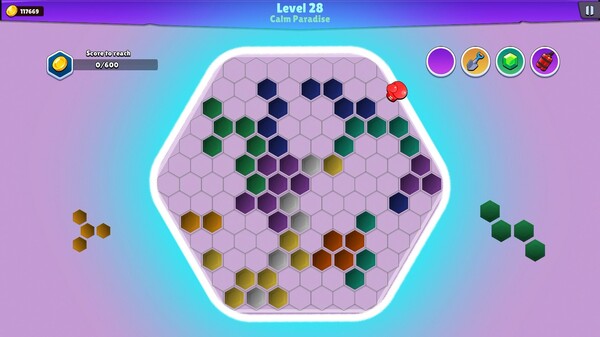
Controls are tight and intuitive, making use of the DualSense without any unnecessary complexity. The presentation, while simple, is clean and easy on the eyes, and the background music adds to the calming atmosphere – even if it can grow repetitive during long sessions. There’s no real campaign to speak of, but the sense of progression comes through in unlocking new stages and chasing higher scores.
Ultimately, Hegzis doesn’t reinvent puzzle gaming, but it does what it sets out to do with confidence. Its blend of relaxing design and demanding spatial logic makes it a solid pick for fans of the genre, especially those looking for a low-pressure challenge with room to refine their performance.
Chasmal Fear review (PC)
Chasmal Fear throws players into the cold, claustrophobic corridors of an underwater sci-fi facility, where the silence is often more terrifying than the monsters that eventually break it. Developed by MystiveDev and published by Wandering Wizard and Snail Games, the game blends tactical shooting with survival horror in a way that’s both immersive and unsettling. The story gradually unfolds through scattered lore and logs, revealing a collapsed research effort gone horribly wrong. Without much in the way of cutscenes and voiceovers, the narrative mostly takes a backseat to the thick atmosphere and high-stakes tension that comes from being woefully underprepared for what’s lurking in the dark.
The bodycam-style perspective gives the game a raw and unfiltered feel, amplifying the sense of vulnerability while navigating tight, dimly lit hallways. It’s an effective design choice, making each encounter feel more grounded and intense, though it can also be disorienting during chaotic moments. Gameplay strikes a solid balance between stealth and direct combat, with limited ammo forcing players to think before pulling the trigger. The mutation mechanic – where some enemies evolve after being downed – adds another layer of pressure, making it risky to even finish a fight unless you’re sure you can clean up quickly afterwards.

Pacing in Chasmal Fear is driven by randomized events that shift on each playthrough. This helps with replayability and keeps players on edge, but it can also lead to uneven moments where the game either overwhelms or underwhelms in terms of scares or action. Some players might appreciate the co-op option for softening the experience, but the game loses a bit of its oppressive tension when shared with a friend. That said, the AI adapts well enough to scale the difficulty, and performance across both modes is generally solid.
Visually, the game’s grimy industrial design and realistic lighting sell the underwater facility well, and the sound design contributes to the ever-present unease, with creaking metal and sudden noises doing much of the heavy lifting. While the controls are functional, they can feel a bit clunky during intense sequences, especially when switching between stealth and combat. Despite its rough edges, Chasmal Fear delivers on its core promise – it’s a horror experience that punishes carelessness and rewards patience, built for those who enjoy their scares slow, suffocating, and tactical.
 Press Play Media