
We’re checking out three games that recently made it onto the PS5 – here are reviews of Little Kitty, Big City, the narrative-driven What Comes After and Hypercharge: Unboxed.
Little Kitty, Big City review (PS5)
Little Kitty, Big City is a cozy, freeform adventure that puts you in the paws of a mischievous feline with a simple goal: get home. In reality, that goal is more of a suggestion than a strict directive, as the game thrives on letting you roam a compact but lively urban environment at your own pace. Its charm lies in the joy of distraction – chasing birds, collecting hidden fish, or causing minor chaos with a well-timed paw swipe.
Gameplay is delightfully easy, with responsive controls that make exploration and climbing feel natural. The platforming challenges are forgiving, and various side objectives – like helping animal NPCs or tracking down new hats – offer just enough structure to keep things engaging without ever feeling demanding. The game invites you to slow down and enjoy being a cat, and it succeeds without overstaying its welcome.
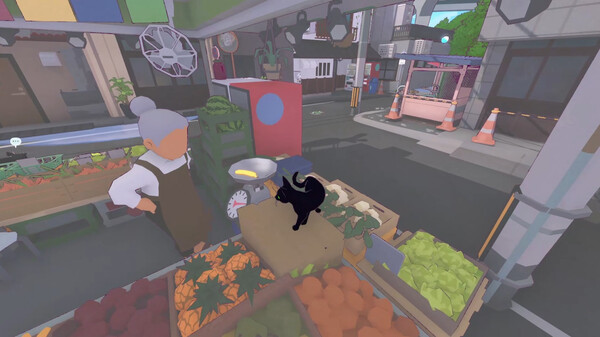
The city itself may be small, but it’s densely packed with visual detail and interactive elements, from rooftop gardens to alleyways. While the graphics go for a stylized, almost storybook look, the result fits the tone perfectly. Dialogue is short and sweet, mostly delivered through amusing interactions with other animals, and it complements the gentle, ambient soundtrack well.
Though the adventure is brief and low on difficulty, Little Kitty, Big City doesn’t need much more to win players over as it’s high on charm. It’s a game about playful discovery and quiet moments, filled with heart and whiskers. If you’re looking for something low-pressure, whimsical, and charmingly offbeat, this feline tale is an easy recommendation.
What Comes After review (PS5)
What Comes After is a quietly emotional narrative experience that trades action for reflection, inviting players to join Vivi on a metaphysical train ride through the afterlife. Developed in part by the creator of Coffee Talk, the game leans heavily into themes of self-worth, grief, and connection, all framed through gentle conversations with the souls of people, animals, and even plants making their final journey. It’s a short ride – clocking in at under two hours and barely more than one for some player – but it carries surprising emotional weight despite its simplicity.
Gameplay is minimal, mostly limited to walking left or right and interacting with passengers, but the limited mechanics allow the writing to take center stage. The conversations cover everything from regrets and second chances to mental health, often handled with unexpected lightness and a touch of humor that balances the heavier moments. While the game does risk feeling linear and static to those expecting branching paths or deeper interactivity, its focus is clearly on delivering a cohesive emotional message rather than mechanical variety.

Visually, the game uses a soft, 2D art style with expressive character designs and calming backdrops that suit its introspective tone. The music plays a quiet but effective supporting role, reinforcing the reflective atmosphere without intruding on the dialogue-heavy storytelling. On PS5, the visuals hold up cleanly, though the presentation isn’t technically demanding either – this is a game built around mood more than spectacle.
What Comes After won’t be for everyone – it’s less of a game in the traditional sense and more of a visual novel with light movement. But for those open to a meditative, heartfelt experience that gently explores topics we often avoid, it’s a meaningful, if brief, journey worth taking. It doesn’t aim to deliver answers, but it offers comfort in asking the right questions – and sometimes, that’s more than enough.
Hypercharge: Unboxed review (PS5)
After making its mark on Xbox earlier, Hypercharge: Unboxed has now arrived on PlayStation 5 – bringing its charming toybox shooter action to a new audience with all the polish and feature-completeness we appreciated in the earlier version. Built on the simple but brilliant premise of toy soldiers battling in oversized household environments, this wave-based shooter leans into nostalgic childhood fantasies without leaning too hard on gimmicks or monetization traps.
At its core, the game is all about defending the Hypercore – a kind of memory-preserving energy source – from waves of toy-themed enemies. The campaign structure is light and deliberately cartoonish, giving just enough context for the action without taking itself too seriously. Cooperative play remains the heart of the experience, and thankfully the PS5 version carries over the excellent offline and split-screen options that help the game shine as both a solo and social title. Bots are surprisingly competent when playing alone, though the action can feel a bit repetitive across longer sessions, especially without the variety that real players bring.

Mechanically, Hypercharge: Unboxed strikes a satisfying balance between tower defense and first-person shooting. You spend your time between waves setting up traps and turrets, then frantically gunning down waves of enemies that range from green army men to spinning tops and projectile-firing mini-robots. The game handles well on DualSense, with responsive controls and clean shooting mechanics that feel refined despite the deliberately lo-fi tone. Loadouts and progression stick to an old-school ethos – everything is earned through play, which feels refreshingly honest even if it means a bit of grinding for unlocks.
Visually, the game plays with scale and perspective in a way that’s still novel, even if it occasionally suffers from some flat textures or inconsistent lighting. The detail in the environments – bedrooms, garages, and toy stores – helps sell the fantasy, and the music and sound effects hit the right mix of playful and punchy. While the PS5 version doesn’t dramatically outdo its Xbox counterpart, it’s a welcome and well-optimized port that brings this imaginative shooter to another batch of living rooms. It’s not trying to redefine the genre, but it does offer a creative and tightly designed alternative to the usual PvP grind.
 Press Play Media