
In today’s look at recently ported releases, we’re checking out Lucy Dreaming, CarGo! and Back to the Dawn – all of which were warmly received when they first launched.
Lucy Dreaming review (PS5)
Blending quirky British humour with the structure of a classic point-and-click adventure, Lucy Dreaming brings a nostalgic yet fresh tone to the genre. The game follows a sharp-tongued young girl navigating both her waking life and chaotic dreamscapes in search of the cause behind her recurring nightmares. It’s a familiar setup, but executed with a distinctive flair that leans heavily into British eccentricity and layered absurdity.
One of the game’s biggest strengths is its dual-world structure, where the contrast between Lucy’s mundane home life in the town of Figgington and the unpredictable madness of her dreams creates a constantly shifting gameplay loop. The dream segments in particular allow for creative and often hilarious scenarios, from interrogating surreal characters to negotiating with bizarre creatures. The puzzle design complements this nicely – mostly logical, sometimes challenging, but rarely unfair. The addition of quality-of-life features like a hotspot highlighter and fast travel via the town map ensures the experience flows smoothly, even during its more obscure moments.
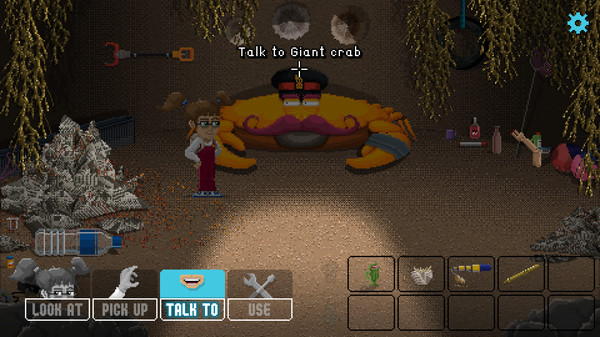
Visually, the pixel art is charming and detailed, evoking a golden age of adventure games while keeping things visually distinct and vibrant across both realities. Each environment, whether it’s Lucy’s bedroom or a surreal dreamland full of talking furniture, is packed with little details and humorous responses to exploration. Voice acting also elevates the game considerably, especially with standout performances lending credibility and warmth. However, some might find that the art style’s modest scope doesn’t always keep up with the game’s most surreal ambitions.
Control-wise, the transition to console works well on PS5. The interface is intuitive enough, though the genre’s traditional reliance on item management and environmental interaction still feels more naturally suited to a mouse than a controller. Even so, navigation feels snappy, and the addition of subtle conveniences – like being able to quickly skip between locations or exit a scene – shows a good understanding of the limitations of the genre and how to deal with them.
Lucy Dreaming doesn’t reinvent the point-and-click wheel, but it doesn’t need to. It succeeds through clever writing, memorable characters, and a tight interplay between the whimsical and the unsettling. While it may not convert those who aren’t already fans of the genre, it stands out as one of the more enjoyable and confidently made entries in recent years – especially for players who appreciate a generous dose of dry wit.
CarGo! review (PS5)
CarGo! – out now on PlayStation 5 – is a colorful, arcade‑style couch co‑op delivery simulator that thrives on chaos and cooperation. Tasked with hauling odd cargo around the whimsically named Carchipelago, players race against the clock to pick up items, deliver them to local facilities, and dodge traffic, trains, and roadblocks. It wears its simplicity as a badge of honor: intuitive pick‑up/drop‑off mechanics, fast-paced routes, and level layouts that gradually introduce hazards all keep the momentum high.
The controls suit the frantic nature of the design. Steering feels loose, but that unpredictability underlines the fun – what begins as frantic fun quickly evolves into strategic splits between players, especially when transporting multiple items or racing to hit lucrative orders before time runs out. As you push through later stages, however, that floaty handling can become frustrating rather than exhilarating when precision matters more.
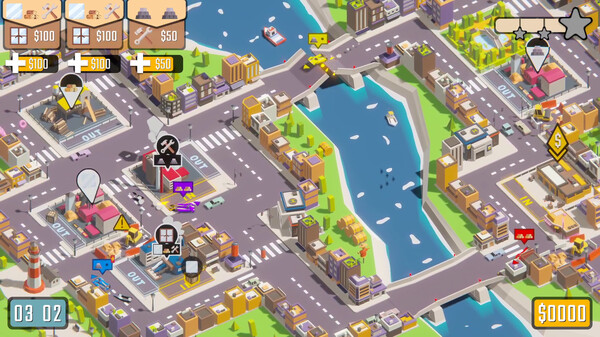
Visually, CarGo! opts for bright, low‑poly cityscapes and toy‑like vehicles in bold colors, which help keep the map clear even when streets are crowded. While attractive and functional, there’s a generic charm to the presentation – some deadpan design choices feel lacking in whimsy or personality. Musically, it leans on a repetitive soundtrack that can grate over longer sessions, though the sound effects lock in the zippy arcade mood.
At its best, CarGo! is an accessible and explosive party game where the real draw is local multiplayer chaos, teamwork, and those minor catastrophes that only friends can laugh at together. Solo play is functional but stripped of that synergy, and the sixteen‑level campaign delivers a fun two-hour spike – yet it lacks long-term depth or replay hooks beyond chasing three‑star ratings and quirky accolades. Still, it remains a solid, laugh‑packed pick for casual sessions.
Back to the Dawn review (Xbox/Switch)
Playing through Back to the Dawn on Xbox feels like stepping into a noir‑tinged prison drama – with enough twists, tension, and shady alliances to rival any gritty thriller. You choose between Thomas the journalist or Bob the undercover operative, each offering over 20 hours of interwoven conspiracy and character-driven story. The narrative brims with secrets, confrontations, and moral grey zones, making every decision feel weighty in a system built to crush you from the inside out. The supporting cast of nearly 50 inmates and dozens of NPCs feels alive – even when a few fall into cliché – adding an immersive texture to the ominous corridors of Boulderton.
The gameplay strikes a satisfying balance between stealth, dialogue, crafting, and strategic thinking. You can rely on brute force, pick locks in the shadows, or charm your way through alliances, and your skills tangibly shape how you survive. The sprawling prison layout – from cells and infirmary to sewers and rooftops – encourages exploration and creative problem solving. While some quests feel padded or occasionally repetitive, the open-ended structure makes each escape attempt feel earned and tailored to your playstyle.

Controls and progression are generally responsive and intuitive, whether you’re picking pockets or brawling your way through a lockdown. The RPG-style lift system – camp crafting, disguise fabrication, or intimidation upgrades – empowers multiple viable approaches. However, occasional clunkiness in NPC reactions and pick‑up animations can interrupt the immersion, and slow dialogue transitions may test patience over longer sessions. Still, for the most part, the systems support your vision of Thomas or Bob navigating a corrupt microcosm.
Visually, Back to the Dawn opts for moody, realistic environments with convincing lighting and muted tones that underpin the oppressive atmosphere. The audio – ambient prison alarms, distant echoes, and a subtle score – enhances the intimacy and suspense of each encounter. It isn’t flashy, and at times the textures feel a step behind next-gen standards. Yet the presentation consistently reinforces the tense tone, even if it occasionally sacrifices polish for breadth.
Since its original release, Back to the Dawn has also made its way to the Nintendo Switch, where its systems translate surprisingly well to a handheld format. The game isn’t particularly demanding, so performance generally holds up nicely on Nintendo’s hardware, and the slower, planning-focused gameplay suits shorter handheld sessions. That said, the interface can feel a little cluttered on the smaller screen, especially early on when the game throws a lot of menus and information at the player, and navigating everything with buttons rather than a mouse isn’t always as intuitive. Still, once you settle into the game’s rhythms, the flexibility of switching between handheld and docked play makes it an appealing alternative way to experience the prison-break drama.
Back to the Dawn may not always play by the rules, but its gripping prison drama, layered mechanics, and wealth of player agency make it a hit for fans of narrative-driven RPGs.
 Press Play Media