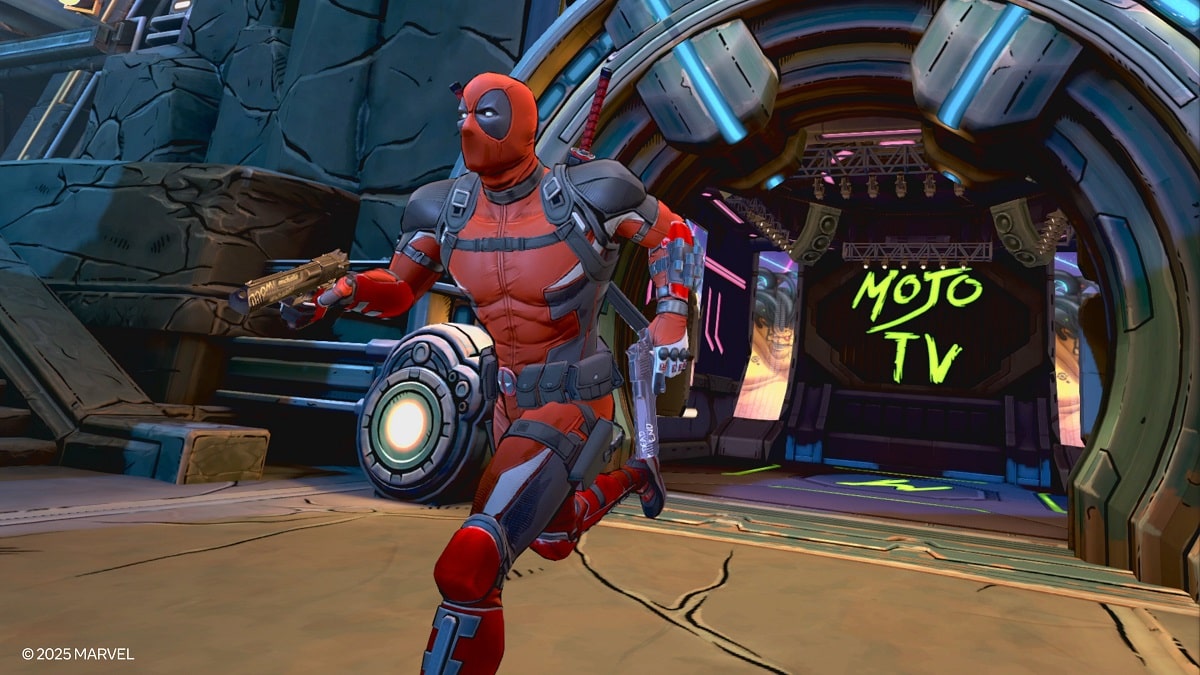
Deadpool has always been the kind of character who doesn’t just break the fourth wall – he smashes it to pieces with a wink and a grenade. Bringing him into VR almost feels inevitable, and with Deadpool VR, Oculus Studios and Twisted Pixel are making that happen. After years of solid Marvel tie-ins in traditional gaming, this project feels like a bold leap into something more experimental, with Deadpool’s chaotic energy perfectly matched to VR’s sense of immersion. We went hands-on at Gamescom to see how it’s shaping up.
What we know
Deadpool VR is being developed exclusively for Meta Quest 3 and 3S, and it blends ranged and melee combat with traversal that takes full advantage of VR’s physicality and the Quest’s wireless nature. The premise has Deadpool contracted by Mojo to become the ultimate interdimensional streaming star, hunting down Marvel villains across bizarre arenas while constantly questioning his own choices. Players get to wield katanas, pistols, grenades, and even more unorthodox weapons – including Deadpool’s own severed limbs – while stringing together over-the-top combos. With upgradeable gear and plenty of freedom in how you approach combat, the game aims to mix brutal action with Deadpool’s trademark humor.
What we saw
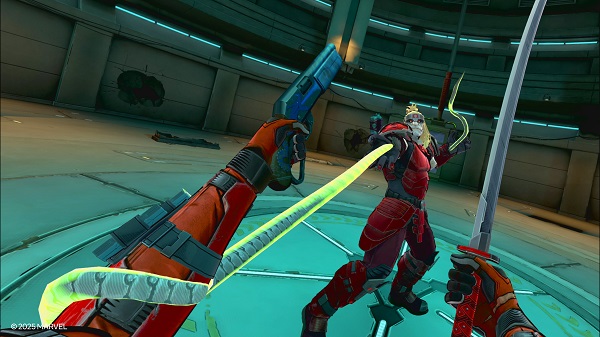
At Gamescom, we played a polished demo build that dropped us straight into the chaos. After a brief introduction to the controls, we were given the chance to experiment with different traversal moves and combat scenarios. The demo balanced set pieces with freeform encounters, letting us swap between guns, swords, and grappling with enemies while soaking up Deadpool’s endless quips.
What we thought
From the moment the headset went on, it was clear that Deadpool VR is designed with polish and spectacle in mind. Meta’s involvement in “first party” content on Quest shows in the overall presentation, which feels slick and high-budget compared to many other VR titles. The constant barrage of voiceover work captures Deadpool’s irreverent personality, and while Ryan Reynolds isn’t lending his voice here, Neil Patrick Harris gives a strong performance that nails the character’s mix of snark and unpredictability.
Gameplay-wise, the demo impressed with its variety. Gunplay feels fast and responsive, sword combat brings satisfying feedback, and the addition of traversal options like grappling adds a fun verticality to the action. However, the sheer number of tools available does create occasional friction – in our session we sometimes grabbed the wrong item in the heat of battle, pulling out a grappling hook instead of a gun or vice versa. Whether this is a matter of fine-tuning or simply a learning curve will be clearer in the final version, but it’s worth keeping an eye on.

Visually, the game makes strong use of Quest hardware, with colorful environments and set pieces that lean into Deadpool’s comic book roots without overloading the system. The presentation combines sharp textures with flashy effects, and the sense of scale when enemies and vehicles fill the play space really helps sell the chaos. Audio design adds to that immersion – quips, explosions, and Marvel fanfare are constantly buzzing in your ears, but it never feels overwhelming.
Perhaps the most encouraging aspect is how Deadpool VR manages to feel like a proper Deadpool experience without simply being a VR gimmick. The combat, traversal, and humor all come together in a way that seems like it could carry a full-length campaign, and the demo already suggested enough variety to keep things interesting. If Twisted Pixel can iron out the small control quirks and maintain this level of polish throughout, Deadpool VR could easily end up as one of the standout Quest releases of the year.
 Press Play Media