
Virtual reality has long promised to put players at the heart of thrilling action-adventure, yet few titles realize that potential as vividly as Reach. Developed by nDreams Elevation and published by nDreams, this cinematic VR experience throws you into a world where your every move shapes both the story and your sense of presence. At Gamescom, we got hands-on time with the Meta Quest version – and it didn’t just deliver on immersion; it made being in the game world feel almost cinematic.
What we know
Reach casts you as a reluctant hero gifted with extraordinary powers, navigating a fractured realm filled with mythical threats and hidden mysteries. The game places a strong emphasis on cinematic immersion, boasting full-body awareness and lifelike interactions that heighten your physical presence in VR. Traversal is a highlight – you’re able to freely jump, climb, zip-line, and navigate vast vertical spaces with intuitive, fluid controls designed specifically for VR.
Combat is similarly dynamic, offering emergent encounters against adversaries that demand both reflex and strategy. Though the narrative remains shrouded beyond the hero’s reluctant arc, the game appears to be a tightly woven blend of a narrative-driven campaign and high octane action. Currently, Reach is confirmed for release on Meta Quest headsets, and will also launch on Steam.

What we saw
At Gamescom, nDreams welcomed us to try an advanced build of Reach. Over the course of the demo, we experienced transitions between traversal, gunplay, climbing, and cinematic storytelling – seamlessly moving from environment to environment with the kind of physical presence VR was made for.
What we thought
From the moment we slipped on the headset, Reach delivered a level of immersion that few VR titles manage to match. The motion controls feel precise and responsive, whether you’re swinging across gaps, scaling rocky ledges, or drawing weapons instinctively – it all felt physically intuitive. This attentiveness to control design made even tense combat and dramatic traversal feel natural, as if you were fully inhabiting the hero’s body.
Visually, Reach impressed – especially considering the platform. Environments are richly detailed, with dramatic lighting and layered set design that reinforce the cinematic tone. The way each scene transitions – climbing leads into a sweeping panorama, zip-lining into a gunfight – creates a sense that you’re living in an action sequence rather than playing a mere game. However, our build appeared to prioritize fluidity and spectacle over deep environmental interaction; we were curious about how much of the world will feel interactive or reactive in the full release.
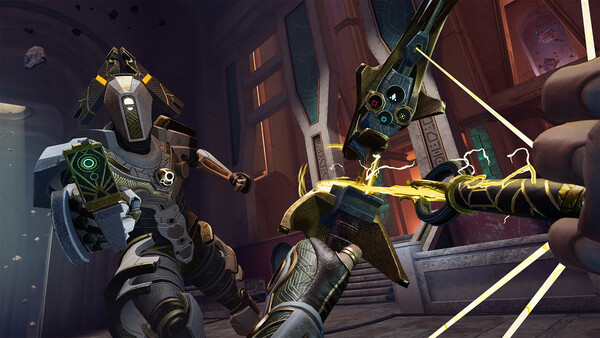
Combat encounters stood out as particularly engaging, blending emergent design with narrative context. Clashes with imposing enemies demanded both timing and careful use of your toolkit, rewarding precision while maintaining VR’s visceral thrill. Still, we’re left wondering how well these moments will sustain over the length of a full campaign – will they evolve in complexity, or risk repetition after the novelty wears off?
For VR enthusiasts, Reach already marks itself as one of the most anticipated releases. It blends physicality with cinematic presentation and places you squarely at the center of its unfolding action. The seamless transitions between mechanics, alongside polished presentation and strong motion design, make a compelling case. While questions remain about overall depth and longevity, Reach has firmly established itself as a standout – one that reminds us why VR can still feel magical when done right.
 Press Play Media