
The past few months have seen a steady stream of indie titles making the leap from PC to PlayStation 5, giving console players a chance to experience some of the more distinctive projects from smaller studios. From the acrobatic combat and retro-futuristic world of Robots at Midnight to the moody road trip of Heading Out, these ports highlight a range of ideas that don’t easily fit into standard genre boxes. There’s also room for multiplayer mayhem in Fling to the Finish, which thrives on chaotic co-op antics, and a retro throwback in SF3RA, a precision platformer with old-school flair. Together, they showcase the eclectic variety of recent PS5 arrivals, each carrying over both the strengths and quirks of their original releases.
Robots at Midnight review (PS5)
Robots at Midnight arrives on PlayStation 5 following its PC debut earlier this summer, and it brings with it a mix of stylish worldbuilding and momentum-driven action. Set on the ruined planet of Yob, the game follows Zoe as she searches for her missing father while piecing together the truth behind a cataclysm known as The Blackout. The story leans into retro-futuristic sci-fi with a personal edge, and while some of the dialogue and delivery can feel uneven, the mystery at the core of Zoe’s journey is engaging enough to push players forward.
The real highlight is the combat system, built around Zoe’s space-gauntlet, The MITT. It allows for fluid traversal – vaulting off enemies, chaining aerial strikes, and smashing bots with acrobatic momentum. When it clicks, it feels exhilarating, turning encounters into a mix of parkour and brawling. That said, the system can be punishingly imprecise at times, with some camera quirks and hit detection issues dampening the flow. Still, for those who push through, mastering the rhythm of combat delivers a rewarding payoff.

Visually, Yob is a striking mix of ruined luxury and mechanical menace, with a retro-futuristic aesthetic that gives the environments character. It’s backed by a moody soundtrack that enhances the atmosphere, even if some technical blemishes – like texture pop-in and inconsistent performance – pull you out of the immersion a few times. Fortunately, the PS5 version does improve stability compared to earlier releases, though not enough to eliminate all rough edges.
Accessibility is another area where the game shows care, with difficulty modes ranging from a story-friendly Hero Mode to a punishing Master Mode. This flexibility allows a wider range of players to experience the narrative while still catering to those seeking challenge. Robots at Midnight isn’t flawless, but between its creative combat, layered world, and evocative presentation, it stands out as a fresh take on the action RPG – even if its ambition sometimes outpaces its polish.
Heading Out review (PS5)
The PlayStation 5 release of Heading Out brings Serious Sim’s road trip adventure to console players, blending narrative-driven design with the speed and risk of high-stakes driving. Published by Crunching Koalas, the game takes inspiration from American road movies and graphic novels, casting players as the mysterious “Interstate Jackalope” on a journey across a mythic version of the United States. The premise is an intriguing one, combining resource management, decision-making, and intense driving sequences into a story about confronting fears and building a legend.
Gameplay revolves around navigating a map full of choices, whether that’s stopping to help strangers, taking part in illegal races, or dodging law enforcement. Every action influences how the world reacts to you, with reputation and wanted levels shaping future encounters. At the same time, players must keep an eye on practical needs like fuel and car maintenance, which gives weight to even routine decisions on the road. This mixture of strategy and action helps distinguish Heading Out from standard racing games, though the learning curve and some repetitive sequences can occasionally slow down the otherwise engaging pace.

Where the game truly shines is in its style. Its striking black-and-white aesthetic, highlighted by sharp splashes of color, immediately sets it apart. Paired with an eclectic soundtrack of jazz and rock tracks, the presentation feels both moody and vibrant, effectively channeling the energy of a road movie in interactive form. The comic-inspired design keeps even quiet stretches of gameplay visually compelling, though some players may find the limited color palette restrictive over longer sessions.
Controls are responsive enough for both casual driving and high-pressure chases, though the handling leans more toward cinematic flair than pure racing precision. This means Heading Out is best approached as a narrative adventure with driving at its core, rather than as a racing simulator. That balance makes it accessible while still delivering moments of speed and danger. On PlayStation 5, the game benefits from smooth performance and fast loading, making the transition from PC a solid one. Not without its flaws, but with a unique mix of storytelling, choice, and style, Heading Out stands out as an atmospheric road trip worth taking.
Fling to the Finish review (PS5)
Fling to the Finish has finally made its way to PlayStation 5 after its earlier PC debut, bringing with it a rare kind of cooperative experience that feels both hilarious and demanding in equal measure. Developed by SplitSide Games and published by Daedalic Entertainment, the game’s premise is as simple as it is chaotic: two players, tethered together by a stretchy rope, must race through obstacle-filled courses while figuring out how to make the best of their bizarre bond. The result is a game that thrives on communication and teamwork, but also isn’t afraid to test friendships in the process.
The rope mechanic defines everything here, turning otherwise straightforward platforming into a series of unpredictable challenges. At first, it can feel awkward, with the tether catching on objects or pulling partners into hazards, but that clumsiness is part of the comedy. Over time, though, players learn to exploit the rope in creative ways – swinging across gaps, flinging each other to safety, and chaining together moves that feel incredibly rewarding when they come off. The balance between slapstick frustration and skillful cooperation is the game’s greatest strength, though the reliance on tight teamwork means solo play loses much of the magic.

Controls are generally responsive, but the very design of being tethered means that precision isn’t always guaranteed. This can be frustrating when obstacles demand more accuracy than the rope allows, leading to moments where progress feels more like luck than mastery. On the other hand, the game leans into its chaotic energy with items like plungers and falling weights, keeping races unpredictable and helping less experienced teams stay in contention. As such, the game keeps the momentum going even when matches descend into glorious messiness.
Visually, Fling to the Finish embraces a vibrant and cartoonish style that matches its playful tone, with each track offering distinct themes ranging from casinos to asteroid fields. The cheerful aesthetic, combined with a bouncy soundtrack, keeps the atmosphere light even when players are on the verge of yelling at each other. It’s not a game for those seeking structured precision or deep solo content, but as a couch co-op or online party experience it’s one of the most unique multiplayer offerings on PlayStation 5 right now – equal parts aggravating and unforgettable.
SF3RA review (PS5)
On PlayStation 5, SF3RA makes an immediate impression as a throwback action platformer that blends 2D retro sensibilities with light 3D touches. Developed by SergioPoverony and published by Ratalaika Games, it casts players as a robotic assassin working for an interstellar syndicate, cutting through waves of malfunctioning machines across a series of planets. The premise is little more than a backdrop, and narrative depth isn’t really the focus here, but the presentation does enough to set the stage for a game that’s all about old-school action.
Gameplay is where SF3RA finds its identity, and fans of NES-era difficulty will likely feel right at home. Movement and shooting are sharp, and the game demands precision in tricky jumps, wall climbs, and enemy encounters. Checkpoints are present, though not always frequent, which can make failures sting more than expected. The addition of an upgradable drone sidekick and a variety of weapons, from simple shotguns to laser rifles, adds some tactical variety, though upgrades aren’t always permanent if you die, which may frustrate some players.
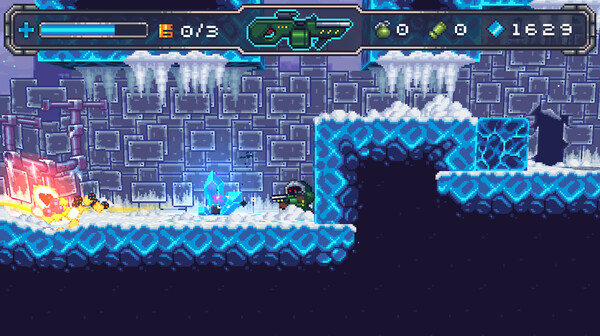
The design leans heavily on classic inspirations, with obvious shades of Mega Man and Ninja Gaiden in its enemy patterns and boss fights. There are also touches of exploratory platforming, with hidden rooms and collectible keys that gate progress. It isn’t all combat either: certain stages break things up with shoot-’em-up segments that feel like an unexpected nod to another genre, giving the pacing a welcome shake-up. Still, repetition does creep in, and some levels feel a little drawn out once the novelty wears off.
Visually, the game strikes a nostalgic chord. Its pixelated aesthetic is reminiscent of handheld classics, with a mix of colorful backdrops and thematic stages like snowy landscapes and mechanical bases. The soundtrack reinforces that retro appeal, with energetic, chiptune-inspired tracks that keep up the momentum. That said, moments of silence or audio gaps can break immersion, and the presentation sometimes feels uneven.
Where SF3RA shines most is in its raw, straightforward charm. It doesn’t overwhelm with complex systems or endless features – what you see is what you get: challenging platforming, tight controls, and a clear fondness for the classics it draws from. At the same time, its lack of storytelling depth, uneven pacing, and reliance on trial-and-error design mean it won’t be for everyone. But for players craving a tough, retro-inspired ride with flashes of creativity, SF3RA earns its place as a worthy indie curiosity.
 Press Play Media