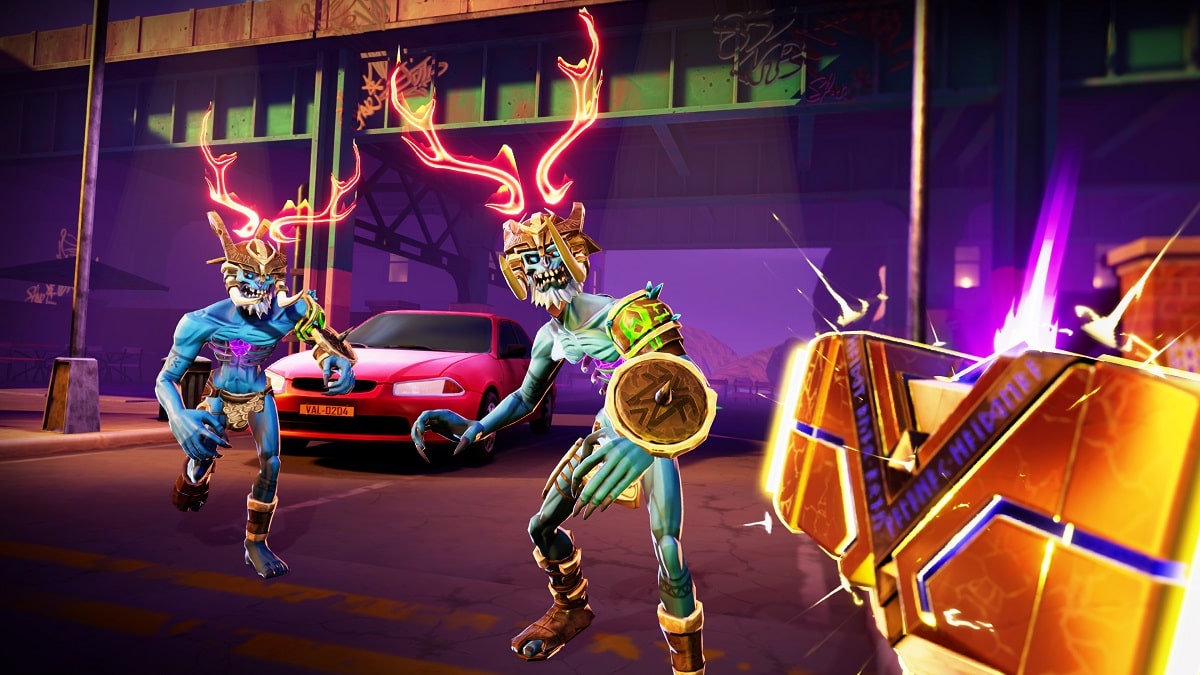
VR has had its fair share of action roguelites by now, but Soul Assembly’s Street Gods takes a particularly bold swing. By colliding Norse mythology with a fractured, urban New York setting, it sets itself apart right from the start. The big hook, of course, is Mjolnir itself – the hammer of Thor, placed in your hands with convincing physicality. After going hands-on with the game at Gamescom, it’s clear this one has both spectacle and ambition, though it might also ask players to get over a bit of a learning curve before it really clicks.
What we know
Street Gods is a physical VR action roguelite coming to Meta Quest, set in a New York that has been overrun by the collision of the nine Norse realms. The city becomes the arena for divine conflict, with you at the center, chosen by Mjolnir to restore balance. Every run through the game is unique, thanks to a system that lets you plot your route on a mystical board, with city blocks reshuffling into new layouts. Along the way, you’ll face enemies inspired by Norse mythology, from standard grunts to massive bosses, and you can grow stronger by unlocking new runes and abilities. Combat is highly physical, built around the heft and recall of Mjolnir, but additional tools and powers broaden the scope of your arsenal.

What we saw
At Gamescom, we met with Soul Assembly and played a demo build of Street Gods. The session started with a warm-up area to get used to the hammer’s weighty controls before throwing us into tougher battles. These sequences featured both standard enemy encounters and more demanding boss fights, giving a good snapshot of the game’s range of challenges.
What we thought
The first thing that stands out in Street Gods is how good it feels to wield Mjolnir in VR. Throwing the hammer, recalling it, and slamming it down on enemies has a satisfying weight that few VR melee systems manage to capture. Pairing it with a lasso mechanic – which lets you pull enemies in or combine attacks – further adds to the sense of empowerment. It often feels like you’re part Thor, part Wonder Woman, which is a refreshing mix that works surprisingly well.
At the same time, the demo also highlighted how dense Street Gods can feel. Between hammer mechanics, runes, path-planning, and the interplay between enemies and bosses, there’s a lot thrown at you early on. While the warm-up section helped, it still felt like the game could benefit from a more extended tutorial to really ease players into its systems. Once you push through that initial wall, though, the depth becomes a strength, and the different mechanics start to complement each other nicely.
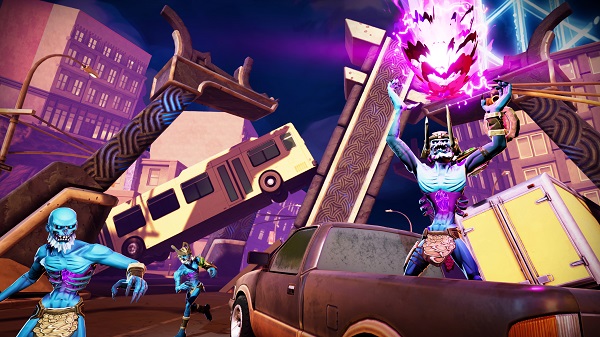
Although a short demo doesn’t really let you dig into it, the roguelite framework looks promising, particularly with the ability to choose your path through shifting city blocks. It’s not just a gimmick – planning your run could end up feeling strategic, and it should help keep the experience replayable. Combine that with the gradual unlocking of rune powers, and there’s a strong sense of progression that can make each new attempt feel worthwhile.
Visually, Street Gods embraces its myth-meets-city concept with style. The fractured streets of New York, infused with divine energy, make for a distinctive setting, and the bosses in particular bring scale and menace to the battlefield. Audio design reinforces the impact of combat, with each hammer slam landing with a satisfying boom. While the technical polish wasn’t final in the demo, the atmosphere and soundscape already sold the idea of being a god among mortals. If Soul Assembly can smooth out onboarding and refine the pacing, Street Gods could become one of the more memorable VR roguelites when it launches.
 Press Play Media