
Tindalos Interactive, the studio behind strategy-driven experiences like Battlefleet Gothic: Armada, is taking a bold new step with Eversiege: Untold Ages. Published by Dear Villagers, the game mixes roguelite structure with elements of base defense, real-time tactics and RPG progression. That may sound like an unusual blend on paper, but after our first hands-on with the PC version at Gamescom, we walked away with the sense that this fusion of genres could be the secret to its appeal.
What we know
Set in a world that has been shattered for centuries, Eversiege: Untold Ages casts players as a champion tasked with defending Bastion – the last stronghold against a seemingly endless enemy siege. Each run forces players to make choices that shape their progress, whether it’s deciding how to allocate resources, when to reinforce defenses, or which ancient powers to awaken. Combat revolves around wielding different types of wargear, from daggers to bows and axes, which can be paired with elemental essences like fire, ice, or lightning. This allows players to tailor builds to their preferred playstyle and adapt to changing threats.
The game’s roguelite structure ensures that every attempt feels distinct. Pushing into enemy territory means fighting through shifting timelines where the forces of evil return stronger with each cycle. As a result, victories are only temporary, and even defeats feed into the overarching progression, unlocking new powers and strategies. The mix of real-time decision-making, resource management, and experimentation with weapon-element synergies promises depth beyond a single playthrough. Eversiege: Untold Ages is heading to PC in early access later this year.

What we saw
We previewed Eversiege: Untold Ages at Gamescom, where Dear Villagers and Tindalos guided us through a half-hour demo of an early PC build. With the help of a developer, we explored the game’s core mechanics, resource management, and moment-to-moment combat, getting a clear sense of how its roguelite structure ties into the siege defense premise.
What we thought
The immediate impression Eversiege makes is that of controlled chaos. Its combination of genres could have easily come across as disjointed, but in practice the pieces fit together more naturally than expected. The moment-to-moment gameplay balances defending Bastion with the push to strike back at enemy forces, and the roguelite loop is easy to grasp while clearly hiding layers of depth beneath its surface. It’s the kind of structure that suggests long play sessions where time just slips away.
Combat in particular stood out, thanks to the freedom of experimenting with different weapon and essence pairings. Even in our short session, we found distinct tactics that felt satisfying in their own right, from rapid close-range strikes to long-range elemental barrages. The mechanics encourage experimentation, and because each run reshuffles conditions, the potential for long-term variety feels strong. That said, the early build didn’t yet show how balanced these systems will be in the long run – an important factor for a game that wants to keep players coming back.
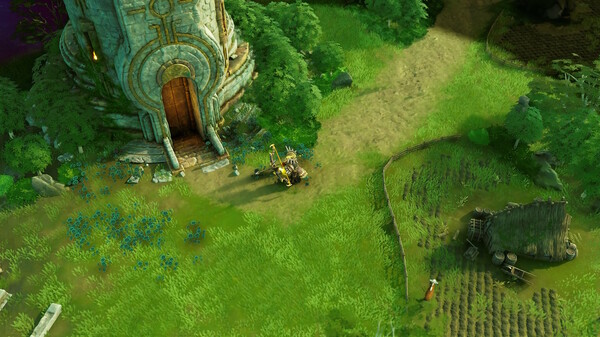
Visually, the game conveys its ruined-fantasy setting with bold strokes, pairing darkly atmospheric environments with stylized effects that bring elemental powers to life. The audio design matches this mood, with a soundtrack that ramps up the tension as hordes close in. While technically competent, the presentation may not yet rival the polish of larger-budget productions, but its identity feels distinctive and in line with its tactical roguelite ambitions.
One aspect we haven’t had the chance to test is the co-op mode, which should add another dimension to the experience. Based on our solo play, Eversiege already shows promise as a deep and replayable title, but how well it transitions to coordinated multiplayer will be a key question moving forward. If Tindalos can deliver on that front, it could elevate the game from a solid single-player roguelite to a standout co-op strategy experience.
 Press Play Media