
Wargaming has long been synonymous with World of Tanks, a game that’s become a cornerstone of online armored combat. With World of Tanks: HEAT, however, the studio is taking a bold step in a new direction. Positioned as a free-to-play spinoff, this new entry aims for faster matches, ability-driven combat, and a distinctly modern edge. It’s not a replacement for the original, but rather an attempt to broaden the series’ reach and explore a different flavor of tank warfare.
What we know
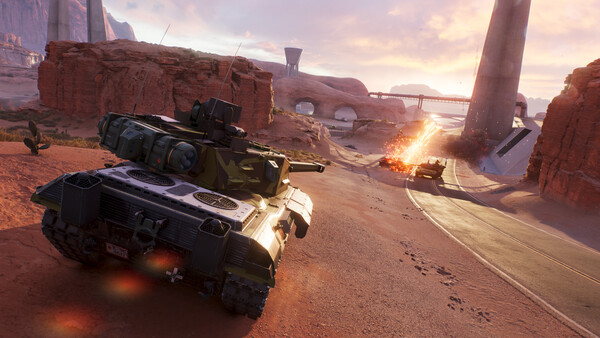
Set in an alternate post-WW2 timeline where rapid scientific advances have reshaped global warfare, World of Tanks: HEAT introduces players to a near-future battlefield where elite Agents command experimental armored vehicles. Unlike the slower, tactical pace of the original, HEAT emphasizes high-speed engagements and ability-driven gameplay across 5v5 and 10v10 matches.
Players choose from a growing roster of Agents, each bringing unique tanks and battlefield abilities to the fight. Modes range from large-scale objectives like Conquest and Domination to more focused encounters such as Plant & Defuse, creating a mix of experiences that highlight both teamwork and individual skill. Customization also plays a central role, with each tank capped by a power limit that forces meaningful trade-offs between offense, defense, and utility. Entirely free-to-play, the game is launching first on PC, with console versions likely to follow.
What we saw
At Gamescom, we joined Wargaming for a presentation before going hands-on with a playable build of World of Tanks: HEAT. The session gave us a chance to test several Agents, check out the loadouts, and get a feel for how the faster combat and ability systems transform the familiar tank-on-tank formula.
What we thought
The immediate impression is how approachable World of Tanks: HEAT feels compared to its predecessor. Matches are quick to jump into, controls are responsive, and the ability-driven combat adds a layer of spectacle that makes battles feel snappy and accessible. For long-time World of Tanks fans, this streamlined approach offers a fresh spin without demanding the same level of patience and precision as the original.
That said, accessibility doesn’t mean the game lacks depth. The modular upgrade system forces you to make real decisions about how to configure your tank, while the diverse roster of Agents ensures no two battles play out quite the same. Modes like Plant & Defuse in particular highlight how well the game can adapt to tighter, more tactical scenarios, while larger-scale battles keep the chaos and spectacle intact.
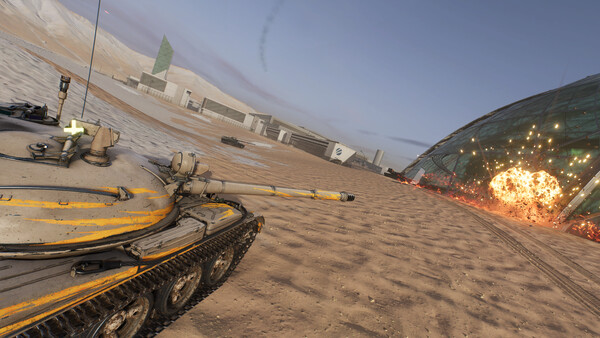
Visually, HEAT strikes a balance between stylization and realism. The alternate-history setting allows for futuristic touches without completely abandoning the grounded look that fans associate with the brand. Combined with the punchy audio design, explosions and weapon effects carry a satisfying sense of impact.
The biggest question mark is whether World of Tanks: HEAT will feel distinct enough to draw in players beyond the existing fanbase. While its faster pace and hero-like Agents clearly differentiate it on paper, the aesthetic and core tank battles still carry the unmistakable DNA of its predecessor. For series veterans, that familiarity will likely be a selling point combined with the new angle they’re taking, but newcomers might see it as more of the same.
Still, in its current form, World of Tanks: HEAT comes across as a confident and exciting spinoff – an easy entry point for new players and a fresh alternative for veterans looking for something snappier. If Wargaming can keep expanding its roster and supporting varied playstyles, this could become a strong companion piece to the mainline series rather than just a side experiment.
 Press Play Media