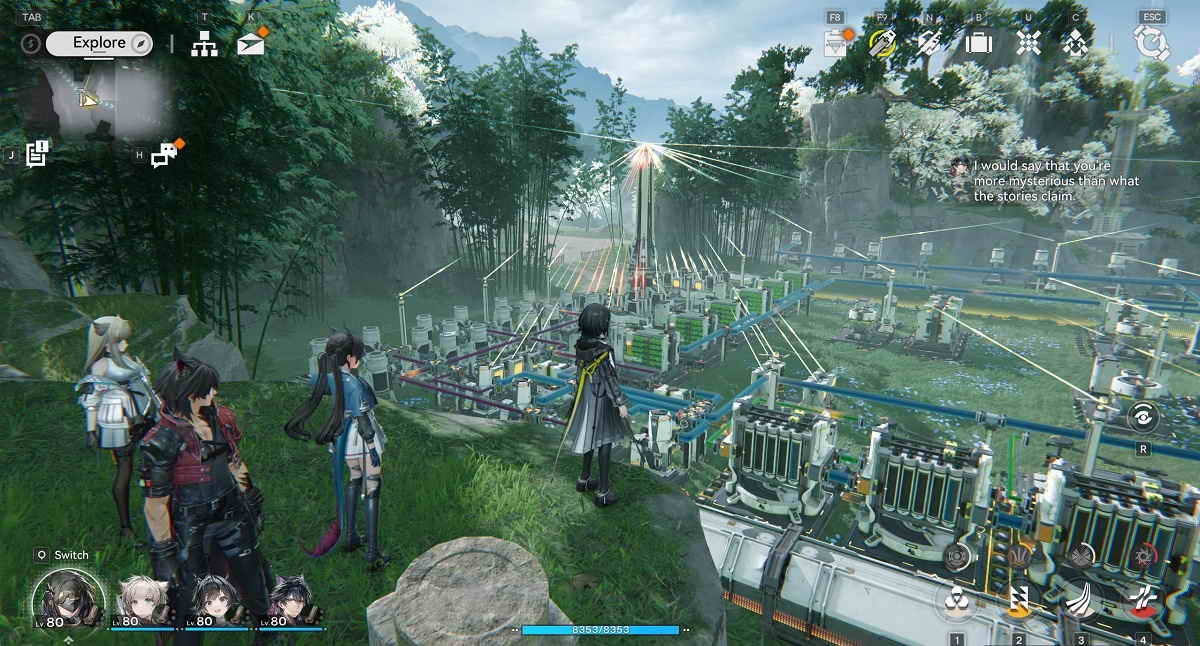
Hypergryph’s Arknights franchise has steadily built a passionate fanbase with its tower defense roots, but the upcoming spinoff Arknights: Endfield is taking a bold new step. Developed by Hypergryph and set to be published internationally by Gryphline, it trades its tactical origins for a real-time action RPG experience fused with base-building and industrial simulation. After seeing it up close at Gamescom, it’s clear the team has big ambitions here – and with a major booth presence, Gryphline is signaling plenty of confidence in this one.
What we know
Arknights: Endfield is a free-to-play action RPG with a heavy dose of resource management and factory simulation, scheduled for release in early 2026 on PC, PlayStation 5, and mobile. Set on the hostile moon Talos-II, the game casts players as the “Endministrator” of Endfield Industries, tasked with leading exploration and development in a world plagued by supernatural disasters and aggressive creatures. The setting ties back to the original Arknights, with familiar lore elements like Originium and Rhodes Island, but expands the scope to a semi-open world that emphasizes exploration and survival.
Combat is designed around four-character party battles where players can switch between operators on the fly, chaining together tactical skills, combos, and ultimate attacks. Enemies can be forced into an “imbalanced” state, opening the door to high-damage follow-ups, giving the combat a layered, strategic edge. Alongside this, players manage industrial outposts, constructing conveyor systems, refining resources, and balancing power grids to support further exploration. Hypergryph has described the balance between action and factory simulation as roughly even, with flexibility for players to lean into their preferred side of the gameplay loop.
What we saw
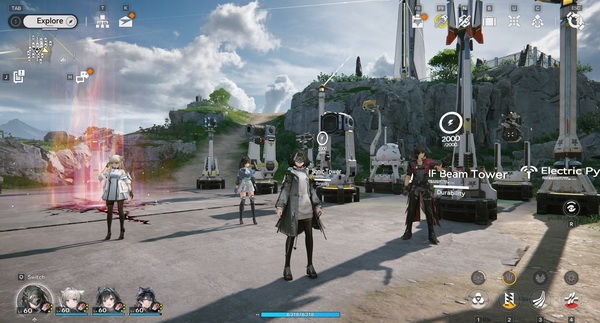
At Gamescom we went hands-on with an early PC build, which offered several short gameplay slices highlighting different aspects of the design. One focused on combat, with a four-character squad battling through waves of enemies; another showcased the boss battle side, letting us explore freely between them.
What we thought
The demo made a strong impression, not just for its gameplay variety but also for how naturally the two halves of the design seem to complement each other. The party-based combat is fast and fluid, allowing you to switch between operators seamlessly and experiment with different skill synergies. Pulling off a well-timed combo or exploiting an enemy’s imbalance state feels rewarding, and there’s a nice balance between accessibility and depth. That said, it still has some rough edges in terms of animations and responsiveness, which will hopefully be refined before launch.
The factory building shows clear inspiration from games like Satisfactory while integrating nicely into the RPG framework. Setting up conveyor belts, refining resources, and making sure everything connected smoothly was surprisingly engaging, and it looks like the industrial layer will add a sense of progression that goes beyond just loot or gear. At times, however, the systems felt like they could overwhelm newcomers if not properly explained, and it remains to be seen how well the tutorialization will guide players through these mechanics.

On a narrative level, Talos-II feels like an intriguing backdrop, with echoes of the original Arknights while standing apart as its own story. The mix of hostile wildlife, corrupted landscapes, and rival factions gives the world texture, and the role of Endfield Industries offers a fresh angle for players coming in from the original game. It’s also interesting to see how the game is embracing a multi-platform launch from the outset, signaling that Hypergryph wants Endfield to be more than just a niche spinoff.
Visually, the game has plenty of promise. The art direction echoes the anime-inspired roots of Arknights but leans into lush 3D environments that feel both vibrant and foreboding. The character designs stand out in particular, with striking costumes and effects that make each operator distinct in combat. Audio wasn’t a huge focus in the demo, but what we heard – from voice lines to environmental ambience – seemed fitting for the setting.
If there’s a risk here, it’s in the balance between genres: the team is clearly ambitious in trying to merge action RPG mechanics with base-building depth, and there’s a chance that one side could end up overshadowing the other. But based on what we played, there’s enough promise in both that Arknights: Endfield could become something genuinely unique when it arrives in 2026.
 Press Play Media