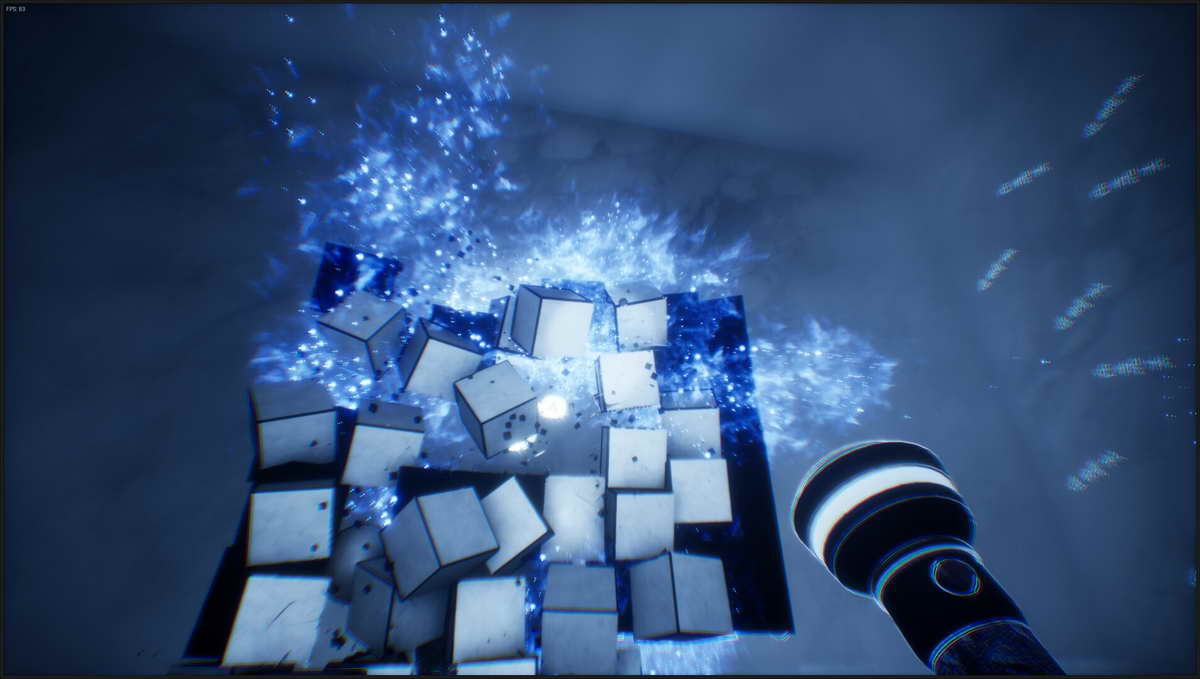
There’s something quietly captivating about puzzle games that ask you not just to think differently, but to see differently. Thanks, Light., developed by South Korea–based Lightersgames, is one of those experiences – a minimalist first-person adventure that bends perception, space, and logic until you start doubting your own spatial awareness. It’s a world built on the tension between light and shadow, presence and absence, and how a simple change in illumination and/or point of view can transform everything around you.
What we know
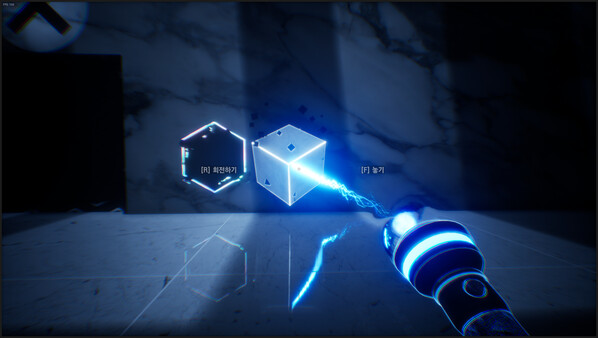
Thanks, Light. is a first-person puzzle game where geometry, light, and physics intertwine to create challenges that constantly play with your sense of depth and form. The player explores a vast architectural world – one that’s pristine and orderly on the surface, but hides something fractured beneath. By shining light, objects that appear flat or abstract are revealed to have mass and dimension; by removing that light, they lose their physicality, collapsing into mere silhouettes.
These dual mechanics of illumination and absorption are central to the game’s design, creating a rhythm between building and dissolving, progress and restraint. Later puzzles expand the rules further, introducing mirrors that duplicate objects, lenses that resize them, and systems that let you merge shapes to forge new tools entirely. All of this unfolds within a stark but beautiful world that draws from brutalist architecture and backroom-like surrealism – and there’s a story threading through it all, about control, rebellion, and the cracks in a supposedly perfect system.
What we saw
We met with Lightersgames at Gamescom, where we went hands-on with a substantial demo that showcased several chapters from the game. Each section introduced new twists on the central light-and-shadow mechanics – from puzzles built around spatial manipulation to later stages that demanded multi-step logic, careful timing, and an almost sculptural sense of space.
What we thought
Even in its early form, Thanks, Light. immediately calls to mind puzzle greats like Portal and Superliminal – not through imitation, but through the same confidence in using perception as a design language. The way it treats light as a tool for both creation and erasure is fascinating. A wall that looks like part of the scenery might suddenly become a staircase when illuminated from the right angle, while a once-solid obstacle can melt away into a harmless outline when the light fades. It’s equal parts mind-bending and elegant, rewarding experimentation and spatial insight rather than simple trial and error.
The puzzle design feels clever and deeply satisfying when it clicks, especially in moments where you combine multiple mechanics – say, duplicating an object, resizing it, and using it to bridge two separate areas. There’s a clear logic beneath the abstraction, and that sense of discovery is what makes it shine. The flip side is that the demo occasionally left us unsure how to proceed, as its abstract design offers no hint system or guidance. During our session, the developers were there to gently nudge us forward when we hit a wall – a luxury most players won’t have once the game launches. It’s a potential point of frustration in an otherwise highly polished experience.

Visually, Thanks, Light. is stunning in its restraint. Its muted palette and geometric forms create a sense of both emptiness and precision, where every beam of light feels deliberate. The interplay of glow and shadow gives the environments a sculptural quality, and while the world feels lonely, it’s not devoid of atmosphere – the subtle sound design and tonal shifts between areas add tension without needing overt storytelling.
All told, Thanks, Light. is shaping up to be something special: a cerebral puzzle game that trusts its audience to think, observe, and experiment. It’s a world that hides its truths in plain sight – and one that rewards you for finding beauty in the spaces between. If Lightersgames can smooth out its few moments of opacity, this could be a new favorite for fans of smart, minimalist puzzle design.
 Press Play Media