From eerie VHS tapes to neon-lit shootouts, a few smaller titles have been making their way to PlayStation 5 – each with its own distinctive flavor. Whether it’s the uncanny children’s TV horror of Amanda the Adventurer 2, the haunting rural folklore of Water Delivery, the stylish but uneven gunplay of Murder Inc., or the frantic arcade chaos of RedEx, these ports showcase how indie developers continue to stretch old formulas in new directions. They range from story-driven psychological tension to raw, reflex-based action, offering a reminder that the best surprises often come from offbeat projects landing quietly between blockbuster releases.
Amanda the Adventurer 2 review (PS5)
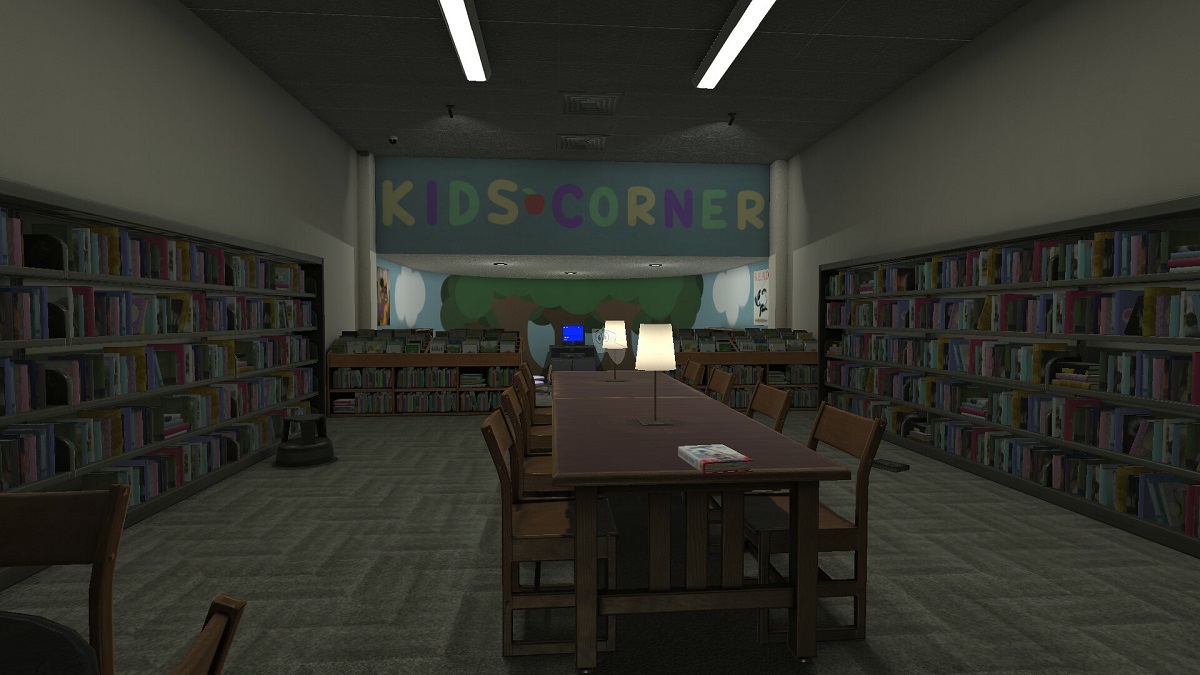
Amanda the Adventurer 2 builds on the unnerving analogue‑TV horror of the first game, placing players in the shoes of Riley Park as they investigate the mysterious Kensdale Public Library. The story deepens the lore of Amanda, Riley, and Aunt Kate, introducing new characters and expanding the universe with fresh narrative threads. The tension is consistently well-maintained, with Amanda’s awareness of the player raising the stakes and making every interaction feel loaded with potential consequences. The library itself feels alive with secrets, drawing players deeper into a narrative that combines curiosity, dread, and nostalgia for retro children’s programming.
Gameplay introduces notable evolutions with the “GET UP!” mechanic, which encourages players to actively leave the screen to search for items Amanda requests. This increases immersion and interaction compared to the first game, making the player’s choices feel more consequential. Puzzle design remains engaging, often balancing challenge and reward, though some sequences can be frustratingly opaque and may require careful observation to progress. Exploration is generally intuitive, and while a few puzzles lean on trial and error, the variety and cleverness keep the experience compelling.
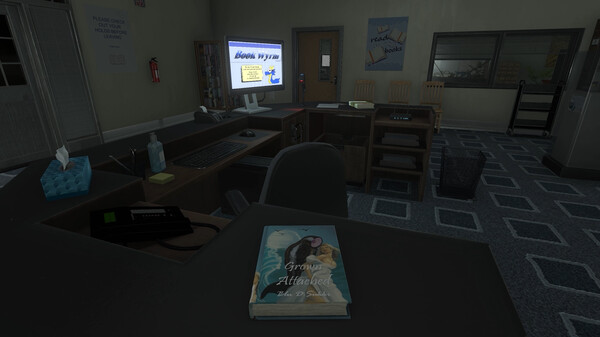
The audiovisual presentation reinforces the eerie atmosphere, with Amanda and her companions animated in a style that is simultaneously charming and unsettling. Voice performances enhance the uncanny tone, while the soundtrack and ambient audio layer suspense without relying heavily on jump scares. The expanded library environment benefits from richer visual detail, with lighting and spatial design contributing to a sense of unease. Minor technical hiccups, such as occasional texture inconsistencies or object placement issues, are present but do not seriously detract from the overall experience.
Ultimately, Amanda 2 succeeds as a sequel by expanding both story and gameplay in meaningful ways. It strikes a balance between horror, exploration, and puzzle-solving, though the narrative occasionally leaves threads unresolved, building anticipation for future installments. The game rewards curiosity and careful observation, and fans of the first title will find enough new content to justify a return to Amanda’s unsettling world. While not perfect, it delivers a memorable, immersive, and occasionally terrifying adventure that solidifies the series’ unique charm.
Water Delivery review (PS5)
Water Delivery, developed by Frozen Lake Software and published by Dolores Entertainment, transforms an everyday errand into an unsettling descent through the shadows of rural life. Players take on the role of a water delivery boy on his final route of the night, moving from house to house to drop off jugs, collect empties, and gather payments – a routine that quickly gives way to something far more sinister. Beneath the repetition of deliveries lies a dark narrative threaded through ghostly encounters, cult activity, and glimpses of human despair, drawing on Filipino folklore to create a chilling, grounded atmosphere.
Structurally, the game keeps things simple, relying on a familiar “task and explore” loop. It’s easy to understand but deliberately paced, using tension instead of constant action. Each home feels unique, encouraging exploration and rewarding curiosity with hidden keys, cryptic symbols, and small discoveries that tie into its multiple endings. However, the delivery cycle can start to feel monotonous as the novelty wears off, and the inability to reload a late-game save makes certain replay attempts more frustrating than they should be. Still, the variety of outcomes – and how they reflect the player’s decisions – adds a welcome incentive to revisit the game despite its repetition.

What elevates Water Delivery beyond its low-budget roots is its atmosphere. The game’s retro visuals evoke early 3D horror but with detailed environmental touches that ground it in local authenticity, from provincial architecture to cluttered interiors. The subdued lo-fi soundtrack in the truck contrasts effectively with the eerie ambient noises and sudden shrieks that punctuate each stop. Playing with headphones heightens the unease, with creaks, whispers, and off-screen noises suggesting more than they show. Performance on console holds up well, though we noticed a few frame drops near the end and some stiffness in the controls.
Clocking in at around an hour per run, Water Delivery doesn’t overstay its welcome. It succeeds at turning a simple delivery route into an unnerving commentary on poverty, superstition, and moral decay, where the most frightening elements aren’t always supernatural. Despite its rough edges and repetitive structure, it’s a memorable and distinctly Filipino horror experience – one that proves even the most mundane jobs can hide real nightmares.
Murder Inc review (PS5)
Murder Inc. casts you as a shadow-operative in a neon-soaked, crime-ruled city where time only moves when you do. The premise is bold: every step, every shot, every pause affects the speed of the world around you, and that ticking clock mechanic is at the core of the experience. The developer, PigeonDev, and publisher, Sometimes You, have clearly aimed for a sleek, high-octane mood, and much of that vision comes through. The retro-wave soundtrack and gritty pixel-art setting pull you into a cinematic action fantasy, but the narrative scaffolding remains thin: the anti-hero’s mission to bring down criminal overlords is serviceable, but it leans heavily on style over character depth.
In gameplay terms, the time‐only‐moves-when-you-move mechanic is clever and, at its best, gives the twin-stick shooter genre an interesting twist: moments of stillness become tactical opportunities, and bursts of motion feel cinematic. In a way, it’s Hotline Miami meets Superhot. The ambition is clear and the rhythm is intriguing. Unfortunately, the execution stumbles in meaningful ways – aiming and movement controls are inconsistent and occasionally unresponsive, making some encounters feel more frustrating than thrilling. Without a proper tutorial or onboarding, new players may find themselves dying repeatedly just trying to grasp how the system expects them to act.
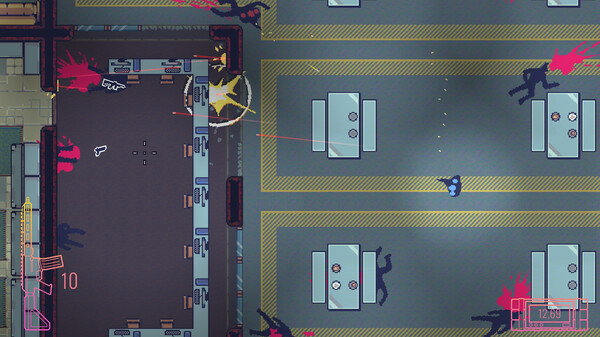
Visually and aurally, Murder Inc. largely delivers on atmosphere: the neon streets, pulsating beats, rain-splattered pavements and blood-splattered vignettes create a mood that works. The pixel style is expressive and the soundtrack does the heavy lifting for immersion. But cracks start to appear when the game lets you down with technical limitations – object placement that hinders combat clarity, or camera/aiming quirks that detract from the stylised action. When everything lines up, the game looks and sounds fantastic; when it doesn’t, the visual flair can’t fully compensate for the underlying mechanical issues.
In the end, Murder Inc. stands as a game of high potential but compromised delivery. It offers flashes of what could be a standout experience – if the controls were tighter, the onboarding smoother, and the balance less punishing. For players who relish challenge and have patience to wrestle with the quirks, there might be plenty here to enjoy. But for those expecting a slick, polished thrill ride right out of the box, the journey may feel uneven and the payoff a little bit short.
RedEx review (PS5)
RedEx drops players into a relentless fight against the corporate forces of RedExpress, blending old-school arcade chaos with a tower defense twist. It’s a fast-paced and punishing 2D shooter where survival depends on quick reflexes, smart placement of defenses, and the ability to adapt as the waves intensify. While the concept is immediately engaging and its pixel aesthetic evokes classic run-and-gun energy, there’s very little narrative to anchor the experience. The focus is purely on action and endurance, with each new wave acting as both challenge and reward for those who thrive on repetition and gradual mastery.
Combat in RedEx is built around mobility and multitasking. You move and aim independently, dodge through incoming fire, and manage resources between rounds to deploy turrets or stock up on armor and ammunition. This loop can feel rewarding once the systems click, as your base becomes a fortress of your own design, but the game does little to explain its mechanics. There’s no real tutorial, and discovering how to use or unlock weapons takes unnecessary trial and error. Some weapons lack balance, and aiming can feel imprecise, especially during frantic aerial movement. Yet, once you understand the rhythm, there’s satisfaction in seeing your defenses hold and your stats improve as you grind through tougher waves.

From a presentation standpoint, RedEx captures a nostalgic arcade feel with its minimalist pixel graphics and upbeat retro soundtrack. The visuals are simple but functional, with each area having its own elevation changes that subtly affect tactics and enemy line-of-sight. However, the lack of polish is hard to ignore: misspelled text, uneven weapon audio, and small bugs reveal a game that feels like it’s still in an unfinished state. Despite these issues, the performance is stable on PlayStation 5, and the combination of visual clarity and fast pacing keeps things readable even during chaotic moments.
Ultimately, RedEx delivers a rough but promising hybrid of shooter and strategy. It’s cheap, fast, and sometimes frustrating, but also oddly addictive once you settle into its rhythm. The limited content and absence of story mean it won’t hold everyone’s attention for long, yet its challenging loop and retro charm may appeal to players looking for pure arcade endurance. For all its flaws, there’s a core of satisfying gameplay beneath the rough edges – one that rewards persistence as much as precision.
 Press Play Media