
From the moment the opening world map unfurls, it is evident that ARTDINK and Square Enix have crafted a labour of love rather than a mere nostalgia grab with their Dragon Quest 1 & 2 HD-2D Remake. The twin sagas of the Erdrick lineage are offered as a single package, and the first title introduces a lone hero set upon a mythic quest, while the second expands into a party-based journey of cousins and legacy. That dual structure remains intact, with new narrative threads woven in to brighten familiar beats and better contextualise the era of the games, yet the fundamental simplicity of the tales persists – hero versus evil, travel through dungeons, reclaim the land. The remake honours the original tone while making the past accessible for modern sensibilities at the same time, marking another great revival by Square Enix.
Gameplay on PS5 plays like a meeting point of old-school JRPG DNA and modern comfort. The turn-based battles, random encounters, stat growth and world traversal are faithful to the originals, but features such as accelerated combat, updated menus and optional quest icons ease the friction for contemporary players looking for a brisker pace. At the same time, the first game in particular still carries its era’s design quirks – encounters may feel frequent, the grind remains tolerable but present, and the narrative momentum occasionally drifts behind more streamlined modern releases. The sequel does more heavy lifting with added zones, a new party member and deeper combat mechanics, giving that component of the package the edge in variety and scope.
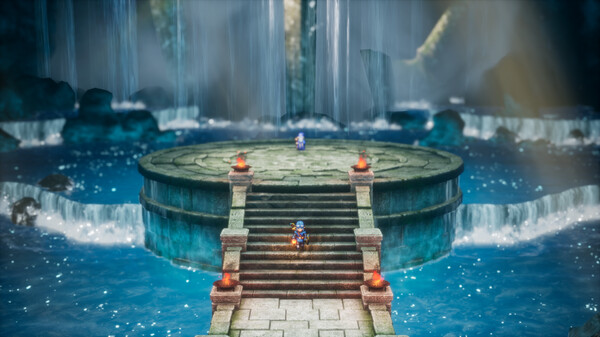
Controls and user-experience strike a comfortable middle ground. On the PS5 hardware the UI is crisp, the mappings logical, load times minimal, and the battle speed toggle meaningful. Many of the barriers that once separated 1980s JRPGs from 2025 expectations have been thoughtfully addressed. Yet underneath, the core structure is still conservative: the first game remains a single-character affair, menus sometimes lean on legacy layout, and certain sections lack modern tutorial depth if guidance is turned off. That fidelity to the original rhythm will appeal to purists but may test those used to more dynamic progression.
Visually the HD-2D treatment delivers an impressive marriage of sprite charm and 3D-backdrop depth. The worldscapes feel rich yet faithful, characters pop against layered environments, lighting and camera work elevate the scenes in ways the originals simply couldn’t. The soundscape receives equivalent care: the orchestral treatments of the original score, voice-acted cutscenes, ambient dungeon and town sounds all contribute to the rejuvenated experience. Minor quibbles, such as some UI elements that could feel slightly small on modern screens or voice-over coverage that doesn’t permeate every nook of the game, remain – but they pale in comparison to the overall polish.
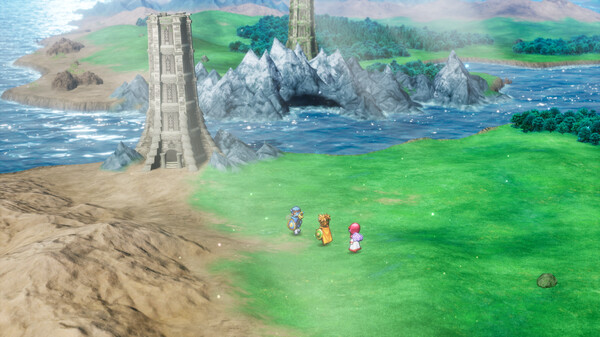
In terms of overall experience, this remake package stands as a compelling bridge between the heritage of the franchise and today’s expectations. For longtime fans it offers a refined way back into territory once difficult to re-visit; for newcomers it presents the origins of the Erdrick saga in a way that is accessible without feeling hollow. Yet the reminder remains that these are games born in another era. The paced structure, the stat-grind undercurrents, the more predictable narrative arcs – those features are preserved more than they are overhauled. Some players seeking ultra-modern mechanics or storytelling complexity may find those aspects less prominent.
Ultimately, Dragon Quest I & II HD-2D Remake succeeds in reviving two foundational JRPG entries with care, elegance and respect. The aesthetic and audio upgrades are top-tier, the gameplay tweaks thoughtful, and the package strikes a smart balance between homage and evolution. Approached with an awareness of its roots rather than a demand to transcend them, it offers a rewarding and memorable JRPG journey.
Score: 8.5/10
 Press Play Media