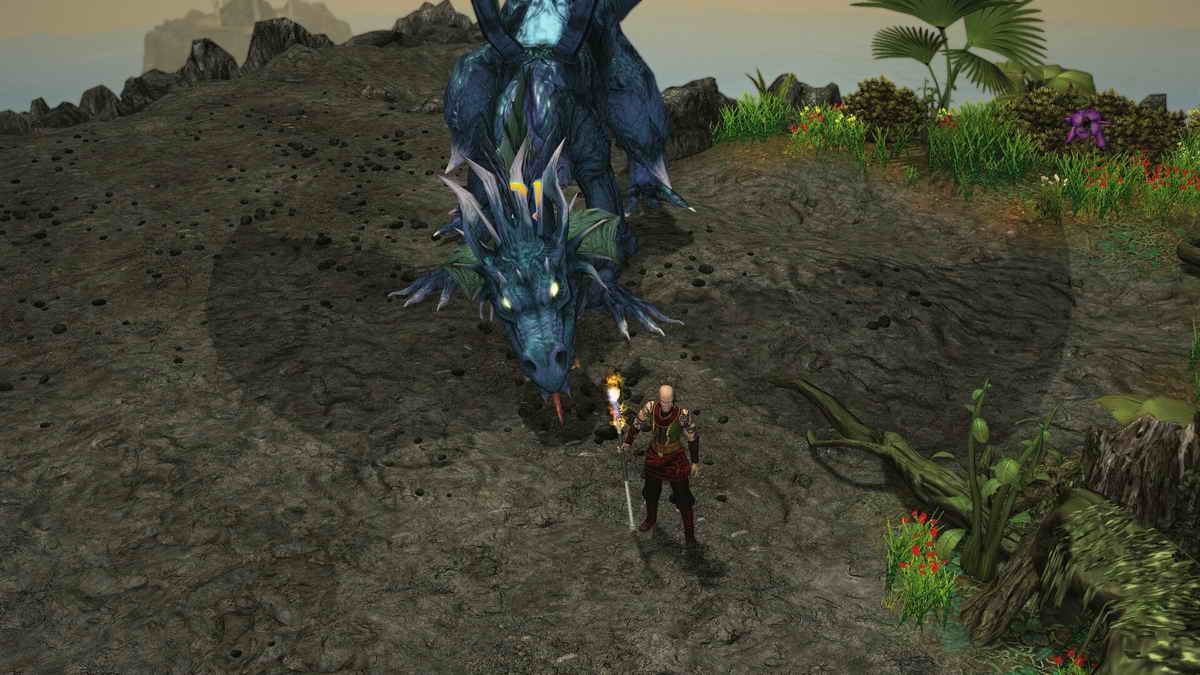
Ancaria returns once again in Sacred 2 Remaster, a revival developed by SparklingBit, Funatics and Nukklear and published by THQ Nordic. The re-release rebuilds 2008’s Sacred 2: Fallen Angel for modern hardware, combining its sprawling open world with quality-of-life adjustments and full controller support. Set in a land divided by the unstable power of T-Energy, it invites players to pick from seven heroes and forge their own path through a continent teetering between light and shadow.
That premise still carries much of the charm that made the original stand out. The campaign structure allows for moral choices and branching quests, encouraging exploration and replay value. Despite its age, Ancaria remains dense with secrets, side paths and optional dungeons. The blend of high fantasy lore and tongue-in-cheek humor still gives it a distinctive flavour among action-RPGs, though some dialogue and quest structure betray its early-2000s roots.
The PlayStation 5 version benefits from a cleaner presentation that makes roaming the landscape smoother than before. Frame rates hold steady even in large battles, loading times are minimal, and controller integration feels natural thanks to remapped inputs and haptic support. Combat, while faster and more responsive than the old PC and console releases, still follows a measured rhythm built on cooldown management and ability chains rather than twitch-based action. The result favours deliberate planning over speed, which will suit players who enjoy layered skill trees and stat optimisation.

Visual improvements are present but not transformative. Enhanced lighting, updated shaders and higher-resolution textures add a sharper look to character models and armour, while improved draw distance helps Ancaria feel more expansive. At the same time, certain environmental details – especially vegetation and water surfaces – remain coarse, revealing the game’s dated underpinnings. The difference is most noticeable when switching between lush outdoor zones and interior dungeons, where lighting upgrades stand out more strongly.
The game’s soundscape continues to be a highlight. Blind Guardian’s inclusion as an in-world band still gives Sacred 2 a unique musical edge, and orchestral combat cues retain their rousing tone. Voice acting, however, varies in quality and sometimes exposes the remaster’s preservation-first approach, as original recordings were kept intact rather than re-voiced. For long-time fans that choice reinforces nostalgia, while newcomers may find the uneven delivery at odds with the sharper visuals.
Interface redesigns make the experience more accessible. Text is legible on modern displays, quick-slot management is intuitive, and navigating inventory and merchants with a controller feels far less clunky than it once did. Yet the menus still echo the past: equipment sorting can be tedious, and character builds occasionally demand deep sub-menus that interrupt flow. It’s a faithful restoration of old systems rather than a complete modernization – one that prizes authenticity over modern convenience.

Beyond the technical facelift, the remaster’s biggest strength lies in its scale. Hundreds of quests, sprawling regions and dual campaigns ensure dozens of hours of content. The inclusion of all expansions and the original Sacred 2 Gold edition adds value, effectively turning this into the definitive archive of the game. Where it falters is in pacing and repetition: enemies respawn frequently, combat zones sometimes blur together, and side quests lean heavily on fetch or escort objectives. The appeal endures, but fatigue can set in after long sessions.
In the end, Sacred 2 Remaster feels less like a reinvention and more like a careful preservation of a bygone era of ARPG design. It performs well on PlayStation 5, looks cleaner, and includes every expansion and fix players could want, but its structure remains as intricate – and occasionally unwieldy – as ever. For those with fond memories of Ancaria, this return is rewarding; for newcomers, it’s a glimpse into how sprawling and ambitious the genre once was before accessibility and polish took over. Imperfect, yes – but still a world worth revisiting.
Score: 7.0/10
 Press Play Media