
This month, a surprisingly eclectic mix of indie titles has made the jump to PlayStation 5, offering everything from surreal tactics and retro precision-platforming to atmospheric horror and inventory puzzling. It’s a reminder of how diverse the smaller end of the market can be: Remnants of the Rift brings stylised dimension-hopping strategy to the console, Red Pippy channels classic 2D platforming charm, Hannah leans into dreamlike terror and symbolic storytelling, and Save Room – The Merchant expands on its tidy puzzle roots with a new merchant-driven twist.
Remnants of the Rift review (PS5)
Developed by Bromio and published by Mooncat Games, Remnants of the Rift brings its roguelite tactics blend to the PS5 with a striking mix of strategy and style. From the moment you drop into the warped dimension of The Bast, Remnants of the Rift ushers players into a bizarre, shifting world where reality and chaos intermingle. The premise – a world torn between dimensions, inhabited by fractured factions and strange creatures – sets a tone of strange intrigue and danger. It nails the sense of entering unknown territory, though its story remains more atmospheric than deeply realized: the feel of the setting often outshines the plot’s clarity.
Gameplay is the heart of the experience, and it handles the hybrid of grid-based strategy and real-time action with ambition. Players move in real time, but the ability to pause time and plan their next moves turns each encounter into a tense tactical puzzle. The moment-to-moment flow – from dashes across the grid to timed attacks and special skills – can feel exhilarating and satisfying, especially when everything clicks. The roguelite structure, with procedural encounters and unlockable upgrades, reinforces a sense of experimentation: different abilities, gear and approaches invite repeated dives with new strategies.
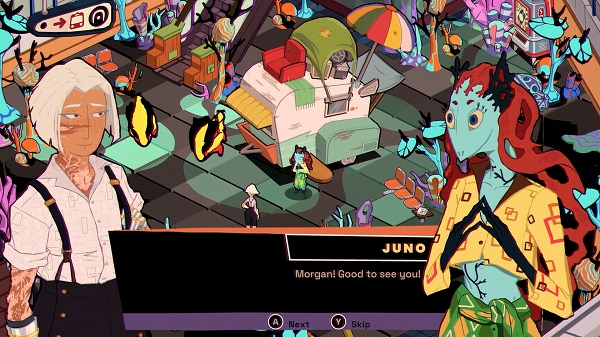
The game’s visual and audio design help define its personality. A retro-futuristic, neon-tinged aesthetic clashes with surreal dimensional distortions, creating a world that feels simultaneously beautiful and unstable. The soundtrack supports that ambience, with synth-laden tones that enhance the otherworldly vibe. Together these elements reinforce immersion in The Bast and often carry the experience even when other aspects lag behind.
Still, Remnants of the Rift doesn’t always stick the landing. Its systems sometimes feel underdeveloped – ability variety and progression depth are modest, and long-term build diversity remains limited. Over multiple dives, some layouts and enemy behaviors start to feel repetitive, which can drain earlier excitement. And while the gameplay’s core is strong, the occasional awkward control choices and rough edges show that the game could benefit from more polish.
In the end, Remnants of the Rift stands out as a bold indie experiment: a fusion of tactics and action that delivers unique moments and memorable atmosphere. It may not fully realize every promise, but for those intrigued by its premise and willing to embrace a bit of roughness, it offers enough flashes of brilliance to warrant the plunge.
Red Pippy review (PS5)
Red Pippy embraces the purity of a classic 2D retro platformer, built around the simple but endearing idea of a small red bird pushing itself toward flight. Magnific Studios keeps the storytelling minimal, giving just enough context to set the tone before letting the platforming take over. It’s a light narrative touch, but the charm of the character and the steady sense of progression provide momentum. The structure of sixty short stages helps maintain that breezy pacing, even if the lack of a more fleshed-out story means the emotional stakes remain mild.
The gameplay leans heavily on precision and rhythm, and that’s where Red Pippy shows its strongest side. Each set of ten levels introduces a new twist – from hovering to swimming, gravity shifting, and eventually a dash mechanic – keeping the adventure from settling into repetition. These shifts are thoughtfully spaced, and the straightforward controls make learning each ability intuitive. Some of the later levels edge toward frustration, especially as hazards become more aggressive, but the quick-restart structure and compact stage design make repeated attempts feel fair rather than punishing.

What elevates the experience is how confidently the game sticks to its retro inspirations. The pixel art aesthetic is bright, clean, and consistent, with environments that change enough across the sixty stages to stay visually engaging. The chiptune soundtrack leans into a classic feel as well, matching the pace of the action with upbeat, unpretentious melodies. It’s a focused artistic identity that never tries to oversell itself, and that restraint gives Red Pippy an authenticity many throwback platformers miss.
Despite its short length and modest ambitions, Red Pippy captures the spirit of old-school platformers in a way that feels sincere rather than derivative. The evolving mechanics keep the journey fresh, and the straightforward design makes it easy to appreciate its simple purpose. As a compact, affordable PlayStation 5 platformer, it’s a charming success that leaves a strong impression and hints at even bigger potential for its creators.
Hannah review (PS5)
Hannah’s PS5 release preserves the surreal, memory-driven horror-platforming that defined our earlier experience with the Xbox version, once again sending players through a VHS-tinged nightmare shaped by childhood trauma. Its symbolic storytelling still works well, using distorted rooms, flickering visual cues and found objects to let themes surface organically rather than relying on explicit exposition. The core fantasy of navigating a dreamlike world built from fear and memory remains its strongest hook, and the atmosphere quickly pulls players into Hannah’s emotional state.
Puzzle-platforming remains central to the experience, mixing environmental traversal, climbing, rope-swinging and device-based interaction with moments of stealth and exploration. Many puzzles are cleverly layered, rewarding players who take time to read the environment, and the branching choices leading to multiple endings help reinforce the personal tone of the journey. While the structure is largely unchanged from the other versions, the PS5 release delivers the same mix of compelling ideas and uneven execution.
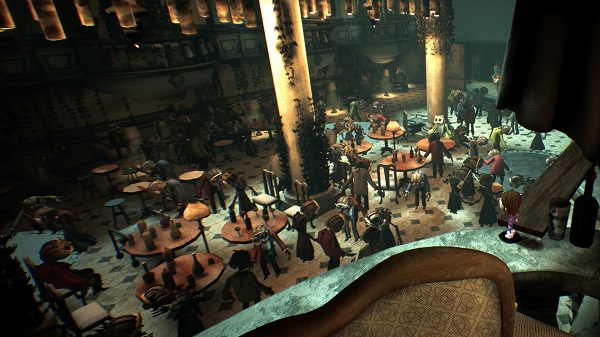
The issues that affected previous platforms continue here. Limited camera control can disrupt platforming precision, and awkward angles occasionally obscure important objects or lead to missed jumps. Bugs such as getting stuck in geometry or needing to restart scenarios still crop up often enough to sap tension, creating moments where atmospheric dread gives way to mechanical frustration. When everything aligns, Hannah can feel sharp and absorbing – but the inconsistencies are difficult to ignore.
The presentation remains the highlight. Hannah’s retro-horror aesthetic benefits from crisp PS5 rendering, with shadowy corridors, warped childhood spaces and oversized toys forming environments that feel both nostalgic and oppressive. Sound design elevates the mood further, with its eerie ambiences and music driving emotional weight even in quieter stretches. Despite lingering flaws, the dreamlike imagery, symbolic storytelling and unsettling soundscape make Hannah a distinctive indie horror experience – memorable for its atmosphere and ambition, even if its mechanics don’t always keep up.
Save Room – The Merchant review (PS5)
Save Room – The Merchant arrives as a curious evolution of inventory-puzzling, adding a trading/merchant layer on top of the spatial-tetris mechanics its predecessor thrived on. The core hook remains deceptively simple: fit assorted treasures and gear into cramped inventory grids, sell what you don’t need to gather funds, then buy and rearrange the essential items required to clear each of the forty handcrafted levels. It’s a tidy puzzle conceit that works best when it keeps its demands modest – a small relief of order in a chaotic bag of loot.
The addition of the merchant and buy-sell economy brings some welcome variety, giving the loops more depth than “just organising boxes.” For some players this back-and-forth will add a satisfying element of resource balancing and planning, especially when mixing treasure value, space constraints, and level requirements – a kind of “pocket Tetris meets shop-sim.” That said, the extra steps come at a cost: the inventory and shop menus can feel tedious, especially when a mistake forces you to repeat whole sequences, undercutting what could have been a breezy puzzle flow.
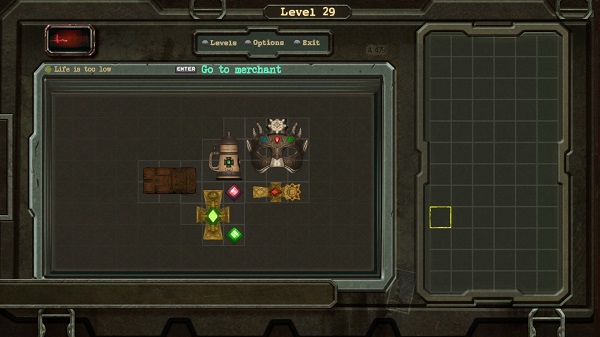
Visually and sonically, the game does little to distract: presentation is modest, functional, and utilitarian – there are no flashy graphics or animations, but the minimal polish is congruent with the game’s stripped-down aims. Background music and ambient sound aim for a relaxed mood rather than drama, which suits the methodical pace of inventory-tetris and decision-making. Controls and navigation may present friction for those used to more fluid UI systems. The addition of menus for selling, buying and re-arranging items, combined with limited convenience features (no bulk-sell or quick-sort in many cases), can make the later levels feel more like busywork than puzzles.
Save Room – The Merchant feels like a niche game for fans of inventory-based puzzles who don’t mind awkward menus and occasional tedium. Its ambition to build on the original concept is commendable – and in moments when the shop and inventory loops snap into place, it can be quite satisfying. But the added complexity often comes with diminishing returns, and many of the newly introduced systems struggle to justify the slow-down. For players who prize streamlined, elegant puzzling, this may not land with full force; for those willing to embrace the quirks and occasional rough edges, there’s a modest but decent puzzle game here.
 Press Play Media