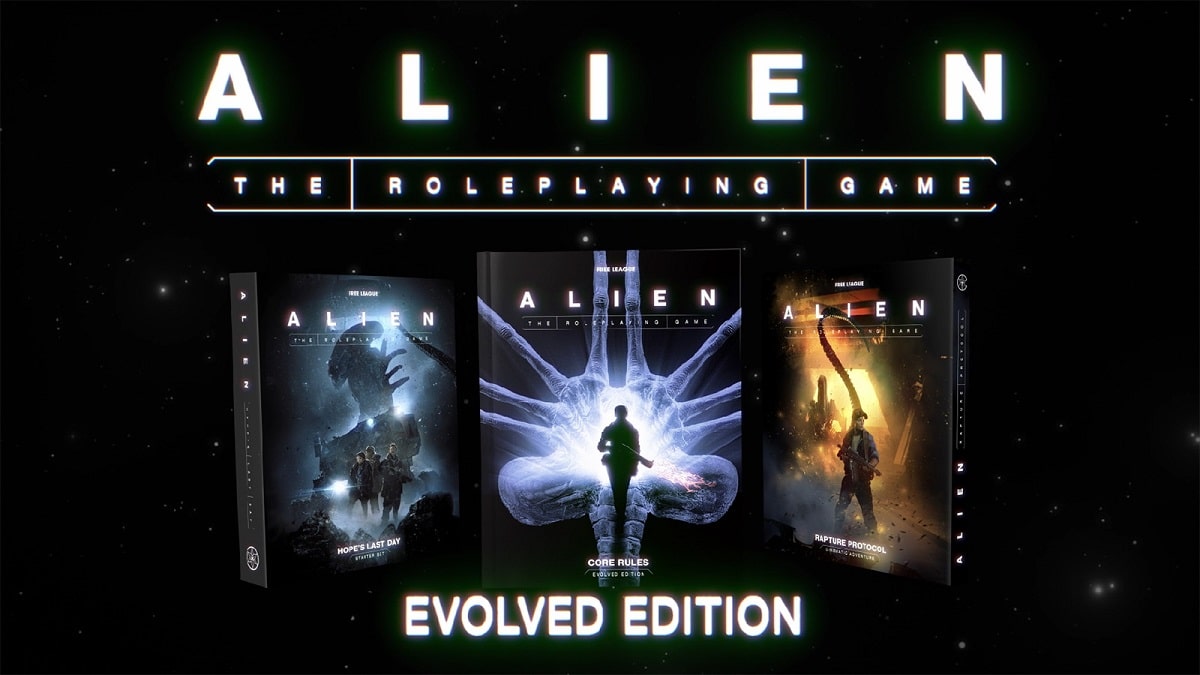
The ALIEN The Roleplaying Game: Evolved Edition, its new Rapture Protocol expansion, and the associated Miniatures Set represent Free League’s latest chapter in tabletop horror-sci-fi mastery, expanding a critically beloved system with refined mechanics, new narrative ground, and enhanced physical components. On its own terms, this is an ambitious package that stakes a significant claim in the RPG landscape; its achievements as well as its foibles are deeply rooted in how it balances the legacy of the original Alien RPG with modern expectations of accessibility, cinematic play, and tactile engagement.
From the moment one opens the Evolved Edition’s core rules, the intention behind the redesign is palpable: this is not merely a reprint but a refinement. The rulebook shaves away some of the structural opacity of the first edition while preserving the franchise’s signature narrative dread and tension. Stress and Panic remain the heart of the game’s mechanics – with stress dice that can both aid and betray – but clearer tables, reworded talents, and a more navigable layout mean that the Game Mother spends less time adjudicating and more time driving fear and narrative forward. The core loop – risk, roll, and rising panic – still captures the thematic heart of Alien, where survival is uncertain and ordinary people confront the unknown with little more than grit and improvised tactics.
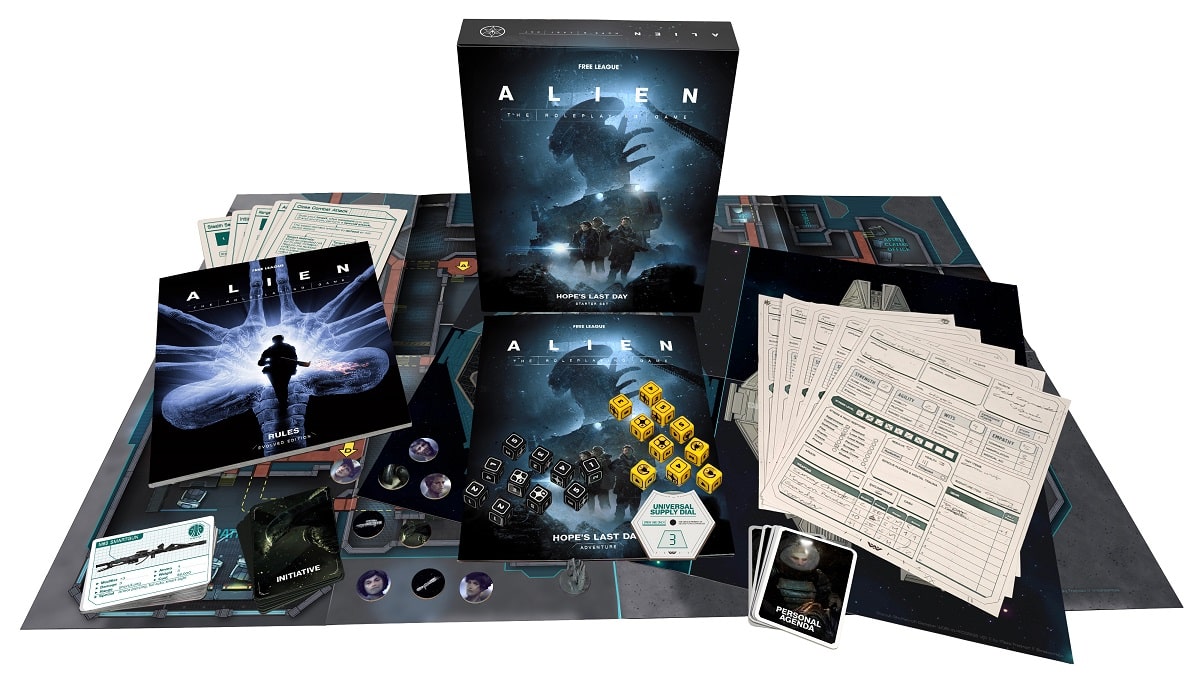
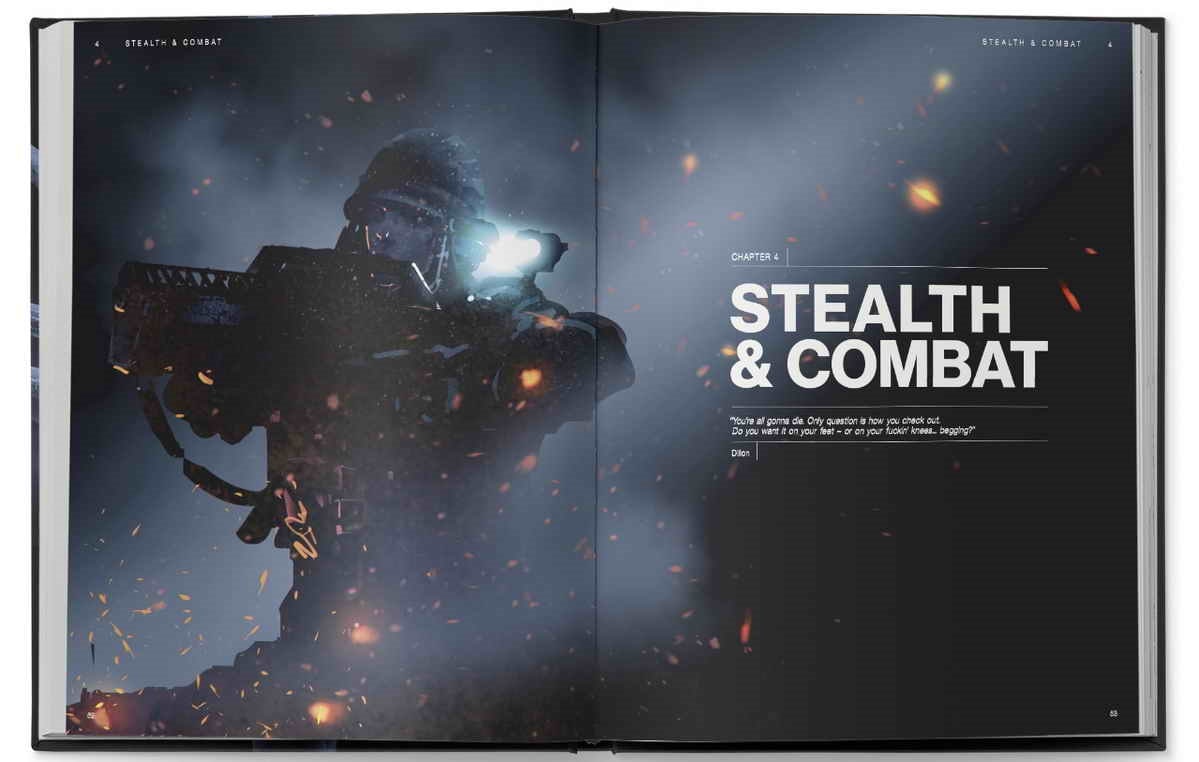
Mechanically, the Year Zero Engine’s familiar dice pools remain intact, but the Evolved Edition clarifies and polishes key subsystems. Stealth and observation rules are more coherent; combat interactions and weapon statistics have been reorganized for swifter adjudication; and the previously diffuse handling of panic responses benefits from streamlining that helps groups new to the system find their footing more quickly. The dual focus on cinematic one-shots and longer campaign play has been sharpened: cinematic play continues to feel like stepping through the beats of a tight horror script, while expanded campaign scaffolding offers richer setting details and more faction interplay for ongoing narratives, giving groups a stronger narrative backbone on which to build tension over multiple sessions.
The horror tone – bleak, corporate, and merciless – is still the game’s greatest strength. The Alien universe is rendered in stark, lived-in text and evocative art, and improvements in presentation – like enhanced readability and reorganized tables – support rather than dilute the oppressive, claustrophobic atmosphere that defines the franchise. This version does not soften the threat of the xenomorph; if anything, clearer entries in the bestiary and more consistent rules help the Game Mother deploy those threats in ways that feel both cinematic and harrowing. However, that same fidelity to lethal, survival-first play will not appeal to groups seeking heroic escapism or tactical depth above narrative tension; even in its refined form, Alien remains existential and punishing rather than heroic and crunchy.
If the Evolved Edition serves as the refined chassis, Rapture Protocol delivers a narrative expansion that tests those refinements at the table. As the opening chapter of the Jeremiah Saga, Rapture Protocol places players aboard a small starfreighter en route to an industrial colony, only to find themselves embroiled in escalating danger – a setup that evokes classic beats from the film franchise’s isolated horror roots. The boxed set’s scenario book, double-sided maps, and pre-generated characters give instant context and drive without demanding extensive preparation, and its pacing, visual layout, and maps are especially helpful in keeping groups oriented amidst the tension. The narrative touches familiar themes of isolation, threat, and corporate indifference, and can be very effective when matched to the game’s refined stress and panic rhythms.
However, Rapture Protocol is not without criticisms. Some sections of the adventure can feel cyclical or mechanically driven rather than organically escalating in terror. This suggests that while the cinematic framing and production values are strong, the scenario’s narrative pace and mechanical hooks may not resonate equally with all players – particularly those who prioritize emergent storytelling over structured beats.
The Rapture Protocol Miniatures Set represents Free League’s most tangible expansion yet into the miniature and skirmish space. With 20 hard plastic miniatures in 28mm scale designed for use on the game’s large maps, this set enables quick, tactical engagement on top of narrative play and brings a new physical dimension to encounters. The inclusion of a simplified skirmish rules booklet is an intelligent addition that allows groups to run stand-alone tactical battles without disrupting broader narrative campaigns, expanding how the system can be deployed around the table. The miniatures complement the cinematic maps and can heighten immersion when visual positioning matters, especially for those who enjoy tactical play alongside narrative horror. For those not as used to playing TTRPGs, they also add a meaningful and tactile layer to gameplay.

Yet, as with the core game and expansion, there were some mixed thoughts about the miniatures on our end. Some thought they were on the small side, not as imposing as they could be, and if you don’t enjoy painting (or just aren’t good at it), they’ll look less impressive than you might want. For groups whose focus is purely narrative or “theatre of the mind” play, the addition of minis may also feel extraneous rather than essential – though we absolutely loved having actual creatures and soldiers on the table. That said, the optional skirmish rules are an effective bridge for players who favor more tactical moments without committing fully to a separate wargame system.
Across all three components – the Evolved Edition, Rapture Protocol, and the miniatures set – production values are consistently high. Layout, art direction, and physical components demonstrate Free League’s ongoing investment in tactile, cinematic experiences that reward both play and display. The Evolved Edition strikes a visual and editorial balance that enhances usability, the Rapture Protocol boxed set’s maps and tokens support clear spatial play, and the minis bring a satisfying physicality to encounters when used. Collectively, they form a coherent suite that can satisfy newcomers as well as seasoned campaigners willing to embrace Alien’s specific type of dread and tension.
In sum, ALIEN The Roleplaying Game: Evolved Edition and its associated expansions and accessories present a refined, thematically dense roleplaying experience that successfully marries cinematic horror with solid gameplay mechanics. It excels in atmosphere, accessibility, and cohesion, though its survival-first design and structured scenarios are not universally compelling for all styles of play. The Rapture Protocol adventure and miniatures set broaden the ways groups can engage with the Alien universe, even as they reveal the limits of audience taste and playstyle priorities inherent in moving from pure narrative to hybrid tabletop experiences. For fans of the franchise, this one’s great for those long, dark winter evenings.
 Press Play Media
One thought on “Alien RPG – Evolved Edition & Rapture Protocol review”