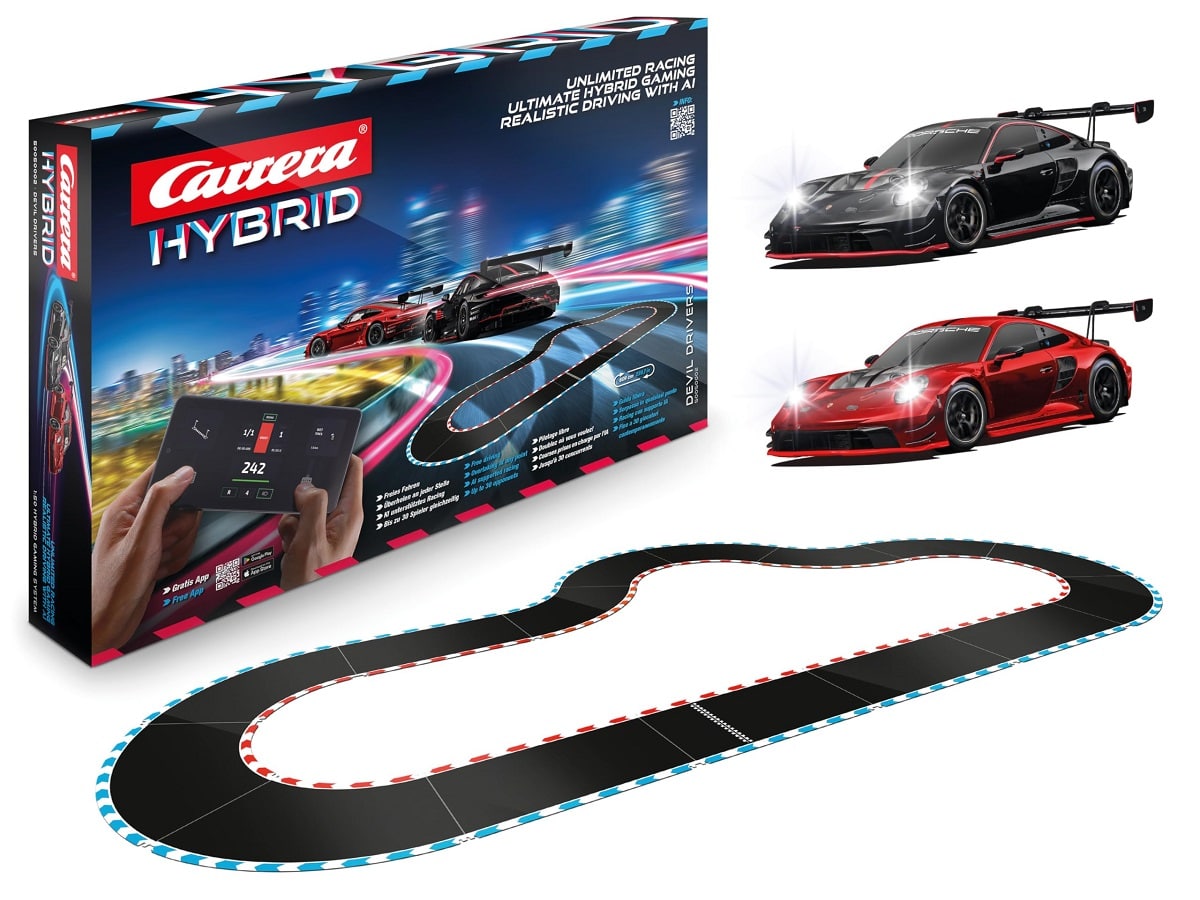
The Carrera Hybrid Devil Drivers set delivers a bold reimagining of the classic toy racetrack, merging physical hardware with app-driven digital control to create an experience that feels both familiar and strikingly modern. Unlike traditional slot cars that cling to metal rails with controllers in hand, the Hybrid system embraces free-roaming 1:50-scale Porsche 911 GT3 R models that respond to intuitive smartphone or tablet controls via Bluetooth, inviting players to race off-track and execute real overtaking moves. This conceptual evolution marks a definitive shift in how toy racing can engage both nostalgia and the expectations of contemporary (video) gamers.
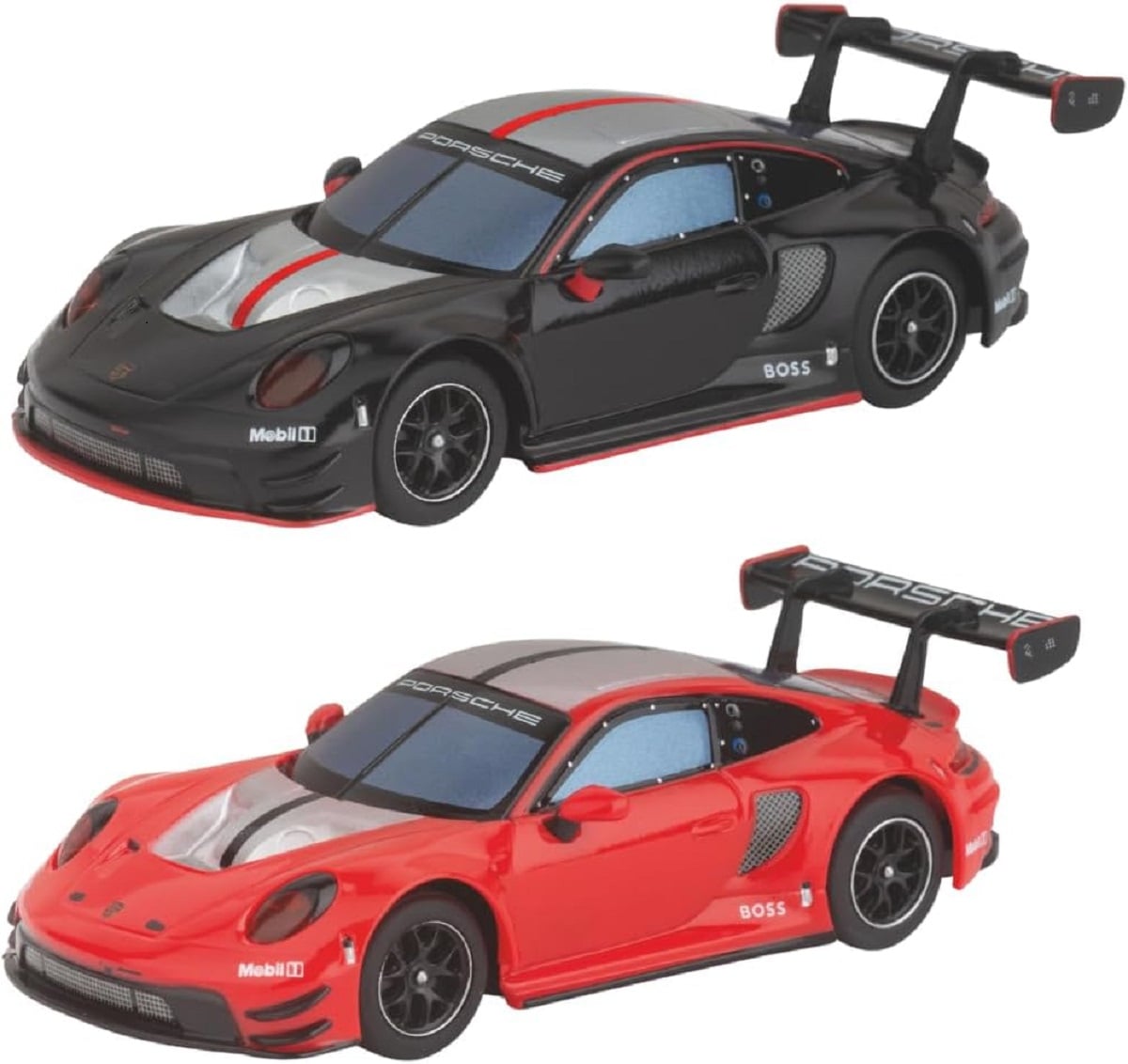
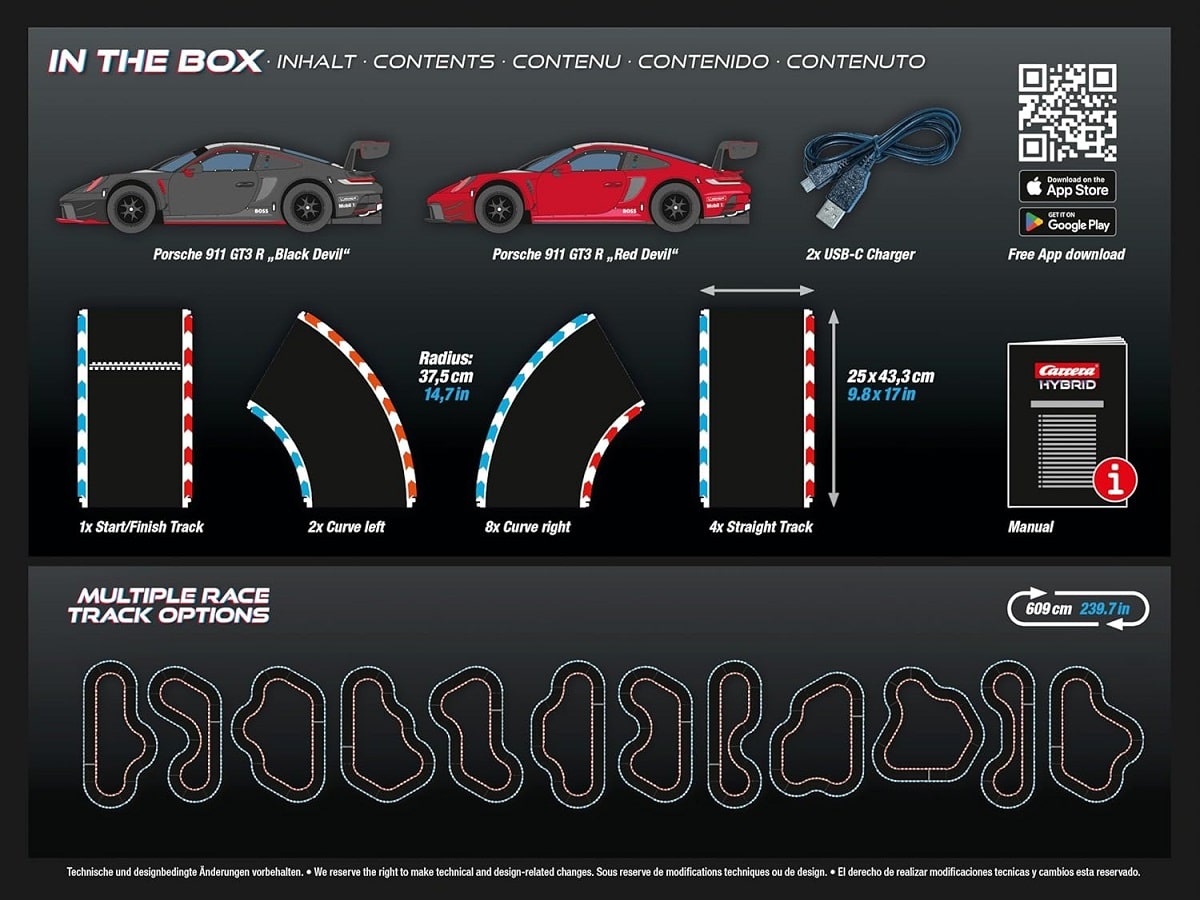
The Devil Drivers box arrives with components neatly packed: two beautifully detailed Porsche GT3 Rs – the brooding Black Devil and the fiery Red Devil – a generous selection of straight and curved track pieces, and USB-C charging cables to keep both vehicles race-ready. On initial inspection, the Porsche models are visually striking and faithful in form, though their lightweight construction is a deliberate trade-off to suit the app-controlled driving dynamics rather than mass or heft. Unpacking the track evokes some surprise; despite the set’s potential footprint of over six metres when fully laid out, individual track parts are slender and surprisingly compact in the box, making setup less imposing than the final scale suggests. Being able to store everything in a relatively small box is a pleasant surprise as well.
Assembly is straightforward: the track sections snap together intuitively and hold firmly, encouraging experimentation with different configurations and even future expansions if you decide to buy more track parts. The advertised length and variety of straights and corners are more than cosmetic – they bring a genuine sense of strategy to races, as mastering racing lines and overtakes requires thoughtful placement of parts rather than merely building a closed loop). For enthusiasts eager to plan layouts ahead of time, Carrera’s app includes tools that allow virtual track design before any physical pieces are moved, adding a layer of pre-race engagement that blends digital planning with physical play.
Where the Devil Drivers set truly distinguishes itself is in motion. Once the cars are charged – typically ready after a quick 20-minute cycle – pairing them via Bluetooth to the free Carrera Hybrid app is reliable, if occasionally finicky when network conditions vary. The app’s interface is sleek and mostly logical, though initial login requirements and small UI elements present minor hurdles. Steering can be handled either by tilting the mobile device, using onscreen joysticks, or even with compatible Bluetooth game controllers, giving racers flexibility in how they engage. Engine and braking sounds generated by the app further blur the line between physical toy and immersive simulator.
On the track, the cars navigate freely rather than being locked into lanes, which introduces a dynamic not usually seen in analog race sets: genuine overtakes and strategic positioning. Especially on longer layouts with sweeping straights and tighter turns, the feel of racing becomes about skill and planning rather than brute acceleration. Nevertheless, the free-roaming nature also introduces complexity. Handling at very high speeds can feel inconsistent, and sometimes sensors react to environmental conditions like reflective lighting, underscoring that this hybrid experience is not quite as plug-and-play as purely mechanical sets of old. Once you get over that bump, there’s a world of customization and innovation out there to play around with.
Despite its innovations, the Devil Drivers set does not feel complete without community or competitive play. Local races support up to 16 players for structured challenges, while free-drive modes theoretically entertain more vehicles, though practical performance considerations counsel restraint. The limited catalogue of vehicles currently on offer – predominantly Porsche variants – may also leave enthusiasts wanting broader variety, though Carrera’s roadmap promises expansion packs and additional models over time. Moreover, maintaining optimal performance requires occasional cleaning of tires and track surfaces, particularly if dust or debris affects the optical sensors on the cars’ undersides.
Thematically, the Devil Drivers set marries the thrill of automotive racing with technology that resonates in a digital age. The tactile satisfaction of assembling track curves and watching ceramic-like LED lights and realistic engine tones play out on the floor is matched by the strategic depth introduced via app-driven tuning, tire grip adjustments, and simulated wear — features that transform a childhood hobby into a mature hobbyist pastime if you want it to. For older players and younger novices alike, the blend of physical and digital encourages repeated engagement; yet that same fusion may initially intimidate users less comfortable with app-dependent toys.
Ultimately, Carrera Hybrid Devil Drivers stands as an ambitious and largely successful redefinition of tabletop racing. Its strengths lie in the freedom of movement, richness of car control options, and depth afforded by AI-assisted features, while its weaknesses hinge on the learning curve of app onboarding and the need for continued product diversification. This set does not simply replicate the joy of a traditional racetrack; it reimagines it for a generation that expects connectivity, customization, and a dash of digital sophistication with every turn of the wheel. The ability to overtake makes this feel like a perfect middle ground between classic slot car racing and video game racers, which makes it a great idea for family gatherings – not in the least because solo play might not hold your attention for too long. Playing with three or four feels like the sweet spot here, and we can see a lot of families having fun with this over the holidays.
 Press Play Media
One thought on “Carrera Hybrid Devil Drivers review”