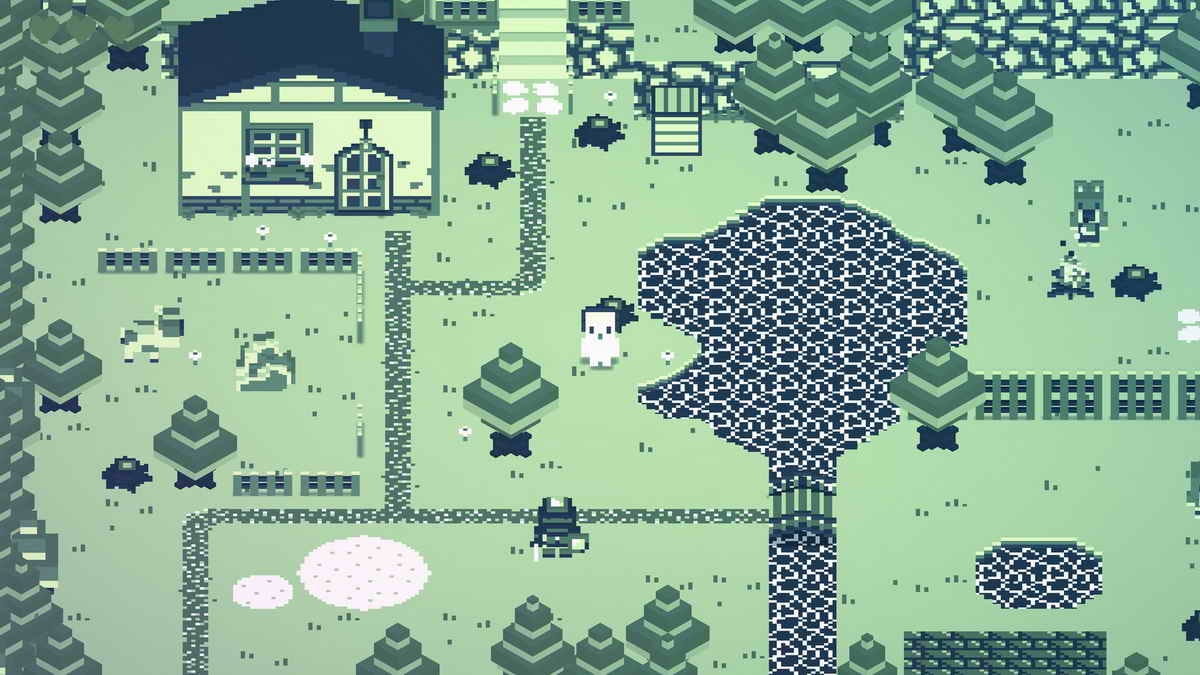
The central conceit of CASSETTE BOY is evident: perception and presence are inseparable, and manipulating how you see the world is the core challenge. Drawing inspiration from games that twist dimensionality for puzzles, CASSETTE BOY builds its entire design around a mechanic that is as philosophically intriguing as it is mechanically distinct – things that vanish from view truly cease to exist. This idea underpins exploration, combat, and even your understanding of narrative, setting CASSETTE BOY apart from typical adventure titles.
The premise – recover fragments of a missing moon in a world governed by observation – is simple but clever, and it naturally feeds into the design of every environment. As you navigate towns and forests, rotating the world with shoulder buttons reveals hidden doors, erases barriers, or causes platforms to appear in otherwise unreachable places. This interplay is often exhilarating and can create genuine “aha” moments when a previously insoluble puzzle clicks into place. The necessity of seeing before believing gives exploration a thoughtful cadence; some backtracking is required, but it seldom feels like busywork because each revisit is an opportunity to reinterpret space through a new angle.

Yet CASSETTE BOY’s reliance on perspective can be a double-edged sword. While the mechanic is consistently inventive, progression can sometimes feel cryptic. There are few overt markers to guide your objective, and the absence of directional aids means players must lean into trial, error, and experimentation. For some, this fosters rewarding discovery; for others, it can yield moments of confusion as you wander between triggers in hopes of the right condition being met. That said, this ambiguity is less of a flaw and more a design choice that aligns with the game’s philosophical bent, though it occasionally tests patience.
Combat and traversal are tightly interwoven with the perspective mechanic, but the execution of traditional action elements is more modest. Sword and bow play contribute variety, but lack the responsiveness and depth found in more combat-oriented adventure titles. Bow aiming especially can feel awkward, marring encounters that should otherwise be punchy and engaging. Boss fights, which require smart use of rotation to interact with the environment effectively, make for standout sequences, but lesser enemies often fall into rote engagement rather than dynamic challenge.
Visually, CASSETTE BOY embraces a minimalist aesthetic that channels retro charm without becoming monotonous. The pixel style and restrained palette lend clarity to complex puzzles, ensuring you can make precise rotations without misinterpreting geometry. This simplicity extends to NPC interactions and narrative presentation: the story never overwhelms, instead unfolding almost as a backdrop to your experiments with perception. There are occasional flashes of personality in the sparse dialogue – particularly through interactions with townsfolk – but the overall narrative remains light, allowing gameplay to shine.
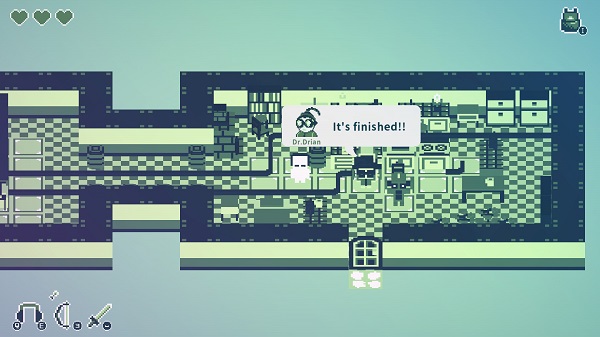
Audio design reinforces the introspective tone of the experience. Ambient tracks drift quietly beneath exploration, never demanding attention yet consistently enhancing atmosphere. The soundscape is unobtrusive, supporting your engagement with puzzles rather than distracting from them. While not a standout score in terms of memorability, the music underscores the thoughtful, almost meditative quality of your journey through CASSETTE BOY’s world.
Ultimately, CASSETTE BOY is a uniquely crafted adventure that rewards curiosity and intellectual engagement. Its perspective-driven puzzles are consistently clever, and the minimalistic narrative and design allow those puzzles to remain at the forefront. While combat and progression systems may not satisfy players seeking more robust action or guidance, the game’s creative use of perception elevates it well beyond genre clichés. For players willing to embrace subtlety and experiment without hand-holding, CASSETTE BOY offers a refreshing and thought-provoking experience on PlayStation 5.
Score: 7.7/10
 Press Play Media