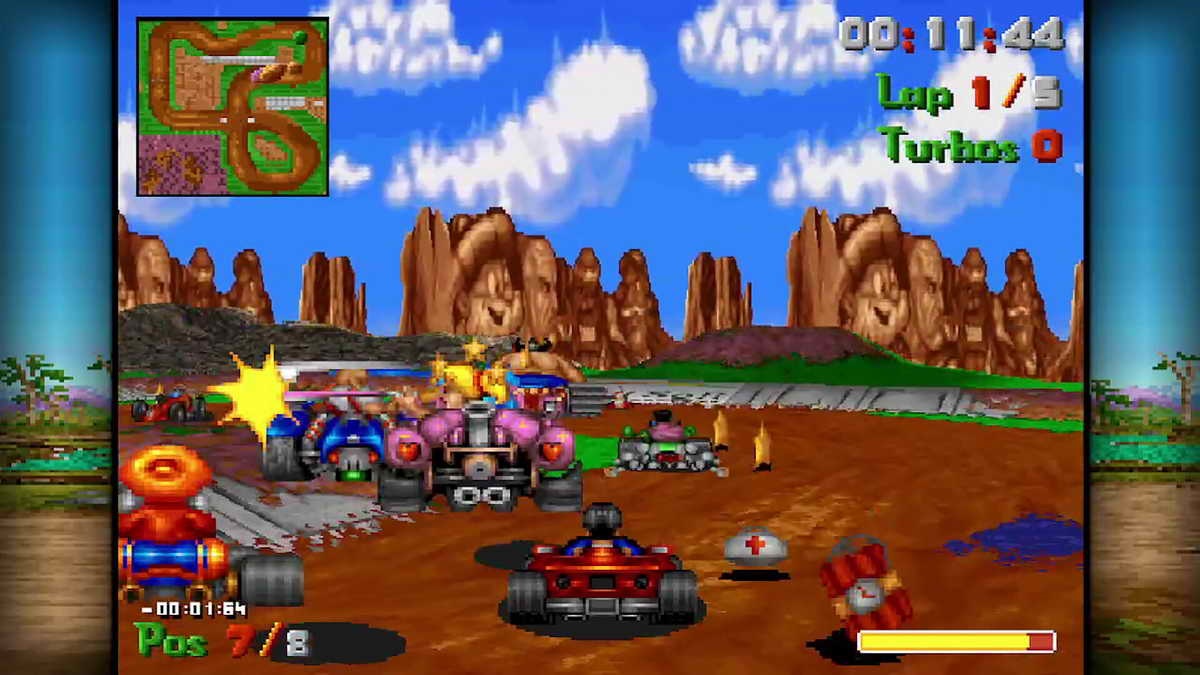
Street Racer Collection arrives on PlayStation 4 and 5 as a nostalgic time capsule, a compilation of four historical ports of the quirky 1990s kart racer originally developed by Vivid Image and brought to modern platforms by QUByte Interactive. At its core, Street Racer is a Mario Kart-like arcade racing experience built on an audacious mash-up of racing and direct combat – a blend that once felt fresh against contemporaries like Super Mario Kart but now shows both its ingenuity and its age. The collection’s premise – four versions of the same core game across SNES, Genesis (Mega Drive), MS-DOS, and Game Boy – underscores both its boutique appeal and its biggest limitation: you’ll get to play versions you never tried before, but ultimately they’re all the same game.
From the outset, the appeal of Street Racer is its character. Eight distinctly styled racers and their bizarre vehicles promise chaotic, combat-heavy races that lean as heavily on fun as speed. Tracks brim with twists, sharp corners, and obstacles that reward memorization and quick reflexes. Yet this same design philosophy can be a double-edged sword: while long-time fans will appreciate revisiting familiar layouts in split-screen multiplayer, modern players may find the controls and track visibility challenging – a product of the original hardware limitations that time has not fully pardoned. The inclusion of various modes – from standard races to the party-leaning “Rumble” and “Soccer” mini-games – adds variety, but none fully escape their dated foundations; Soccer, in particular, feels more novelty than a viable replacement for standard racing thrills.
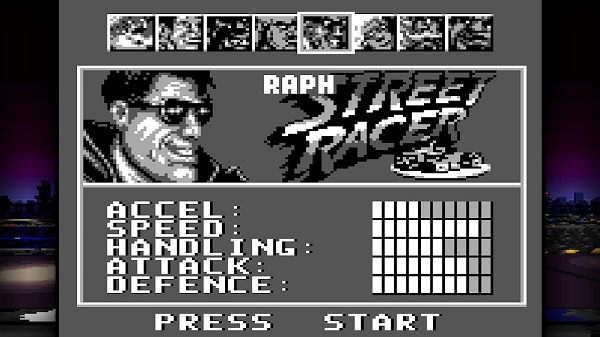
Gameplay mechanics are a study in contrasts. The special attack and item systems once helped Street Racer distinguish itself, injecting Road Rash-like punches and quirky hazards into races, but they now feel raw compared to modern kart racers’ polish. Some versions, like the DOS port, deliver smoother gameplay with clearer visuals and more approachable pacing, which helps recapture some of the original charm without as much frustration. Others, especially the Game Boy iteration, suffer from sluggish performance and cramped visuals that undermine their playability; its inclusion feels more like a nod to completeness than a genuinely enjoyable handheld experience.
Control fidelity varies dramatically between ports. What felt intuitive on original hardware now comes across as stiff or awkward on DualShock controllers, requiring patience to relearn the idiosyncratic inputs and timing that once defined the game’s competitive edge. Even simple actions like jumping are mapped in ways that feel counterintuitive on modern pads, a small detail that can sour first impressions. Despite these quirks, the core racing and combat loop still rewards mastery, and split-screen multiplayer – lacking any online component – remains the most compelling way to experience the title’s chaotic energy, particularly among friends with shared nostalgia.
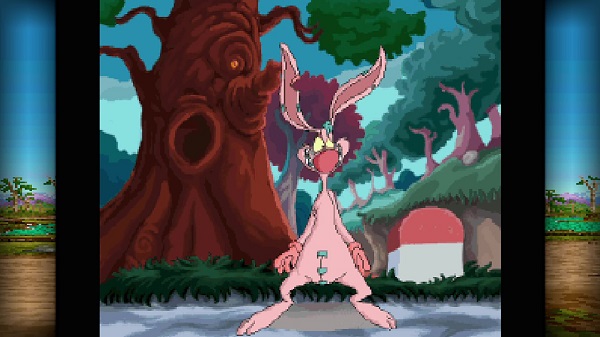
Visually and aurally, Street Racer reflects its 16-bit lineage with pixel art that brims with personality if not technical prowess. Colorful characters and track themes evoke a whimsical era of game design, but there are clear signs of aging; certain ports display flatter palettes, rougher animation, or visibility issues that make races harder to parse than they should be. Audio fares similarly – catchy and era-appropriate in context, even if relatively basic by contemporary standards. The presentation in this collection is functional rather than lavish, with emulation that is stable but lacking in extras like documentaries or deep archival material that might satisfy history buffs wanting to know more about this niche title.
In sum, Street Racer Collection is a retro proposition that will resonate most deeply with players who carry warm memories of the original games or enthusiasts of retro arcade racers. Its blend of racing and combat still has spark, particularly when shared with others in local multiplayer, and the DOS and SNES versions in particular show why the game earned a cult following. However, its uneven port quality, dated control schemes, and limited scope – compounded by the absence of key versions like the Saturn and PlayStation ports – curtail its broader appeal. For those seeking a historical curiosity with splashes of genuine fun, it offers a rewarding, if occasionally frustrating, experience; for players expecting a polished modern racer, it remains a lesson in both how far the genre has come and why some classics linger in memory more fondly than they play today.
Score: 6.8/10
 Press Play Media