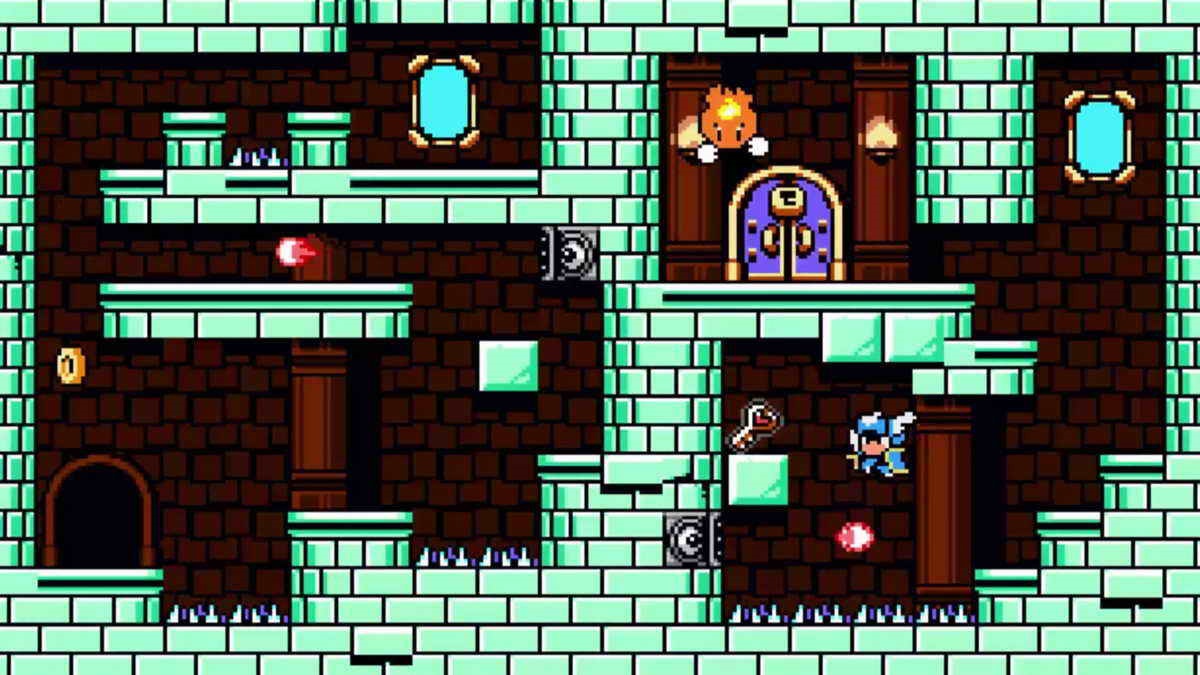
Lovish, the latest 8-bit-styled action-adventure from LABS Works and publisher DANGEN Entertainment, wears its inspirations on its sleeve – and for better and worse, that nostalgic DNA defines both its strengths and its quirks. On PlayStation 5, the game captures the spirit of classic single-screen platformers in a wonderful way, but it also reminds players why many retro mechanics were eventually refined or abandoned.
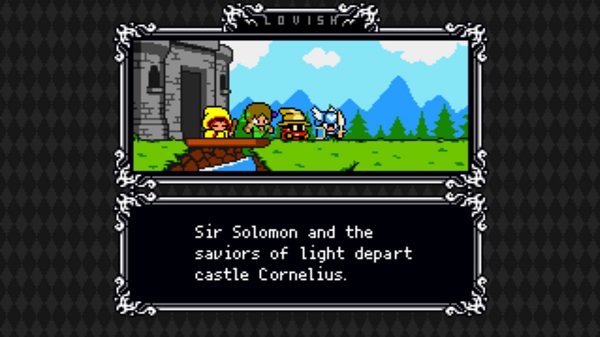
The narrative premise is delightfully self-aware: Sir Solomon, obsessed with ensuring Princess Tsuna loves only him once she’s freed, abandons his allies and charges into the Devil Lord’s castle solo. It’s an absurd twist on the standard “rescue the princess” trope, and the game leans fully into that inherent comedy. Between rooms, Lovish throws up dozens of brief vignettes – sometimes a simple treasure find, other times a bizarre RPG encounter – that riff on the protagonist’s folly with genuine charm. These interstitial scenes elevate the overall tone and often yield more memorable moments than the core plot structure itself.
That tone extends into the gameplay loop. At its core, Lovish is a collection of compact challenges, each taking place on a single screen with a clear goal: reach the exit. Early rooms are gentle nudges into the game’s mechanics, but the difficulty ramps into punishing territory as enemies and hazards proliferate. Echoing classic design philosophies, the knight dies in a single hit, and most foes take multiple sword strikes to dispatch – a combination that turns spacing, timing, and patience into central skills. This can be thrilling when it clicks, yet occasionally frustrating when an unexpected hit wipes progress after several precise jumps.
Progression is thoughtfully paced without ever feeling overwhelming. Players collect in-game currency to purchase upgrades such as directional attacks, dashes, and ranged strikes. While some upgrades genuinely widen tactical options, others skirt the edge of gimmick without deeply altering how the game feels in play. Still, the incremental nature of growth rewards experimentation and makes exploration of optional objectives – like finding hidden crowns per room – feel worthwhile.
On the controls and stage design front, Lovish mostly hits its marks very well, with responsive jumping and attacking that evoke the satisfying simplicity of older platformers. Some rooms, however, suffer from design choices that feel needlessly cruel – like traps that strand players in unwinnable positions – which can disrupt flow and patience in a way that feels more arbitrary than purposeful until it clicks for you.
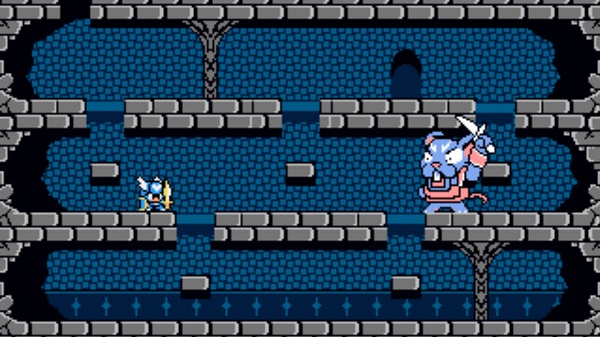
Visually and audibly, Lovish is a love letter to retro aesthetics. Pixel art throughout is vibrant and expressive, especially in the between-room scenes, where character animations and absurd scenarios pop with personality. The soundtrack’s chiptune compositions are catchy and set a playful rhythm that complements the game’s frenetic bursts of action. There isn’t anything groundbreaking here, but the presentation consistently conveys personality and enthusiasm.
Ultimately, Lovish succeeds when it embraces its own identity: a tightly packed, occasionally chaotic homage to classic action platformers with a modern dash of humor and randomness. It doesn’t always innovate beyond its inspirations, and its difficulty spikes can be polarizing, but it nonetheless delivers moments of genuine charm and satisfying challenge. In the context of LABS Works’ catalog, it feels both familiar and fresh, making it a worthwhile diversion for players who enjoy retro action with a sense of humor.
Score: 8.4/10
 Press Play Media