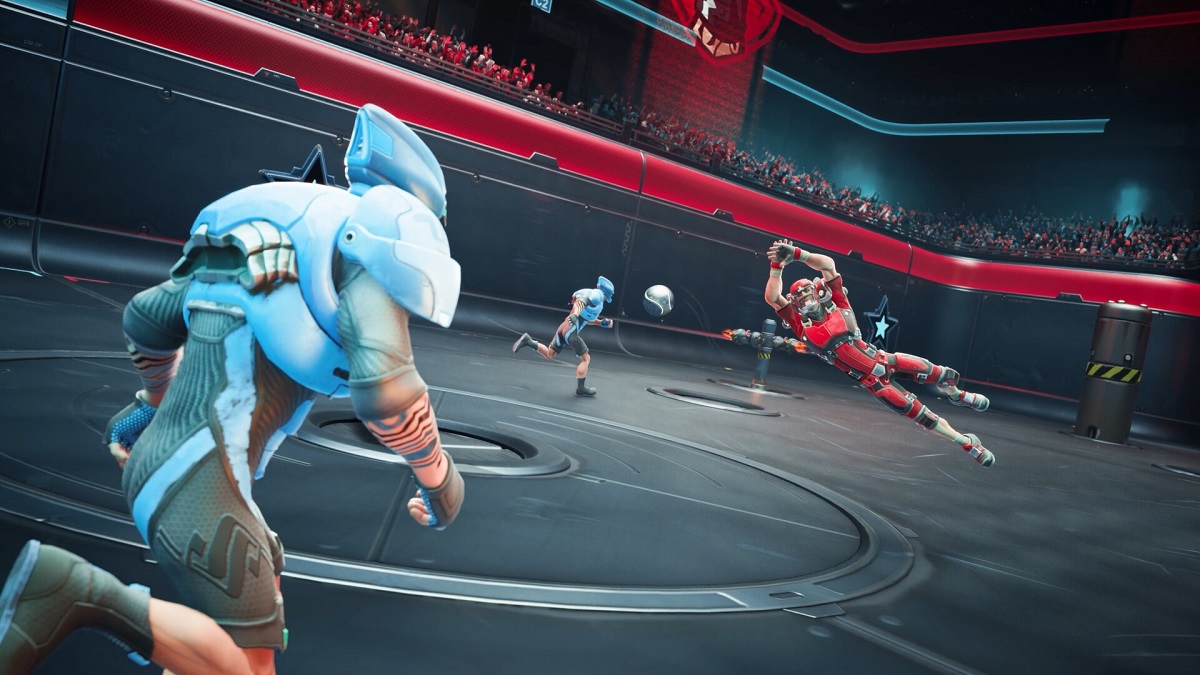
Rebellion’s Speedball for the PlayStation 5 arrives as more than a simple nostalgia bite: it’s a deliberate attempt to transplant a beloved arcade-sports classic into a modern competitive context, with all the promise and pitfalls such a project entails. The original Speedball and Speedball 2: Brutal Deluxe were staples on the Atari ST and Amiga in the late 1980s and early ’90s, thriving on one-button joysticks, ferocious pace, and a visceral blend of futurism and sport – traits that defined a youthful era of gaming and left many players craving a worthy modern successor. Rebellion has consciously invoked that legacy here, embracing the high-octane, blade-edged aesthetic that fans remember, but the result on PS5 ultimately feels like a thrilling prototype rather than a fully realised evolution.
The setting and narrative framing are as unapologetically dystopian as the original: a brutal future sport in the year 2138 where mega-corporations exploit gladiatorial competition to distract the masses. This gives Speedball an attitude that’s more stylistic backdrop than plot, and while it fuels the energy of the arenas, it never really deepens beyond being cool window-dressing. The promise of team management, strategic depth, and league progression is present, yet feels thin at launch – partly because the league mode’s mechanics reset stats each season and offer limited long-term investment, and partly because outside the core arena matches there isn’t a narrative spine to give it weight.

Mechanically, Speedball delivers visceral, punishing matches that are almost always exciting in the moment. The top-down perspective supports fast decision-making and allows you to see the full arena at a glance, which is essential given how quickly possession changes hands and how brutal environmental hazards – electrified zones, bumpers, traps – can sway momentum. The blend of speed, aggression, and tactical positioning feels like a faithful homage to the series’ legacy, and scoring a goal via a well-executed passing string or brutal takedown delivers a pop of exhilaration that keeps you engaged even in defeat. However, this very intensity occasionally works against players: the pace is relentless, the learning curve steep, and without extensive tutorials or control customisation newcomers can feel overwhelmed early on.
In terms of controls and gameplay flow on PS5, Speedball mostly sticks the landing. The DualSense controller’s feedback amplifies the physicality of collisions and tackles, and basic actions – sprinting, passing, shooting, tackling – are responsive. Yet there are gaps in polish: the absence of certain quality-of-life features (like adjustable controls, replay systems after goals, or deeper training/practice tools) stands out, especially when compared to other contemporary sports titles. Many long-time players also sense the missing depth in team customisation; cosmetic choices exist, but the absence of substantial player progression or meaningful managerial decisions makes the league mode feel like a façade more than a compelling career loop.
Visually, Speedball opts for a clear and functional aesthetic rather than an ambitious graphical showcase. Arenas, players, and effects are crisp and readable – a crucial factor when split-second decisions matter – but they never feel richly realised in the way high-budget AAA sports games do. The industrial futurism is evocative, yet the visual flair can feel restrained given the brutality the game tries to convey. Sonically, the soundtrack and sound design do a solid job: the thump of collisions, the roar of imagined crowds, and the whir of hazards build atmosphere effectively, even if the presentation doesn’t consistently evoke the spectacle your ears expect from such a violent sport.
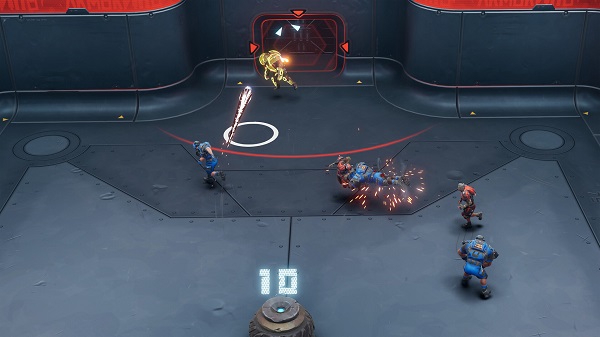
Where Speedball most clearly succeeds is in moment-to-moment excitement. Whether you’re tearing through a local split-screen match with a friend – perhaps the experience many will find the most fun right now – or trying to carve out strategy in an online game, the core action loop has undeniable energy. It’s a game that shines brightest in short bursts of competitive play, and its simplicity is part of that charm. But this strength also highlights its weaknesses: outside those matches, the structural support around the sport feels skeletal, and when the servers aren’t buzzing the single-player alternatives don’t quite fill the void.
In balancing legacy and contemporary expectations, Speedball is a mixed bag. It undeniably captures the spirit of the original’s ferocity and delivers it with a modern sheen that will resonate with fans. But the lack of deeper progression systems, missing modern amenities like control remapping and rich replay features, and a mode ecosystem that doesn’t extend far beyond the core loop leave it feeling in need of more work in places. At its current price point and state, Speedball feels like a promising foundation that could blossom with post-launch support – but as it stands on PS5, it is exhilarating in bursts and underwhelming in its broader package.
Speedball is a bold homage to its lineage with moments of brutal brilliance, yet its structural shortcomings and thin contextual layers keep it from becoming the triumphant return many hoped for. It’s fun, fast, and occasionally fierce – but it’s also a reminder that nostalgia alone isn’t enough without substance to back it up, and we’re hoping for some solid post-launch support for this one.
Score: 7.0/10
 Press Play Media