Ports and late-cycle console arrivals often serve as quiet second chances – opportunities for games to find new audiences, smoother performance, or simply a more comfortable home on current hardware. In this roundup, we revisit three such titles now available on PlayStation 5, each bringing a distinct identity. From the choice-driven, tarot-laced intrigue of Sovereign Syndicate, to the genre-blending pastoral adventure of Rune Factory: Guardians of Azuma, and the mischievous strategic inversion at the heart of Countless Army, these PS5 editions invite a fresh look at how well their core ideas translate.
Sovereign Syndicate review (PS5)
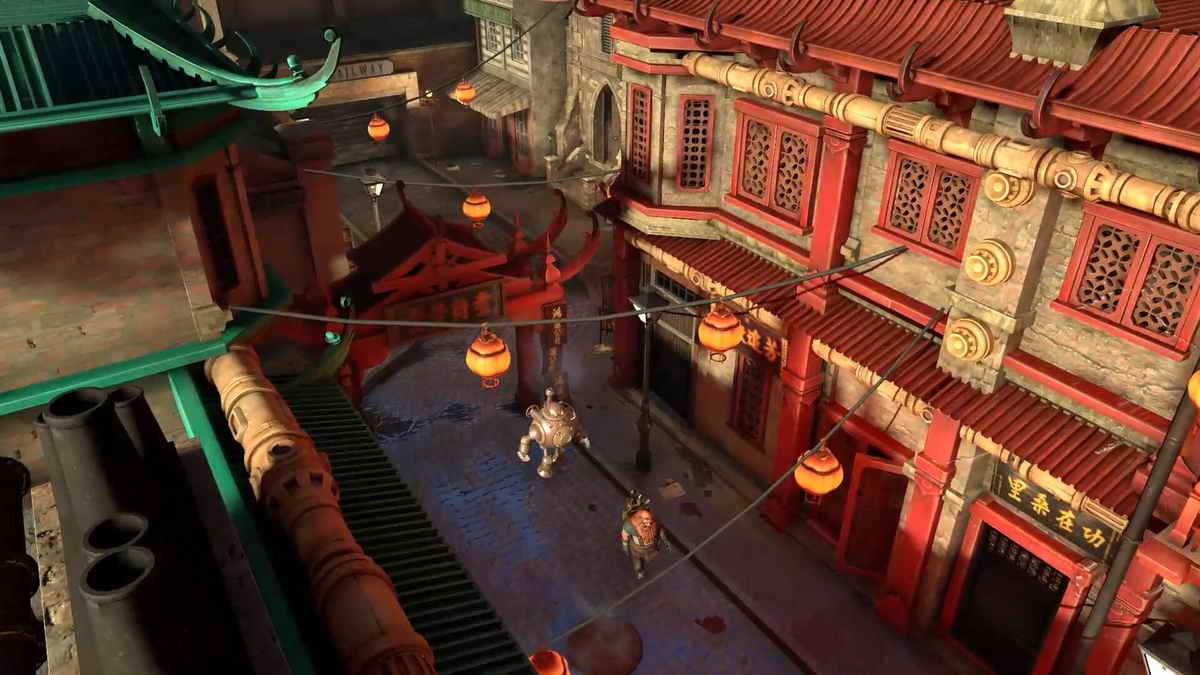
Sovereign Syndicate stares resolutely into the grime-slicked streets of a Victorian steampunk London, weaving its three protagonists’ stories into a larger mystery that thrives on introspection and atmospheric noir. Playing as Atticus Daley, Clara Reed, and Otto the automaton unfolds a tapestry of distinct voices, motivations, and personal strife that elevate what could have been a static narrative into something meaningfully textured. While the tarot-based skill challenge system’s reliance on card draws adds unpredictable flavor to dialogue and investigation, its execution sometimes feels as esoteric as the game’s heavy narrative focus – a blend that rewards patience but can leave more action-oriented players yearning for momentum.
Mechanically, Sovereign Syndicate leans hard into its RPG credentials without leaning on traditional combat, instead channeling choice and consequence through dialogue checks and skill interactions. This decision gives the game a fresh take compared to combat-driven peers, but it also makes pacing uneven: backtracking through familiar locales becomes routine, and switching between characters at chapter breaks occasionally interrupts narrative urgency. Navigation itself is occasionally clumsy due to a locked camera and a point-and-click movement scheme that can feel dated on console, and some quests can be inadvertently blocked if you miss triggers – an issue that chips away at the otherwise engaging exploration.
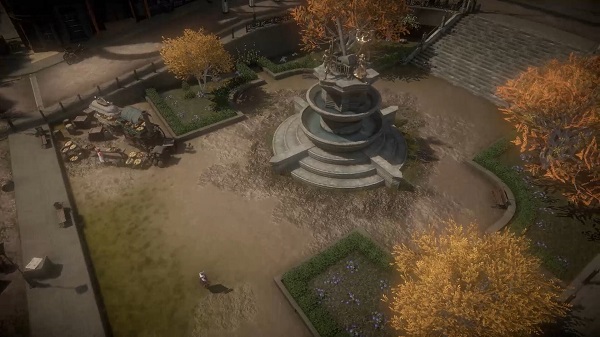
Visually, the game’s painterly aesthetic and imaginative character designs – top-hatted minotaurs and clockwork automatons – lend a distinct flavor that suits the fog-laden docklands and opium dens. However, the graphical polish is uneven: textures and animations remain basic, and the lack of adjustable camera angles limits environmental readability. Likewise, the audio landscape serves its purpose with ambient music and subtle effects, but a modest soundtrack and absence of voice acting make lengthy reading sections feel laborious rather than cinematic. Still, when the music swells for key moments and the writing finds its stride, these shortcomings fade into the background.
Where Sovereign Syndicate truly asserts its identity is in its commitment to story and character, even if that commitment sometimes overextends itself. The writing can be evocative and sharp, grounding the world’s oddities in emotional stakes that resonate, yet it isn’t immune to muddled pacing or occasional structural friction as threads converge and diverge. The ending, in particular, can feel hastened, leaving some arcs less satisfying than the journey promised. Despite these rough edges, Crimson Herring Studios delivers a cRPG with personality and promise – a title that may not redefine the genre but offers an intriguing, if imperfect, narrative adventure on PS5 that is worth the plunge for fans of choice-driven storytelling.
Rune Factory: Guardians of Azuma review (PS5)
Marvelous’ Rune Factory: Guardians of Azuma spreads its wings on PS5 as a surprisingly holistic hybrid of action RPG, farming/life sim, and village builder – a sprawling spinoff that largely succeeds at weaving its disparate parts into one cohesive whole. Stepping into the shoes of an amnesiac “Earth Dancer” charged with reviving the blighted lands of Azuma, the narrative threads – while familiar – are given a bit more direction and pace than in some past Rune Factory outings, delivering consistent momentum without feeling aimless even as it bridges combat, cultivation, and relationships. The PS5 version carries all of that into crisp, richly colored environments that lean into their Japanese-inspired aesthetic, with voice work and music that ambitiously bolster immersion, though neither soundtrack nor locales escape a few moments of repetition.
At its best, Guardians of Azuma harmonizes its systems: village restoration feels meaningful rather than a side chore, combat provides satisfying variety with bows, talismans, and dodge-heavy skirmishes, and social ties have enough charm and accessibility that even players new to Rune Factory can enjoy making friends and pursuing romance with any eligible NPC. There’s a pleasant rhythm in flipping between clearing corruption, planting crops, or assigning villagers to roles that strengthen your settlements. The menus and tools feel clearer and more approachable than in some series predecessors, too, which is a welcome quality-of-life tweak.
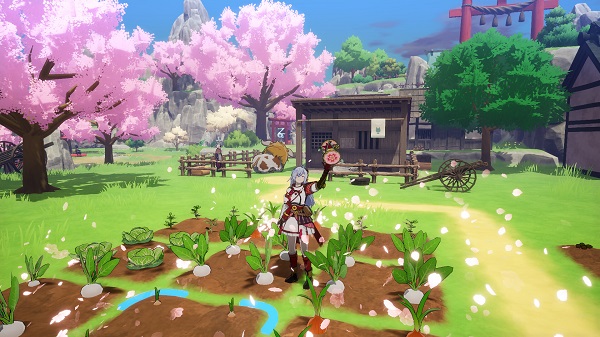
Still, the game’s ambitions occasionally outstrip its execution. Farming and exploration, while undeniably core to the appeal, can feel simplified in spots – a by-product of blending so many game loops, where some elements like deeper soil mechanics or nuanced crafting don’t quite match the emotional depth of character interactions, and entering buildings remains a visual abstraction rather than a fully rendered interior. Conversely, the village-management layer gives a satisfying macro feel, but its impact on combat or story progression isn’t always as tight as it could be. A few design choices, such as ease of progression in social and settlement systems, may delight players who prefer a lower barrier to entry, but those craving complexity might find some of the mechanics leaner than expected.
On PS5, there’s little to complain about in the presentation department, with stable framerate performance and swift SSD-backed load times enhancing the experience. DualSense haptics add a subtle tactile layer that, while not essential, complements the sensory palette. Having reviewed the Switch build before, we found the PS5 port faithful and polished, though not pushing the hardware much. In the broader context of the series’ evolution – and especially when recalling our earlier Switch review – Guardians of Azuma stands as a compelling, confident reinvention that leans into its strengths even while not every idea is pushed to its fullest.
Countless Army review (PS5)
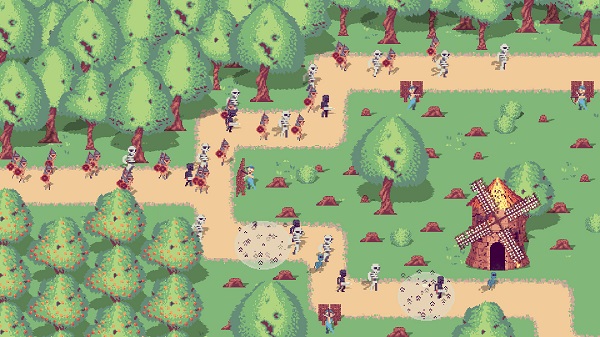
Countless Army sets out a clever premise: instead of the player defending against waves of monsters, you are the invader, sending undead hordes to crush village and city defences in a continental conquest. This inversion of the traditional tower defence paradigm gives the strategy genre a refreshingly mischievous identity, and the freedom to select unit types, their order, and the paths they march along lends genuine tactical richness to each encounter. The narrative framing as a rising Dark Lord may be light, but it serves its purpose as a vehicle for escalating challenges across diverse biomes.
In practice, the core mechanics can be quite engaging. There’s a satisfying depth in choosing from a dozen monster types, leveling them along branching classes, and supporting their advance with dark magic, and short, replayable runs make each map a compact tactical puzzle. The pixel-art presentation and soundtrack help give Countless Army a distinct indie charm that belies its modest production, and when a strategy clicks – perfectly timed waves splitting across multiple routes – the game feels both addictive and rewarding.
However, the experience is hampered by noticeable rough edges. A range of small annoyances – from clumsy spell targeting to confusing UI elements – accumulate into a persistent friction that can interrupt the flow of planning and execution. We also ran into small balance issues, unclear tooltips, and occasional progression stalls that can make later stages feel grindy or opaque. These technical and design hurdles sometimes undercut the joy of planning and execution.
On PS5, these strengths and weaknesses combine into a title that’s often fun and inventive but imperfect. Countless Army’s strategy foundation is strong enough to keep players experimenting and returning for quick sessions, yet its rough presentation and usability quirks remind you frequently of its indie, budget-limited roots. For players craving a novel twist on defence strategy with bite-sized tactical play, it’s worth exploring – just be prepared for a few irritations along the way.
 Press Play Media