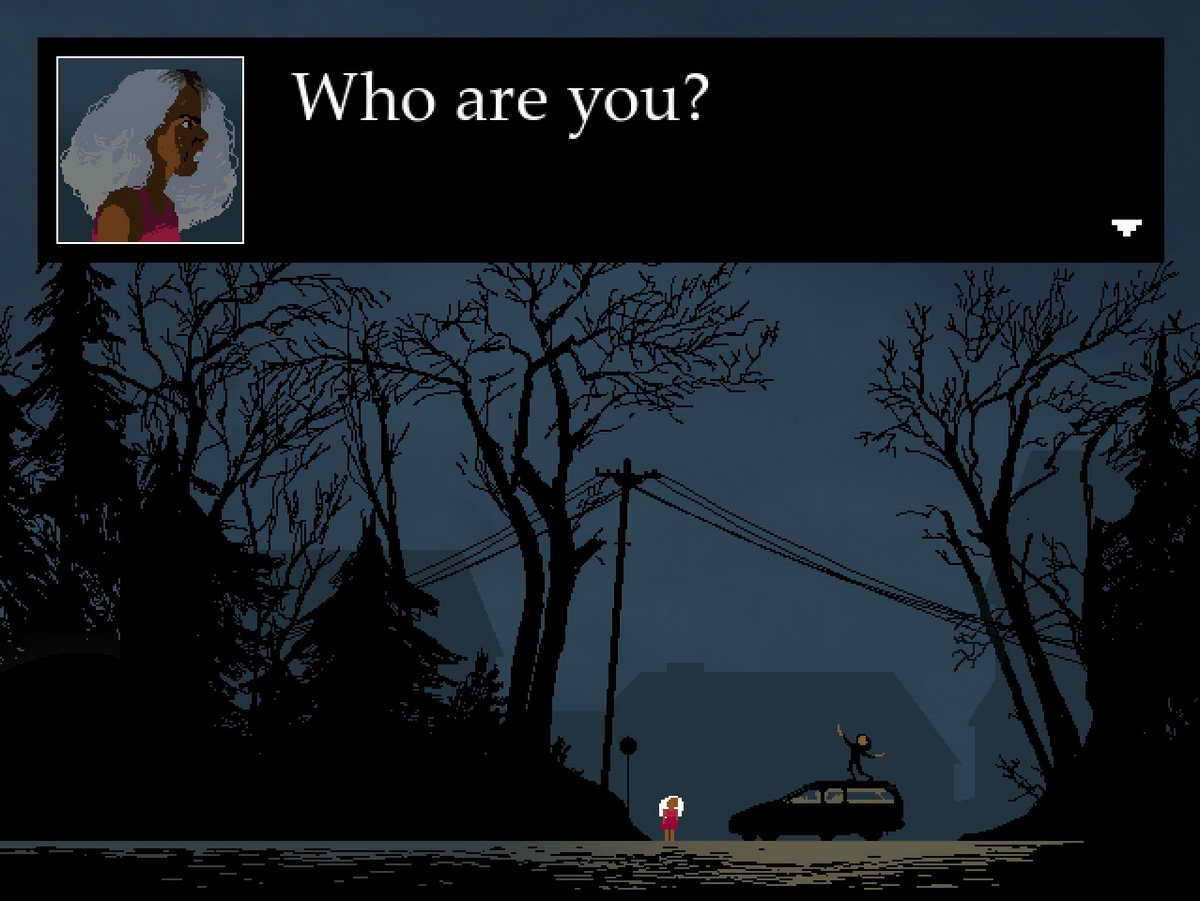
From the moment Love Eternal drops you into its world on PlayStation 5, it’s clear this isn’t a conventional platformer. Developed by brlka and published by Ysbryd Games, the game trades spectacle for an intimate, often disquieting tension that’s stitched together through atmosphere more than exposition. You play Maya, a girl ripped from her ordinary life by a strange, lonely deity, forced to traverse a labyrinthine castle built from fragmented memories – a premise that unfolds in fragments rather than clear narrative beats, leaving players to stitch the story together from clues rather than cutscenes. This deliberate ambiguity is part of the allure for some, though others may find themselves craving a more direct emotional hook.
Mechanically, Love Eternal is astonishingly lean: run, jump, and flip gravity. That’s it. But what sounds modest on paper becomes something far more demanding in practice. Maya can reverse gravity once per leap, forcing you to judge every flip with mathematical precision. Red orbs that recharge your flip ability add an extra layer of choreography, turning rooms into delicate puzzles of momentum and timing. The control scheme feels tight and responsive throughout, a crucial foundation for a title that often punishes the smallest miscalculation with instant death. There’s a deep satisfaction in mastering these mechanics, and the game invites that mastery by never clouding your inputs with floaty controls or inconsistent physics.
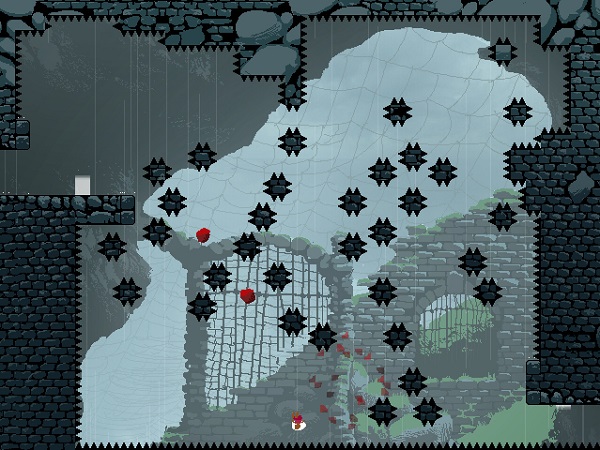
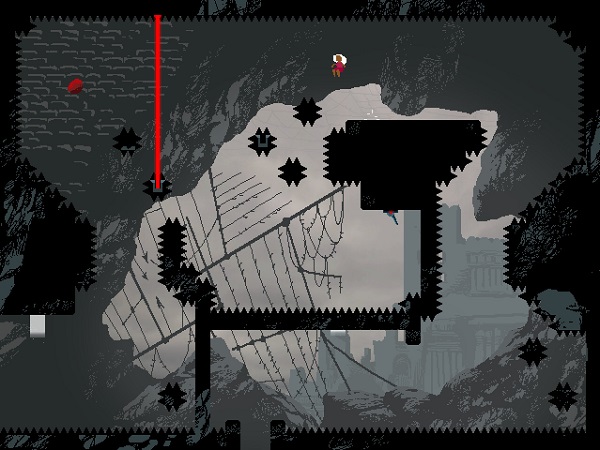
That said, the difficulty isn’t shy about scaling up. What begins as fairly accessible soon demands near-perfect execution, and while most rooms feel fair, there are spikes that feel abrupt and occasionally out of step with the surrounding flow. Players can go a long time wrestling with a single room, teeth clenched and fingers tense, before a breakthrough finally comes. The result is a rhythm that swings between exhilarating and exhausting, and it isn’t for everyone – those unprepared for repeated failure may find the learning curve too steep.
Visually, the game’s hand-drawn pixel aesthetic is one of its strongest assets. Simple at a glance, the style carries an emotional weight that belies its minimalist palette. The environments feel cold and surreal, and the cutscenes – rendered in the same bespoke pixel language – lend the game a quietly unsettling tone that reinforces its psychological leanings. The default resolution and aspect choices can feel constrained though, lending a sense of playing through a window that’s smaller than you expect. Yet that same boxed-in feeling can also amplify the title’s thematic claustrophobia.
Audio does a lot of heavy lifting here, too. The soundtrack is subtle and atmospheric, underlining Maya’s solitary journey with tones that shift from melancholic to tense without ever overpowering. Sound effects – whether it’s the satisfying clang of breaking a red orb or the small gasp when a flip barely misses its mark – enhance each moment without distraction. It’s an audio design that supports immersion without elbowing you into attention.
The narrative tone wavers between unsettling mystery and strange, almost absurd moments, especially later in the game where shifts in perspective and genre briefly emerge. It’s an ambitious move that will delight some and bewilder others, but it’s emblematic of Love Eternal’s broader character: it asks players to bring their patience and their curiosity, and in return offers a journey that’s both punishing and oddly compelling. It won’t hold your hand, and it doesn’t always explain itself, but for those who revel in precise platforming married to an atmospheric, thought-provoking world, this is one of the more memorable indie explorations the genre has offered in recent memory.
Score: 7.2/10
 Press Play Media