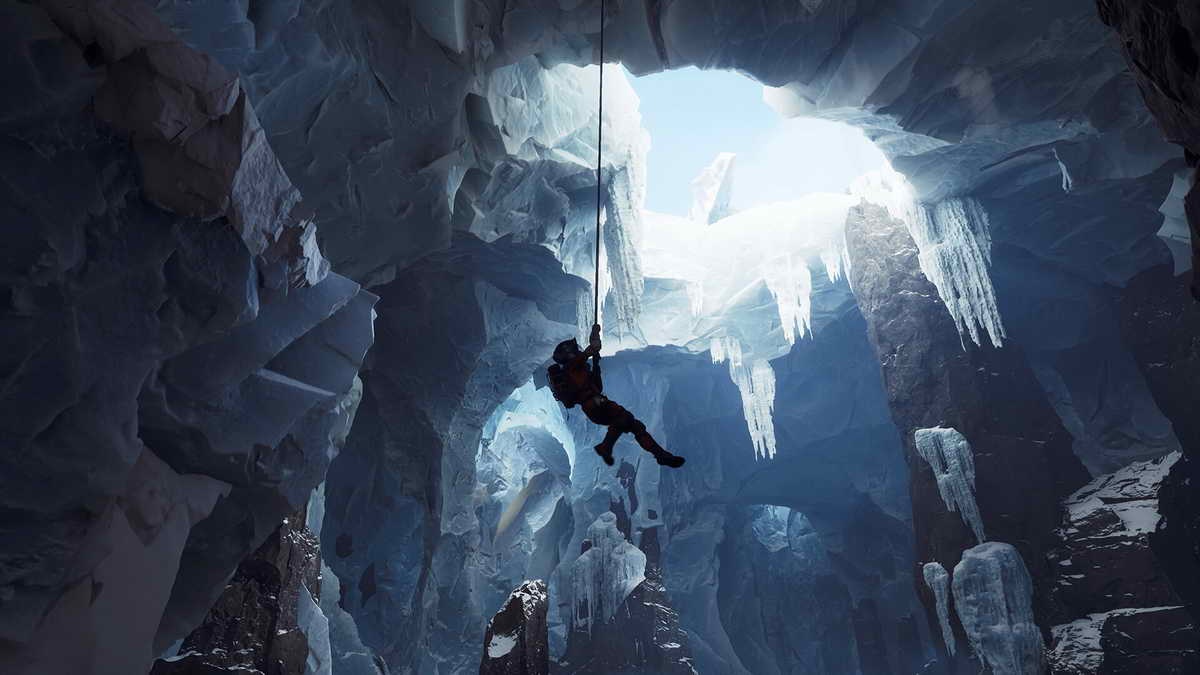
With its blend of intimate character drama and high-concept science fiction, Aphelion positions itself as a cinematic survival adventure that leans as heavily on emotional tension as it does on environmental peril. Published by DON’T NOD and previewed here on Xbox, the game strands two astronauts on the edge of the solar system and asks whether fractured relationships can endure where humanity itself nearly could not.
What we know
Set in the year 2060, Aphelion imagines a near future in which Earth has become uninhabitable. Humanity’s last hope lies in Persephone, a newly discovered ninth planet orbiting at the solar system’s outer reaches. The European Space Agency dispatches the Hope-01 mission to survey the frozen world, sending astronauts Ariane Montclair and Thomas Cross to determine whether it could serve as a new home for humankind.
Things unravel almost immediately. A catastrophic crash scatters the crew across Persephone’s icy surface, separating Ariane and Thomas and transforming a scientific expedition into a desperate survival story. Structured as a third-person action-adventure, Aphelion alternates between the two perspectives. Ariane’s segments emphasize high-risk traversal, using tools like a pathfinder device, grappling hook, and oxygen tank to cross unstable terrain. At the same time, Thomas, injured and isolated, must rely more on observation and problem-solving to endure.
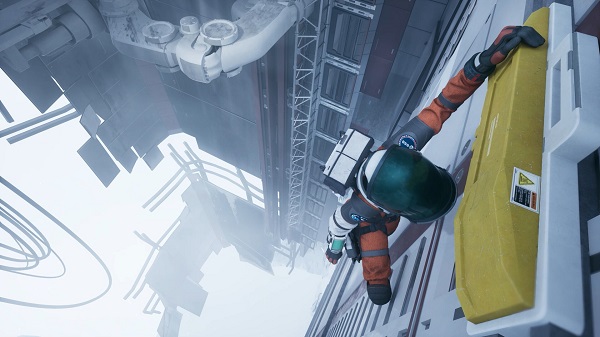
Persephone itself is portrayed as a vast, frozen expanse defined by volatile weather, shifting landscapes, and strange phenomena that bend reality in unsettling ways. Exploration is central, but it is not without danger. A hostile lifeform stalks the protagonists, turning parts of the experience into tense stealth encounters where detection can prove fatal. Alongside its survival and traversal systems, the game promises an emotionally driven narrative focused on Ariane and Thomas’s complicated shared history – an unresolved bond that becomes their lifeline as they struggle to reunite.
What we saw
Our preview was based on a playable Xbox build featuring early chapters, amounting to roughly an hour of gameplay. The slice introduced both protagonists, alternating between Ariane’s physically demanding traversal sequences and Thomas’s slower, investigative sections. It covered the immediate aftermath of the crash, offered an early look at stealth mechanics, and provided extended traversal segments across icy cliffs and cavernous chasms – enough to establish tone, pacing, and the core gameplay loop without venturing too far into the larger narrative arc.
What we thought
Aphelion’s strongest early impression is its atmosphere. Persephone feels hostile and desolate, with sweeping frozen vistas that emphasize both scale and isolation. Subtle environmental storytelling – wreckage half-buried in snow, unnatural formations beneath the ice – hints at mysteries beneath the surface. The audiovisual design reinforces this sense of vulnerability: wind howls across open plains, creaking ice underscores precarious climbs, and the musical score swells at carefully chosen narrative beats. At times, the presentation borders on stark minimalism, but that restraint often enhances the mood rather than detracting from it.
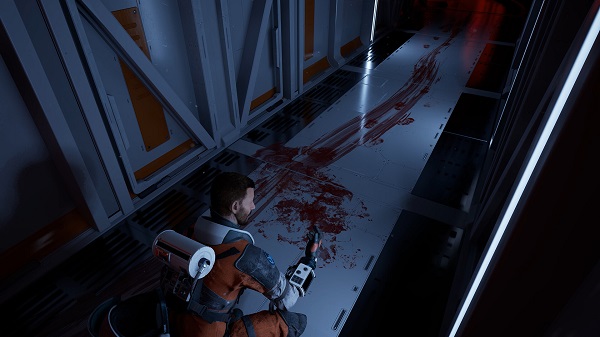
The dual-protagonist structure introduces a welcome contrast in pacing. Ariane’s sequences are kinetic and tactile, centered on momentum-driven traversal that blends climbing, grappling, and careful oxygen management. There is a satisfying physicality to swinging across gaps or scrambling up melting ice walls, though some transitions felt slightly rigid in this early build, particularly when lining up multiple jumps under pressure. Thomas’s sections, by contrast, lean into slower, more methodical exploration. His vulnerability – injured and less mobile – creates a different kind of tension, one rooted in observation and deduction rather than agility.
Stealth encounters add another layer, introducing an alien presence that shifts the tone from survival drama to outright suspense. These moments can be genuinely nerve-wracking, especially when visibility is low and environmental cover is sparse. However, the stealth systems occasionally feel under-explained in the preview build, with enemy behavior that is not always immediately readable. It remains to be seen how these mechanics evolve across the full experience, but they already suggest a willingness to disrupt the game’s exploratory rhythm with sharper spikes of tension.
Narratively, Aphelion appears to be aiming for something more intimate than its cosmic premise initially suggests. The fractured relationship between Ariane Montclair and Thomas Cross grounds the broader survival narrative in personal stakes. Early dialogue exchanges hint at unresolved conflicts and emotional distance, adding texture to what could otherwise have been a straightforward disaster story. If the full game maintains this balance between spectacle and introspection, Aphelion could deliver a science fiction adventure that resonates as much for its human drama as for its frozen alien landscapes – though questions remain about mechanical depth and long-term variety.
For now, the Xbox preview leaves us cautiously optimistic. The foundation is compelling: a striking setting, a dual-perspective structure that meaningfully affects gameplay, and a narrative core with emotional weight despite its linear nature. The coming period will determine whether these elements coalesce into a cohesive whole, but Aphelion already shows the ambition and tonal confidence to stand out in the crowded sci-fi field.
 Press Play Media