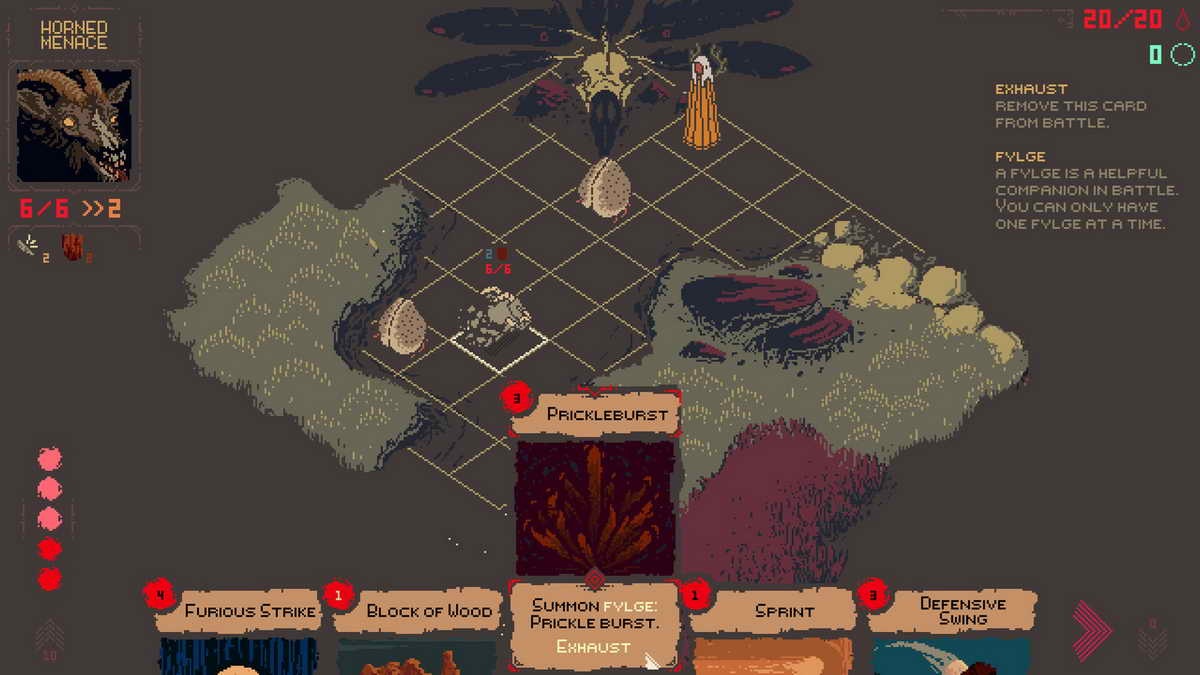
Our latest batch of ports landing on PlayStation 5 ranges from the grief-soaked tactical deckbuilding of Death Howl to the gothic, therapy-infused visual novel stylings of Vampire Therapist, from the tabletop-inspired communal adventuring of Baladins to the absurdist sci-fi escapades of No Sleep for Kaname Date – From AI: The Somnium Files. Each arrives with its own tonal ambitions and mechanical priorities intact. What unites them is not genre or scale, but the question every port must answer: how well does this experience translate – not just technically, but contextually – when given new life on Sony’s current-gen hardware?
Death Howl review (PS5)
Death Howl’s narrative thrust places you in the grief-stricken moccasins of Ro, a hunter navigating a fragmented Spirit World in a desperate attempt to bring her son back from death. The story is rarely sentimental but carries thematic weight, tracing loss and perseverance with evocative pixel visuals that convey emotion without overstatement, even when dialogue is sparse. This emotional core gives Death Howl a rare earnestness for an indie deckbuilder, grounding the blend of mechanics in a genuine arc rather than a mere genre exercise.
Mechanically, the game welds tactical, grid-based turn combat with deep deckbuilding in ways that feel both strategic and punishing. Cards draw you into a careful calculus of movement, attack, and defense, while enemy patterns and limited action points force constant weighing of risk versus reward. Over 160 cards and region-specific synergies offer a broad palette of playstyles, though the steep difficulty curve and resistance to power escalation can make early progress feel unforgiving and grind-heavy, especially for players unaccustomed to Death Howl’s pace.
Controls and systems largely serve the design’s intent: positioning and card choice matter as much as raw stats, and the grid-centered combat rewards observation and adaptation. That said, newcomers may find the onboarding sparse; the moment-to-moment challenge can feel opaque initially, and some nuance around enemy behavior and card effects comes at the cost of trial-and-error frustration. But while missing a robust tutorial or accessibility options holds the game back from broader appeal, the satisfaction of mastering its rhythms is substantial once the loop clicks.
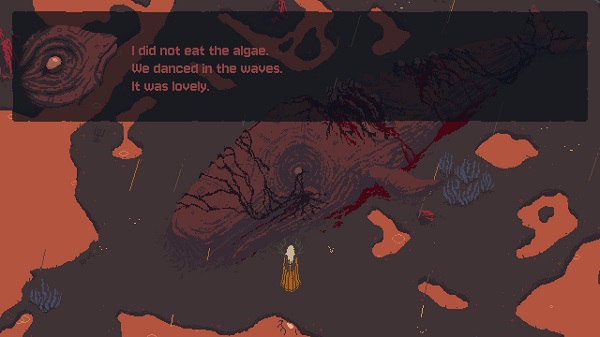
Visually and aurally, Death Howl’s aesthetic is a study in atmosphere. Its understated pixel art and a haunting soundscape work in concert to create a liminal, almost meditative mood that fits the journey’s somber tone. Environments may repeat palettes across realms, but within their stylistic constraints each locale evokes the otherworldly peril Ro must endure. Audio cues and ambient design further deepen immersion, though the minimalist approach won’t cater to those seeking bombastic presentation. In sum, Death Howl’s visuals and audio are integral to its identity, complementing a challenging tactical core with a distinct, reflective soul for one of the best in the genre.
Vampire Therapist review (PS5)
Little Bat Games’ Vampire Therapist on PS5 plays like a pitch-black spin on a visual novel that somehow learned cognitive behavioural therapy. You step into the shoes of Sam, a former Wild West gunslinger turned therapist for the undead, guiding centuries-old clients through all manner of emotional distortions while bantering in a moody nightclub aesthetic. The narrative ambition here is genuine: a blend of dark humour and introspection that treats mental health concepts as more than thematic dressing. At its best, the writing strikes a balance of levity and emotional insight, and the fully voiced cast – giving life to a diverse roster of clients – keeps the dialogue engaging even when the script leans into heavy topics.
Mechanically, Vampire Therapist is faithful to its visual novel roots, with the core engagement revolving around identifying cognitive distortions in dialogue and applying therapeutic techniques. This framework rarely bursts into traditional “gameplay,” and aside from some light meditation and bite-the-neck minigames, there’s little else to vary the pace – a design choice that will satisfy players who came for story but underwhelms those seeking mechanical depth. The interface is generally approachable, though aspects like journal navigation feel a bit clunky and the limited player agency makes the progression feel guided rather than exploratory. These smaller systems don’t break the experience, but they underscore that this title is about contemplation more than interactivity.
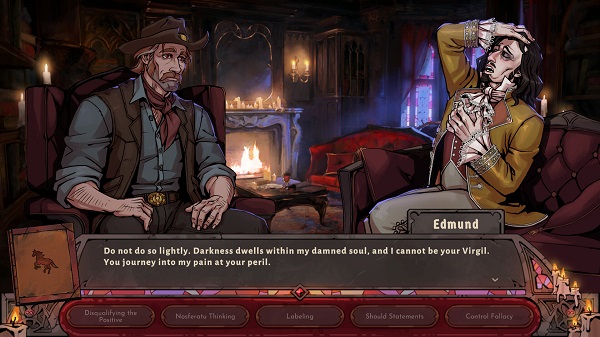
On the audiovisual front, the art and sound direction serve the narrative well. The character portraits are expressive, and subtle visual cues support the emotional beats of interactions. The PS5 version’s performance feels smooth, and the voice acting does much of the heavy lifting, with expressive delivery that elevates even the quieter scenes. That said, the soundtrack and ambient audio – while fitting the gothic club vibe – rarely distinguish themselves beyond supporting roles, and some modern touches in writing and references don’t always land tonally.
What Vampire Therapist ultimately offers is a thoughtful, conversation-driven journey rather than a traditional adventure. It excels where it understands its strengths – memorable characters, sharp dialogue, and a willingness to tackle uncomfortable, even absurd, emotional territory – but it’s also content with that scope. If you approach it expecting a deep mechanical challenge or broad exploration, you’ll find it slender; if you’re open to narrative immersion and self-reflection, it’s a rare kind of game that lingers after the credits roll.
Baladins review (PS5)
Seed by Seed’s Baladins, published by Armor Games Studios and reviewed here on PlayStation 5, frames heroism not as monster-slaying conquest but as communal celebration. Set in the bright fantasy world of Gatherac, the game casts players as travelling performers whose mission is to lift spirits rather than defeat evil. The premise is charmingly offbeat, leaning into the idea that joy itself can be a heroic pursuit, and its tabletop roleplaying inspiration is immediately evident. At its best, the narrative structure captures the improvisational energy of a live campaign, with branching scenarios shaped by dice rolls and player decisions. Yet that same looseness can sometimes undercut momentum, as story threads feel episodic rather than building toward something truly momentous.
Mechanically, Baladins operates as a streamlined choose-your-own-adventure experience, with skill checks and character abilities influencing outcomes in small but tangible ways. Each of the five classes – from the culinary-minded Cook to the flamboyant Bard – offers light asymmetry, encouraging experimentation across multiple sessions. Character growth comes through items and incremental upgrades rather than deep systems, keeping the experience accessible but also limiting long-term complexity. On PS5, navigation through dialogue trees and event prompts is generally smooth, though the reliance on menu-driven interactions can make extended sessions feel repetitive. The cooperative component, playable locally or online, adds a social spark that suits the game’s celebratory tone, even if the core mechanics remain relatively simple.
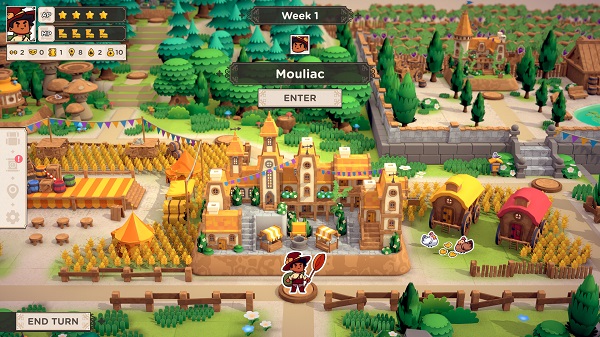
Where Baladins consistently shines is in presentation. Its storybook-inspired art direction embraces soft colours and expressive character designs that reinforce the whimsical atmosphere. The world feels inviting rather than perilous, and that tonal consistency is one of the game’s strongest assets. The soundtrack complements this approach with light, upbeat compositions that underscore the sense of travelling performers moving from town to town. However, repetition can set in both visually and aurally over longer stretches, particularly when revisiting similar event structures or environmental backdrops.
Ultimately, Baladins succeeds most when approached as a relaxed, social storytelling experience rather than a deeply strategic RPG. Its emphasis on creativity over moral binaries, combined with accessible mechanics and drop-in co-op, makes it welcoming to a broad audience. At the same time, limited mechanical depth and occasionally circular narrative pacing prevent it from reaching the heights its concept suggests. On PlayStation 5, performance is stable and controls are intuitive, allowing the focus to remain on collaborative decision-making. For players seeking a light, tabletop-inspired adventure built around charm and camaraderie, Baladins delivers a pleasant – if somewhat modest – journey.
No Sleep For Kaname Date – From AI: THE SOMNIUM FILES review (PS5)
Spike Chunsoft’s No Sleep for Kaname Date – From AI: The Somnium Files arrives on PS5 as a compact, humour-laden detour through the beloved AI: The Somnium Files universe. Framed as a side story between the first two main entries, it casts series stalwart Kaname Date and his AI partner Aiba into a madcap mission to rescue internet idol Iris from an alien abduction. The narrative leans hard into absurdity and series in-jokes, yielding moments that are charming and silly in equal measure, though the overall mystery rarely reaches the emotional or structural heights of its predecessors.
Gameplay spreads across three primary pillars – traditional investigation segments, surreal Somnium explorations, and purpose-built escape rooms. Here the spin-off conforms to both the strengths and limitations of its design: the escape rooms add a welcome burst of hands-on puzzle solving, breaking up the more passive visual-novel pacing that dominates much of the game. These sequences often feel more like a nod to Zero Escape’s legacy than the franchise’s usual mechanics, providing spatial challenges that are engaging and occasionally clever. However, the Somnium dives themselves are shorter and less inventive than in earlier titles, and the investigation segments stick closely to familiar beats without much variation.
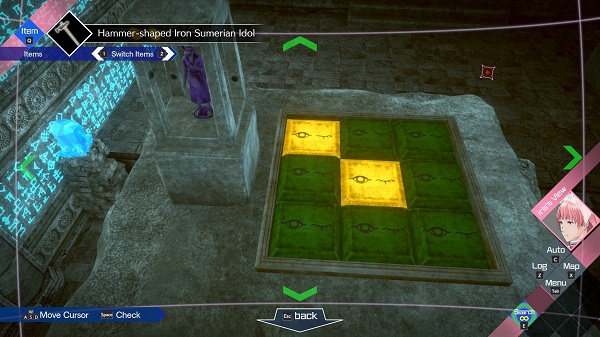
Controls are generally responsive, with puzzle interfaces and menu navigation working smoothly on PS5. Visually, the game opts for reuse of character models and environments familiar to longtime players, a choice that reinforces its midquel status but also keeps the experience from feeling as fresh or polished as a full mainline release. Sound design, including strong voice work from the English cast, elevates the dialogue and character interplay, even when the writing veers toward juvenile jokes or fanservice.
Ultimately No Sleep for Kaname Date is best approached with expectations calibrated to its intent: a shorter, fan-oriented escapade that leans into series charm more than deep storytelling or high production evolution. While the humour and throwback references will land for dedicated followers, newcomers may find its pacing uneven and its investment return modest at full price. For those ready to revisit Date’s antics without seeking the plot twists that defined the main series, there’s genuine delight here – even if this is a spin-off that never quite transcends its scope.
 Press Play Media