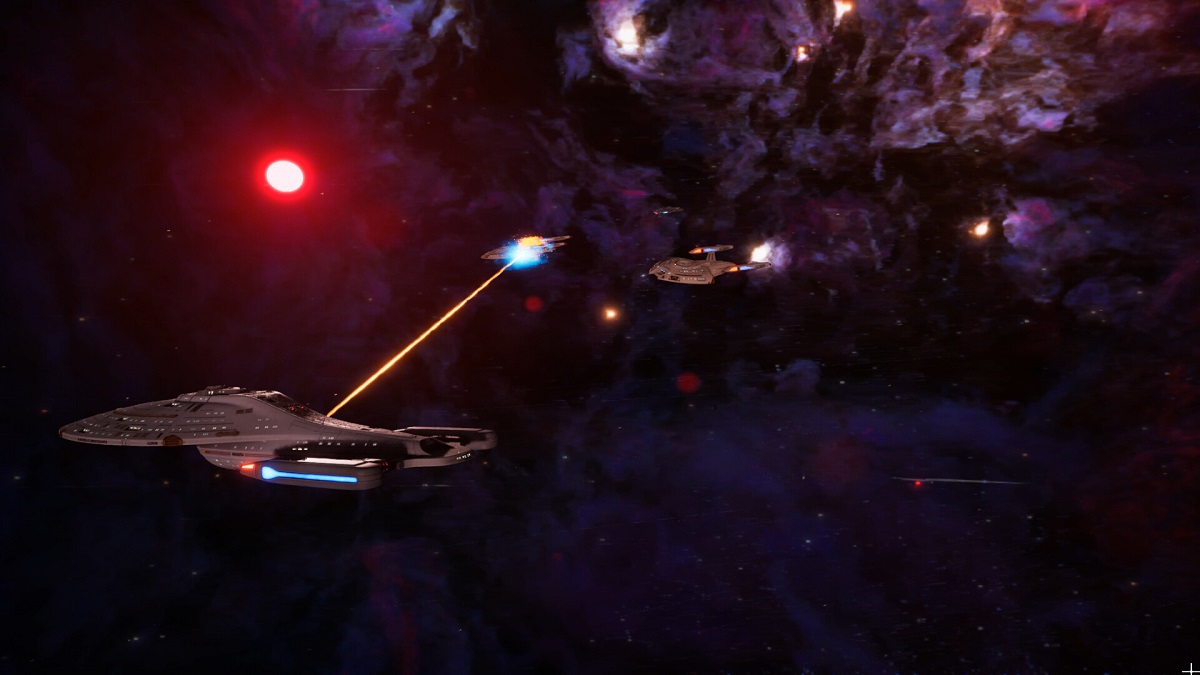
Star Trek: Voyager – Across the Unknown on PlayStation 5 wears its heritage proudly: Gamexcite’s strategy-heavy adaptation thrusts players into the Delta Quadrant with a focus on long-term survival and thematic fidelity rather than blockbuster spectacle and action. Right from the shattered corridors of the U.S.S. Voyager to the high-stakes decisions that echo across sectors, the game underlines that this is not a shoot-’em-up spinoff but a slow-burn simulation of command where choices matter. If you relish the idea of managing hull breaches, juggling morale, and watching every decision ripple forward, there’s an unmistakable draw here that captures much of Voyager’s narrative spirit.
Narratively, Across the Unknown impresses by intertwining story and systems rather than isolating them. Events, crew interactions, and moral dilemmas emerge organically from exploration and resource pressures, lending weight to each choice in a way that feels much closer to the ethos of Star Trek than many past licensed games. These aren’t window-dressing branches; they can lead to crew deaths, sector-wide consequences, or alternate historical threads that genuinely reflect the “what if?” premises the developers set out to explore – which they made clear by role-playing through their in-person demo with us last summer. That tension between choice and consequence – where missteps can compound into spirals that force players to rethink strategy – carries a lot of emotional heft when decisions land hard.
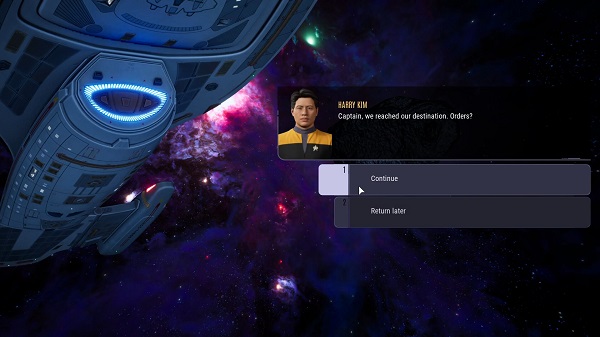
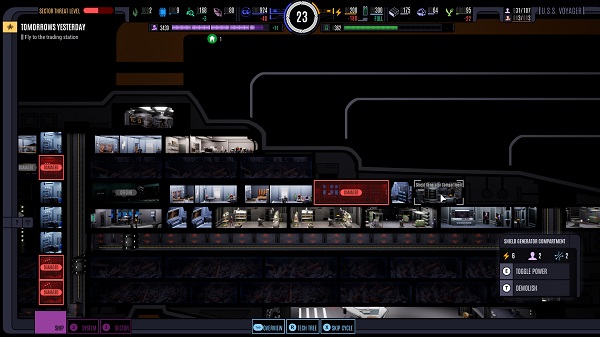
At the core of the experience sits the game’s strategic engine: rebuilding Voyager, restoring damaged sectors, conserving fuel, and managing life support are all compelling systems that appeal to planners and risk-managers alike. The UI is a strong point – clear, thematic, and surprisingly elegant given the volume of data it conveys. Ship management stands among the game’s highest strengths, where every repair or research choice feels consequential and often double-edged.
Yet, these deep strategy loops come with trade-offs. Combat – both in ship engagements and tactical situations – rarely rises above functional. Whether directing phaser fire or sending away teams, the systems often lack the kinetic engagement that might satisfy players expecting more active and/or visually engaging confrontations. Battles can feel distant and underwhelming compared to the richly layered management gameplay, and combat presentation and animation struggle to match the mechanical depth of other elements.
Visually and audibly, the experience is equally mixed. The game’s aesthetic runs on a modest budget: interior models and cutaways evoke classic Trek designs, and the UI is a reliable anchor, but animation quality and voice work are a bit inconsistent. Cutscenes and character movement often feel dated, and while there are partial voice performances, major narrative beats still play out largely in text – which can dampen emotional impact and immersion at times. The soundtrack generally bolsters atmosphere well, providing the cinematic flourish the visuals sometimes lack, but there are moments when the lack of full voice acting and dynamic presentation undercuts scenes that could have landed more vividly.
For controls and pacing on the PS5, the game’s turn-like cycles and menu navigation translate well to controller input, though the deliberately slow pace may not suit every player. The absence of manual saving and the reliance on autosaves adds bite to decision-making but can frustrate those who want more agency over session flow. The relentless nature of survival mechanics makes Across the Unknown feel rewarding when it clicks but punishing when it doesn’t, especially for players less versed in survival or strategy games. If you’re here for Star Trek but not experienced in this genre, there’s definitely a learning curve.
Put together, Across the Unknown is an ambitious, characterful entry in the Star Trek gaming lineup – one that wears both its indie roots and its love for Voyager on its sleeve. It doesn’t always stick the landing in presentation or action, but where it matters – in narrative depth, consequential choices, and strategic thinking – it often does. Fans of thoughtful sci-fi and long-term planning will find much to admire here, even if players seeking high-octane combat or cinematic polish may be left wanting more.
Score: 7.8/10
 Press Play Media