Indie releases continue to carve out distinctive corners of the PlayStation 5 library, often prioritising personality and focused design over scale. In this roundup, we dive into three very different takes on retro-inspired gaming: the slapstick point-and-click antics of Fred and Jeff: The Atomic Sulfate, the Norse-tinged side-scrolling ambition of Book of Korvald, and the tight, dreamlike precision platforming of Pogui. Each aims to channel familiar genre foundations through a smaller studio lens, with varying degrees of success. What unites them is a clear creative intent – whether through comedy, mythic drama or cozy challenge – and a reminder that in the indie space, execution matters just as much as imagination.
Fred and Jeff: The Atomic Sulfate review (PS5)
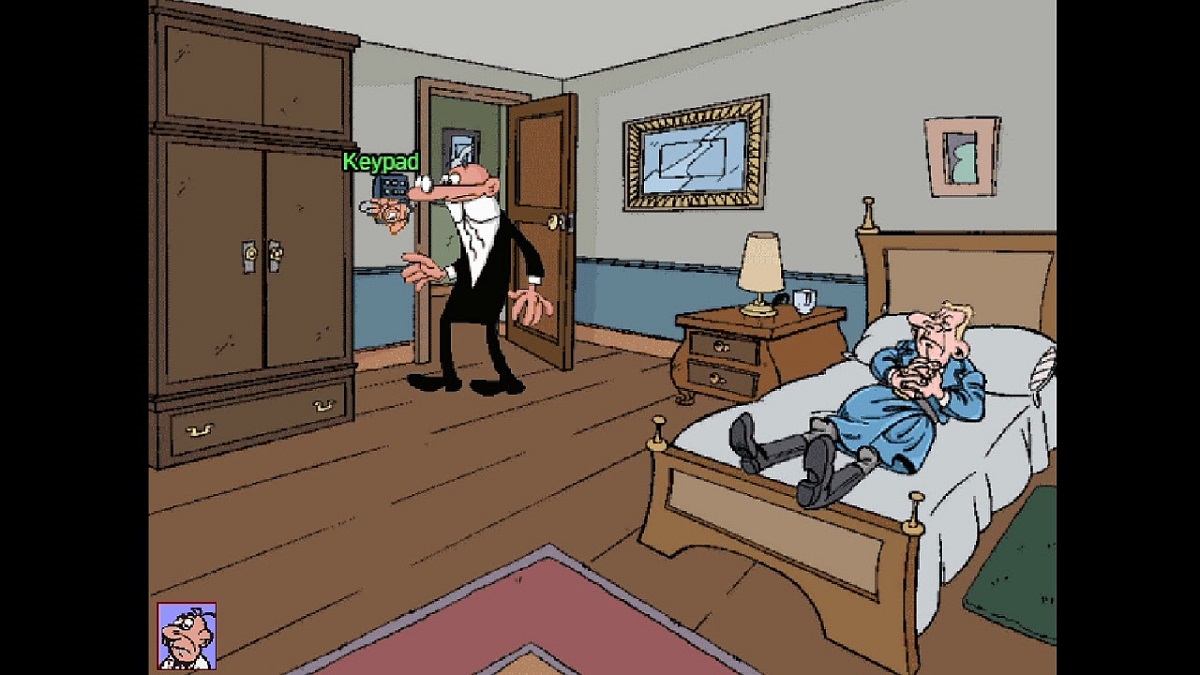
Fred and Jeff: The Atomic Sulfate on PS5 brims with personality from its outset: a goofy premise about reclaiming a stolen chemical that accidentally turns insects into colossal nuisances sets the tone for a comedy-driven, old-school point-and-click adventure. The narrative leans heavily into slapstick and absurdity, and while the stakes are intentionally silly, the interactions between the two protagonists give the story a charming buddy-comedy rhythm that keeps even the simplest moments engaging. Unfortunately, that charm doesn’t always carry over into the gameplay itself, where pacing can lag and some sequences rely more on guessing than sharp puzzle design.
At its core, Atomic Sulfate sticks closely to genre tradition: wander environments, examine and combine items, and switch between Fred and Jeff to tackle obstacles that require different approaches. The dual-character mechanic injects moments of strategic thinking, and switching between personalities to solve certain conundrums feels rewarding when it clicks. However, the controls and interface show their age – cursor movement, action selection, and item interaction often feel unintuitive, and without clear guidance, progression sometimes reduces to trial-and-error rather than clever problem-solving. These rough edges mar what is otherwise a fundamentally solid point-and-click framework.
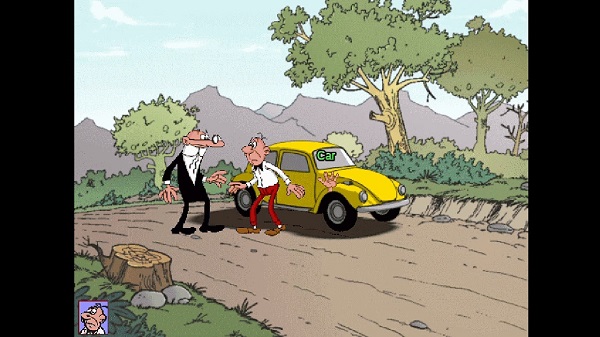
Visually and aurally, the game wears its retro inspiration on its sleeve. The art style – reminiscent of classic comic aesthetics – is appealing and consistent, and the optional CRT filter does a nice job of evoking the feel of vintage adventure titles without undermining clarity. Voice acting in Spanish adds extra flavor to character performances, though the choice won’t resonate with everyone, and its optional nature is a sensible inclusion. The original soundtrack enhances the quirky ambience, even if it rarely breaks new ground. Where presentation scores high, the actual puzzle design and navigation can feel overly simplistic, leading to an experience that might satisfy genre die-hards more than newcomers seeking rigor or flow.
Fred and Jeff: The Atomic Sulfate on PS5 is a compact, affectionate tribute to classic adventure games with enough personality to win over fans of the style, even if its mechanical shortcomings hold it back from broader acclaim. It’s a title with flashes of wit and retro charm – especially in visuals and character interplay – but one that occasionally stumbles under its own antiquated systems and pacing choices. For those who enjoy light, humorous point-and-click fare and have patience for its quirks, there’s fun to be had here; for players craving tightly tuned puzzles and smoother navigation, the experience may feel more frustrating than fulfilling.
Book of Korvald review (PS5)
Published by Eastasiasoft, Book of Korvald arrives on PlayStation 5 as a side-scrolling action-adventure that blends Norse myth, revenge drama and a surprisingly heavy emphasis on narrative and adult themes. The premise – a condemned scribe drawn into a wider conspiracy involving warrior nuns and mythic beings – has the makings of pulpy, dark fantasy intrigue, but the execution struggles to match its ambition. An extended introductory sequence front-loads exposition for nearly ten minutes before meaningful interaction begins, creating a sluggish first impression in a genre that typically thrives on action and immediacy. While the broader arc hints at larger stakes and shifting allegiances, the storytelling rarely becomes compelling enough to offset its uneven pacing.
Once control is firmly in the player’s hands, Book of Korvald settles into familiar side-scrolling territory. Combat revolves around melee weapons, rune-based abilities and incremental skill unlocks, but encounters often feel routine rather than exhilarating. Standard enemies frequently function as disposable obstacles, and although boss fights inject some spectacle and resistance, the core mechanics lack the responsiveness and fluidity needed to elevate the experience. The skill tree and weapon variety suggest depth, yet the underlying combat feel can come across as stiff, limiting the sense of growth that progression systems aim to provide.
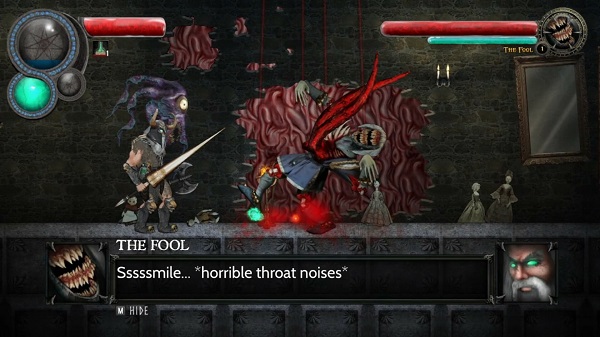
The game attempts to diversify its structure through mini-games and side activities, ranging from arena bouts to lighter diversions, yet their quality varies noticeably. On PS5, performance remains stable, but presentation proves to be a double-edged sword. Character art and environmental backdrops convey a serviceable dark fantasy aesthetic, though they rarely stand out in a crowded indie landscape. Audio is a more persistent issue: voice performances lack polish and occasionally undermine dramatic scenes, with uneven recording quality pulling players out of the moment. Combined with a largely unremarkable soundtrack, the overall production values feel modest.
At its best, Book of Korvald delivers a nostalgic echo of earlier console-era action platformers, complete with straightforward combat loops and clearly structured stages. However, that familiarity also highlights its limitations. The emphasis on narrative gravitas does not fully compensate for mechanical roughness, and the experience is consistently overshadowed by more refined genre peers. For players specifically seeking a retro-styled, story-driven side-scroller with Norse overtones, there is some entertainment to be found, but on PS5 this is a competent yet uneven adventure that struggles to rise above mediocrity.
Pogui review (PS5)
Pogui on PS5 is a compact precision platformer wrapped in earnest charm, centering you on a dream-wandering pug trying to escape surreal landscapes. The narrative is minimal by design – there’s no spoken dialogue or deep lore – but the visual progression through distinct environments gives the sense of a whimsical journey rather than a purely mechanical score chase. That restraint in storytelling lets the game sustain a light, cozy tone that matches its pixelated aesthetics, even if it never strives for emotional depth beyond its own cheerful premise.
Mechanically, Pogui feels crisp and responsive right out of the gate, which is vital for a genre so reliant on careful timing and positioning. Platforming across five themed worlds introduces varied hazards and movement impulses that keep sequences engaging without feeling overly punitive. The generous checkpoint system and quick respawns ease frustration, but for some players the focus on precision and sequence memorization can make progression feel like a means to an end rather than a joy in itself.
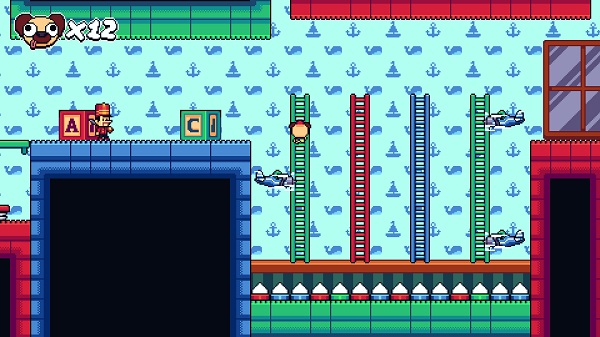
The visuals are consistently a highlight: the pixel art is vibrant and characterful, with environments that feel handcrafted and full of personality. Even the small touches – costume changes and expressive animation – add layers to the otherwise straightforward action. The audio complements this with upbeat, chiptune-flavored tracks that maintain a pleasant undercurrent without overwhelming gameplay. However, while the style is undeniably appealing, the core design rarely evolves beyond what’s established early on, which can make later stages feel familiar rather than fresh.
In the end, Pogui is at its best when it embraces its small-scale ambitions: a few hours of tight platforming that respect your time and skill. It may not offer the depth or narrative resonance of larger platformers, and some players may find its main loop more suited to speedrunning or mastery than leisurely play. Yet, for those who appreciate compact, responsive design and a bit of personality in an indie package, it delivers a memorable, if modest, adventure.
 Press Play Media