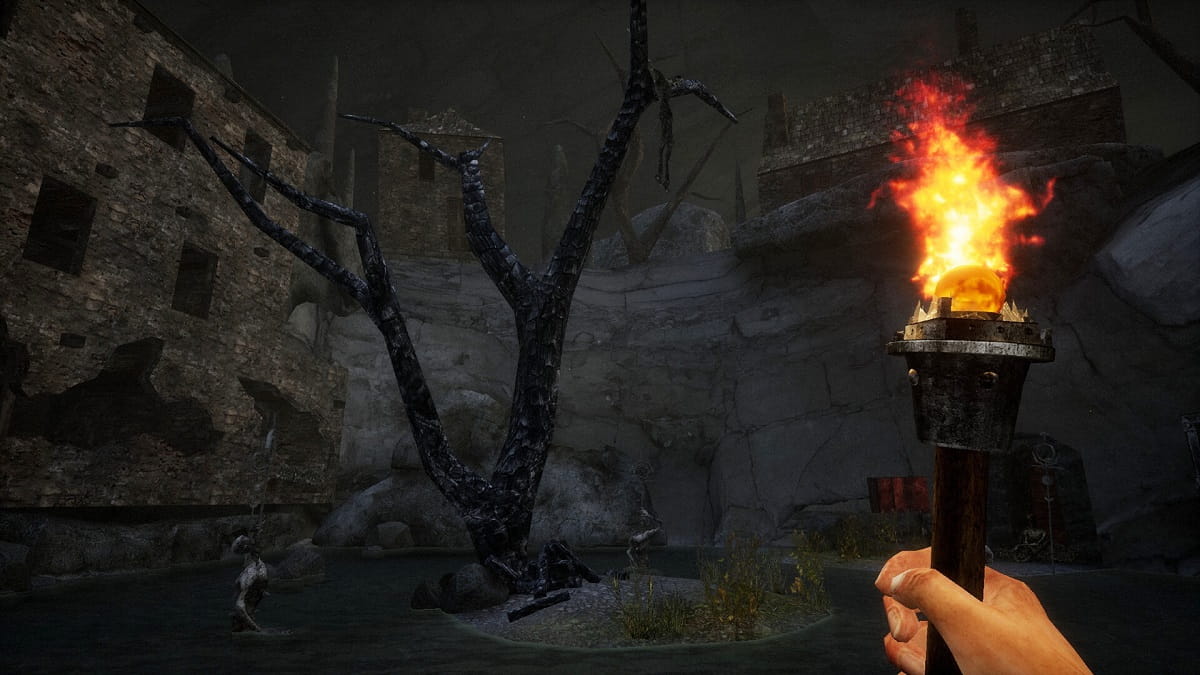
Caput Mortum, developed by WildArts Games and published by Black Lantern Collective, is one of those indie horror games that almost feels more like an artistic experiment than a conventional genre entry. At heart, it’s a first-person descent into a mysterious alchemist’s tower that leans heavily on atmospheric design and retro sensibilities, evoking an eerie blend of Renaissance mysticism and medieval dread. The narrative isn’t served up in cutscenes or dramatic set pieces; instead, it unfolds through environmental storytelling and scattered journal entries that reward curiosity without ever holding your hand.
From the outset, the premise invites comparison to classic horror and dungeon crawlers. There’s no grand arc of plot twists or high-budget spectacle – just the slow, unsettling drip of discovery as you work your way deeper into forgotten halls. The world’s design is rooted in its lore: tapestries, paintings, and grotesque recreations of masterpieces create an unnerving aesthetic that speaks to the fractured psyche at the game’s core. It’s a setting that pulls you in through suggestion rather than shock, making isolation itself a source of tension.
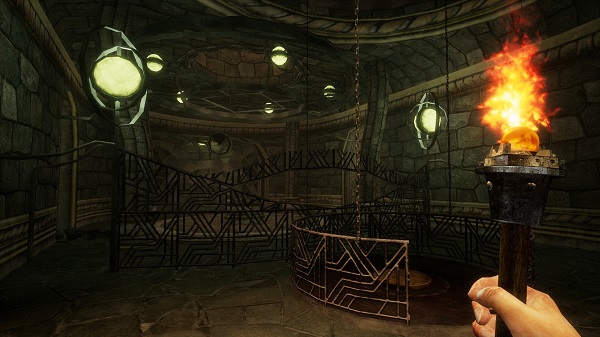
Where Caput Mortum most clearly distinguishes itself – and where it will likely divide players – is its control scheme. Inspired by early first-person dungeon crawlers, the default setup deliberately feels awkward and imprecise. Turning with triggers while controlling your hand independently with the analog stick aims to make every interaction feel like a small gamble, heightening vulnerability at the cost of smoothness. There are alternate schemes available, including a more modern controller option, but the default’s friction is core to the game’s identity and it works if you’re able to embrace it. Having said that, some players will find this tactile awkwardness a creative delight; others may see it as needless friction that detracts from pacing.
This awkwardness extends into combat and puzzle interaction. Enemies are designed not solely as combat obstacles but as narrative devices – grotesque homunculi with disturbing designs that sometimes require you to solve interactive challenges instead of simply hacking away. These moments can blend horror and absurdity, and while combat encounters rarely feel deeply tactical, they reinforce the game’s uneasy tone. Puzzles generally flow well, tying exploration to logic without becoming obtuse, though the game’s brevity means some mechanics are introduced without as much evolution as players might crave.
Visually and aurally, Caput Mortum succeeds in creating a chilling, memorable world despite its modest production scale. Its environments lean into decay and shadow, and the sound design – sparse but potent – fills corridors with distant echoes, unsettling drones, and the occasional high-pitch jolt when danger lurks near. These elements combine more like those of a psychological horror than a jump scare machine, and while the game rarely shocks in the conventional sense, it’s remarkably effective at sustaining an oppressive ambience throughout its short run.
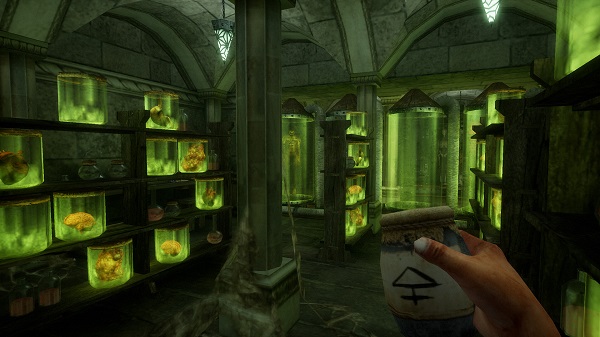
Yet for all its creative strengths, Caput Mortum does stumble in ways that keep it from feeling fully polished. Its deliberate pacing and idiosyncratic controls, while thematically consistent, make the experience feel narrower in appeal than many modern horror titles. The game’s short length – clocking in well under standard AAA runtimes – means some narrative threads and mechanics are resolved before they fully take root. For some this brevity is a virtue, keeping the descent concise and unnerving throughout; for others it may feel like the prelude to something even more intriguing that never materializes.
Ultimately, Caput Mortum stands as a memorable but imperfect indie horror: a title that’s equal parts mood piece and mechanical oddity. It’s strongest when you surrender to its deliberate pace and embrace the unsettling atmosphere crafted by WildArts, and it will linger in the mind more for what it does with its ideas than for any single shock or twist. Whether that’s enough to recommend it depends on how much patience you have for deliberate design and unconventional controls – but those willing to lean into its unique character will find a rewarding and unique descent into alchemical nightmare.
Score: 7.6/10
 Press Play Media