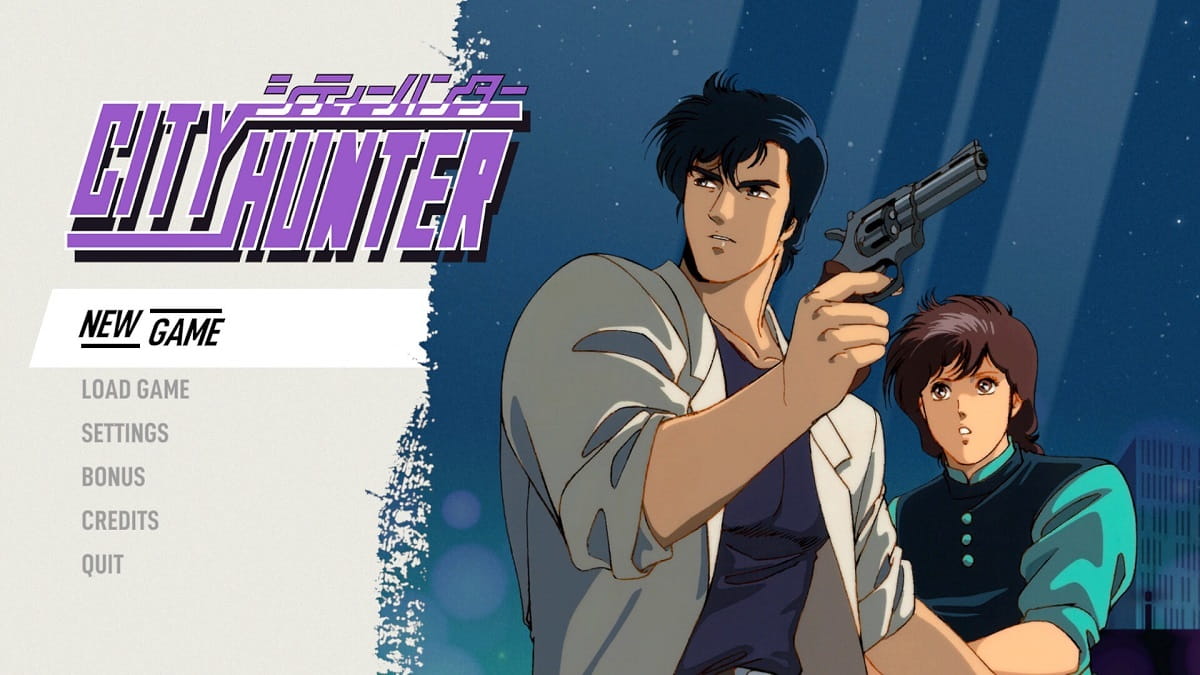
Three and a half decades after its original release, City Hunter’s return on modern hardware feels less like a triumphant rebirth and more like an invitation to an era that no longer exists. Anchored in the familiar milieu of Ryo Saeba – the self-styled “sweeper” of Shinjuku – the game places players squarely into a retro run-and-gun framework with light narrative dressing. Its premise, while faithful to the spirit of the manga and anime, hardly evolves beyond a sequence of text-driven vignettes that set up each of the four core cases Ryo tackles. There’s an earnestness in seeing familiar characters like Kaori and Umibozu appear, but the storytelling rarely goes deeper than functional exposition. For players who grew up with the franchise, these moments evoke nostalgia; for new players, they can feel perfunctory at best.
On a mechanical level, City Hunter wears its age visibly. The basic marching order of play – shoot enemies, enter doors, find keys, face a boss – taps into classic arcade DNA, but this formula reveals constraints that modern design would generally avoid. The game’s exploration can feel labyrinthine and occasionally confusing, with indistinguishable doors and a lack of any automap leading to frustrating backtracking that feels more like busywork than meaningful engagement. Some will find a charm in this old-school structure; others may see it as a needless barrier to enjoyment.
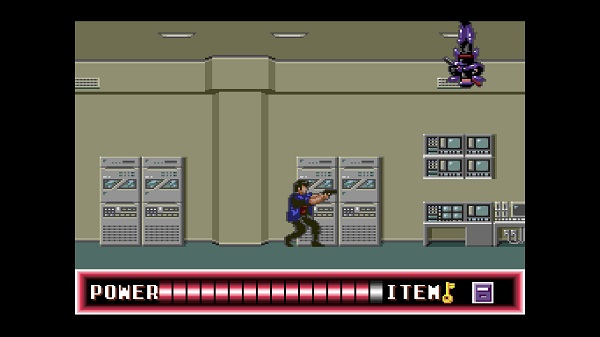
The inclusion of multiple modes – Original, Enhanced, and Hard – is perhaps the most thoughtful aspect of this reissue. Enhanced Mode brings genuinely welcome changes to the controls and responsiveness, smoothing out the latency and odd quirks of the 1990 build and making movement, shooting, and weapon switching more intuitive for the contemporary player. Hard Mode further pushes challenge by adjusting enemy behavior, damage, and encounters, and even adds a new sequence for those seeking a greater test. These options grant the package a flexibility that helps bridge the gulf between nostalgic artifact and playable retro action.
Audio and presentation are similarly mixed. On the one hand, the game’s soundtrack and in-game jukebox effectively channel the feel of early ’90s anime tie-ins, and the inclusion of galleries and music modes serve as a nice nod to longtime fans. Visually, the sprite work and environments are consistent with the original aesthetic, but when judged by modern platformers they lack the polish and clarity players expect today. This is a package that looks and sounds like a faithful port, not a revitalized reimagining, even in its ‘enhanced’ form.
Yet where the game’s old-school charm falters, the remastered features sometimes succeed. Quality-of-life additions – rewind, save states, CRT filters, and multiple aspect ratios – show a clear awareness of contemporary comfort expectations, and on PS5 the inclusion of achievements further sweetens the deal. Controls that could once feel stiff or unresponsive on original hardware are here recalibrated so that jumps, shots, and interactions feel deliberate rather than archaic. Still, these improvements can’t fully disguise the core’s repetitive pacing and brief overall length, which leave some players feeling like they’ve barely scratched the surface before credits roll.
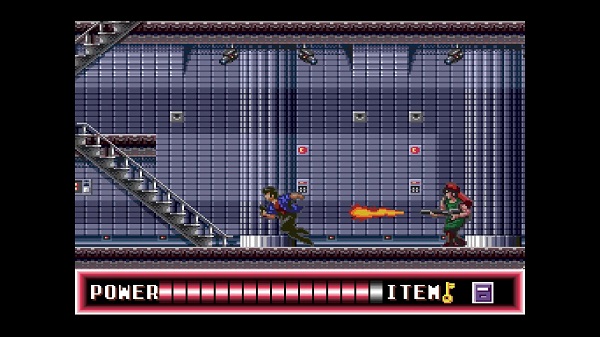
As a celebration of City Hunter’s heritage, the game has genuine heart and will appeal to those seeking retro flavor, but as a modern action title it struggles to justify its structure outside of nostalgia. The narrative cohesion between missions, while serviceable, doesn’t offer the same emotive payoff that more contemporary games might strive for, and boss battles and confrontations rarely capitalize on the world’s intriguing premise.
In the end, City Hunter on PS5 is less a revitalized classic and more a curated relic. It’s a game that shines brightest in its respect for source material and dedication to preserving an early era of licensed action gaming, but it doesn’t transcend its original limitations in ways that would make it compelling for everyone. Fans of the anime or retro design will find plenty to appreciate in its presentation, modes, and dedication to authenticity; players looking for a robust narrative or deep mechanical innovation may find it lacking.
Score: 6.5/10
 Press Play Media