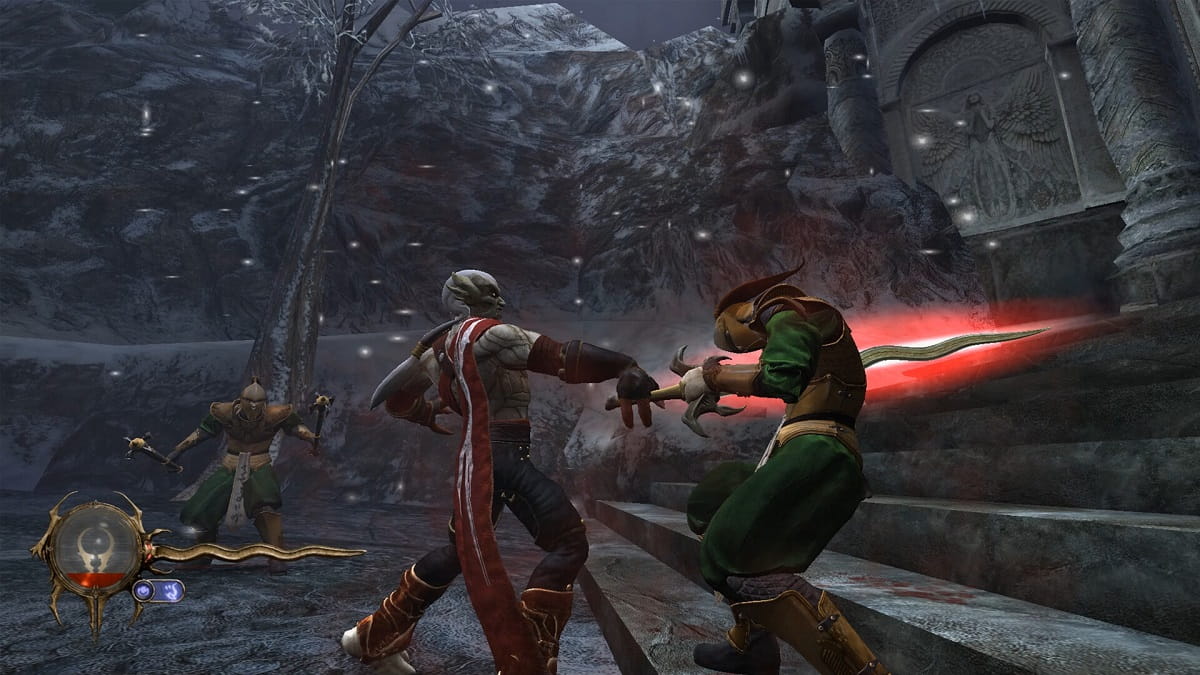
Crystal Dynamics’ Legacy of Kain: Defiance Remastered is, at its core, a love letter to a cult classic that spent nearly a quarter of a century languishing in technical purgatory. Where the original 2003 release was hampered by fixed cameras, dated controls and a pacing more rooted in the early 2000s than in 2026, this remaster aims – and largely succeeds – at reconciling the game’s ambitious narrative and gothic world with a modern console sensibility without betraying what made it distinctive in the first place.
Narratively the game remains one of the strongest reasons to revisit Nosgoth: the entwined destinies of Kain and Raziel are delivered with the same operatic gravitas that defined the Legacy of Kain saga, and for many players this emotional weight still carries the experience. The dual protagonists, each with their own motivations and abilities, help balance the game’s sometimes ponderous pacing with a sense of thematic purpose. Yet Defiance was already divisive in its original form and can still feel uneven in its structure – long stretches of combat and exploration that once felt epic can now seem dated and repetitive.
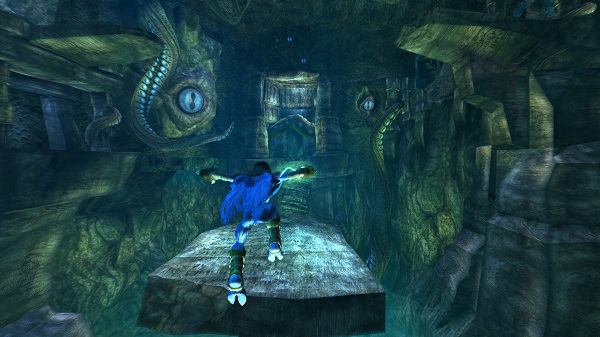
Mechanically, this remaster addresses some of the original’s most glaring weaknesses without rewriting the design. A fully modernizable camera replaces the fixed perspectives that frustrated players in 2003, allowing for freer navigation of Nosgoth’s towering gothic spaces and more comfortable puzzle traversal – the difference is so stark that toggling back to the original angles is now an exercise in patience rather than nostalgia. Combat, while fundamentally unchanged in its simplicity and pacing, feels more precise thanks to refined controls, though it still lacks the depth and responsiveness of contemporary action titles.
Visually the remaster makes Defiance feel less like a time capsule and more like a re-exhumed artifact with fresh lacquer. Textures, lighting and models have been cleaned up and elevated to high-definition presentation, which, when juxtaposed against the original rendering via the toggle, highlights both the artistry of the original game and the necessity of the upgrade. That said, some animations and enemy encounters betray their age, and there are moments where the aesthetic, even with new polish, still struggles against the expectations of 2026’s action-adventure standards.
On the audio side, performances from voice actors – including the returning original cast – anchor the experience emotionally and help sell the dark fantasy atmosphere, even if some aspects of the sound design itself feel anchored to the past. Music, ambience, and dialogue still convey the series’ mythic tone, but repetition and occasional dated mixing remind you that this is still, fundamentally, a product born of an earlier era.
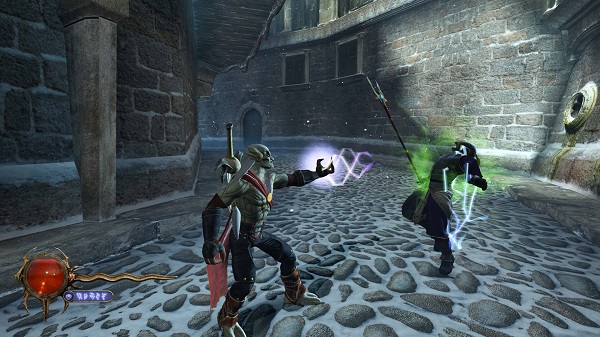
What ultimately defines Defiance Remastered is its identity as a preservation project as much as a resurrection. The array of extras – from alternate skins and a lore database to “lost levels” and archival content – positions this edition not just as a game but as a curated experience for longtime fans. For enthusiasts of the series, these additions deepen appreciation and offer context that was previously inaccessible, though players who come for a purely modern action-adventure might find some of it more curiosity than necessity.
At the end of the day, Legacy of Kain: Defiance Remastered doesn’t erase all of the original’s issues, but it reframes them in a package that feels respectful to both its roots and the players who remember it fondly. Its narrative ambition and atmospheric weight remain compelling, while technical improvements make Nosgoth more navigable and visually striking than ever. If this remaster introduces the saga to a new generation, or simply brings closure to veterans still haunted by unfinished business in Nosgoth, then its work is well-done – even if it occasionally still feels like a relic dressed up in new clothes.
Score: 7.1/10
 Press Play Media