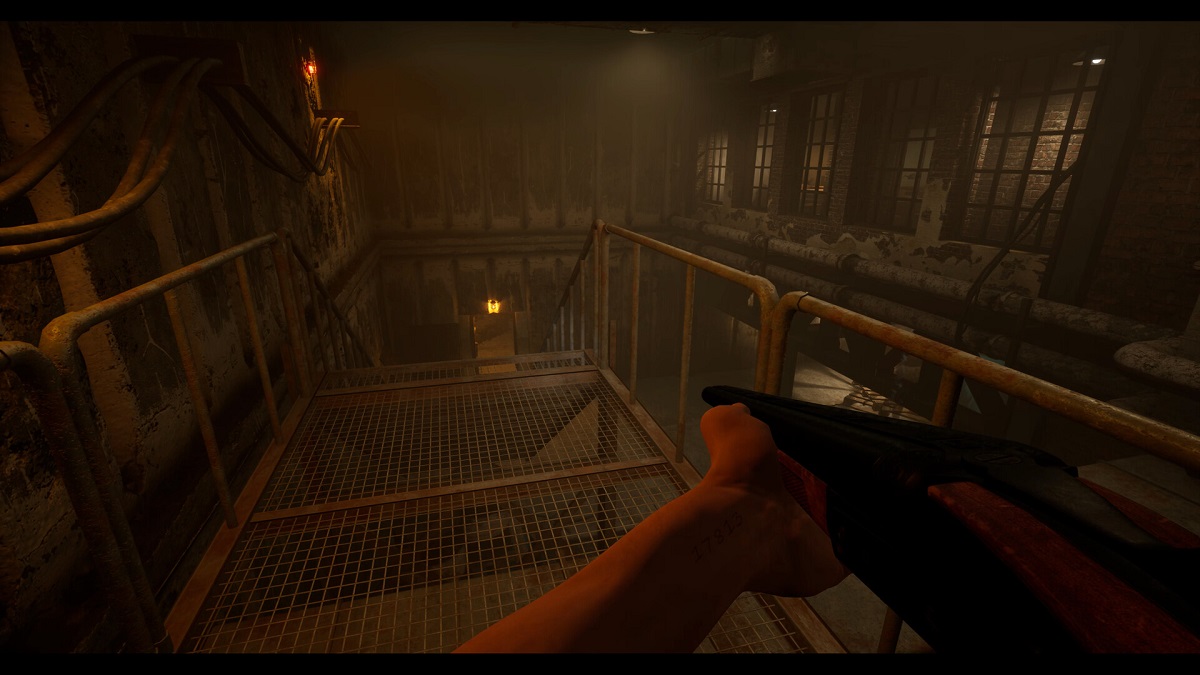
Mortanis Prisoners is a survival horror experience developed by Alexey Bulgakov and Vladimir Zlobin and published by Honor Games, bringing players into a bleak and controversial setting that blends historical horror with supernatural elements. Playing as Justina, a member of the Polish resistance captured during World War II, the story begins with her imprisonment in a Nazi concentration camp before taking an abrupt turn into something far more surreal. After a grim opening involving experimentation and death, the narrative shifts toward a purgatory-like nightmare where the protagonist must navigate twisted remnants of her past and fight her way toward escape. It’s an undeniably provocative premise that initially promises a psychologically heavy and atmospheric survival horror journey, though the game sometimes struggles to fully capitalize on the weight of its setup.
Narratively, Mortanis Prisoners aims to mix historical tragedy with supernatural horror, placing Justina in environments that feel like warped reflections of her suffering. The game leans into the idea of purgatory and spiritual torment, creating a story framework where memories, hallucinations, and monstrous manifestations collide. That concept has potential, and the early moments do a solid job of establishing intrigue as the player awakens in unsettling locations and encounters strange entities hinting at a deeper metaphysical narrative. However, the storytelling can feel somewhat underdeveloped as the game progresses, with the broader themes remaining more of a backdrop than a fully explored arc. Instead of building tension through narrative escalation, the experience often shifts quickly toward combat and progression, leaving some of its most compelling ideas only partially realized.
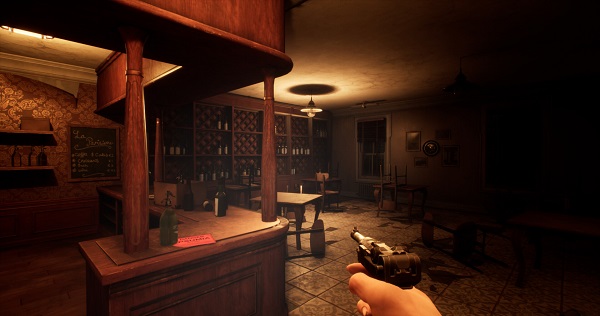
Gameplay combines first-person shooting with light puzzle solving and resource management, drawing from classic survival horror conventions. Exploration plays a central role, with players searching environments for keys, notes, and items that help unlock new paths or advance the story. The inventory system encourages careful resource use, particularly when it comes to ammunition and healing supplies. At the same time, the game frequently leans more toward straightforward shooting encounters than slow-burn survival tension, which can create a slight mismatch between its horror ambitions and the actual moment-to-moment gameplay loop. Combat itself is functional and responsive, but encounters sometimes lack variety and depth, leading to a rhythm that can feel repetitive across the relatively short campaign.
The controls on PlayStation 5 are generally accessible and easy to grasp, making it simple to move through the environments, interact with objects, and engage enemies. Gunplay is straightforward, emphasizing quick aiming and shooting rather than tactical complexity. While this helps keep the experience approachable, it also reinforces the feeling that Mortanis Prisoners behaves more like a small-scale action shooter than a traditional survival horror title. The balance between exploration, puzzles, and combat occasionally tilts too heavily toward the latter, which may leave players hoping for a bit more tension or strategic depth from its survival mechanics.
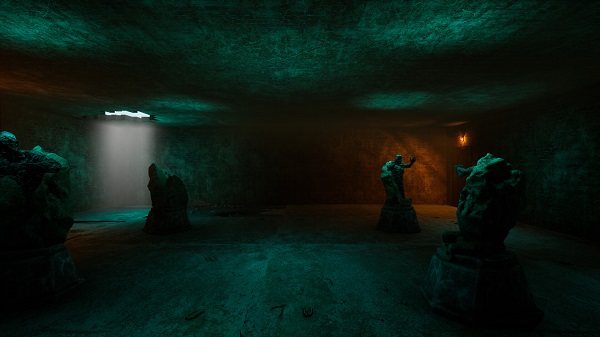
Visually, the game succeeds in establishing a dark and oppressive mood that fits its premise well. Environments such as dim corridors, morgue-like rooms, and distorted purgatorial spaces create a sense of unease that carries through much of the experience. Lighting and environmental design do much of the heavy lifting in terms of atmosphere, helping the game maintain a haunting tone even when gameplay systems remain relatively simple. Character models and textures, however, can sometimes reveal the project’s smaller-scale production values, with certain animations and environmental details lacking the polish seen in larger horror releases.
Audio design reinforces the game’s unsettling tone with ambient effects and occasional musical cues that heighten tension during exploration. Echoing footsteps, distant noises, and eerie environmental sounds help build an atmosphere of dread, particularly during quieter sections when the player is navigating the game’s labyrinthine spaces. The soundscape contributes meaningfully to immersion, although the limited variety in some effects and voice performances means it does not always sustain the same level of tension throughout the entire experience.
Ultimately, Mortanis Prisoners is an intriguing indie horror project that succeeds in establishing a striking premise and an appropriately grim atmosphere, even if its gameplay systems do not always match the ambition of its concept. The blend of historical context and supernatural horror creates a memorable framework, but the execution often leans toward a straightforward shooter rather than a deeply layered survival experience. For players interested in short, atmospheric horror games with a darker narrative edge, there is still something worthwhile here, though those looking for a more fully realized survival horror experience may find the overall package a bit thin and uneven.
Score: 6.3/10
 Press Play Media