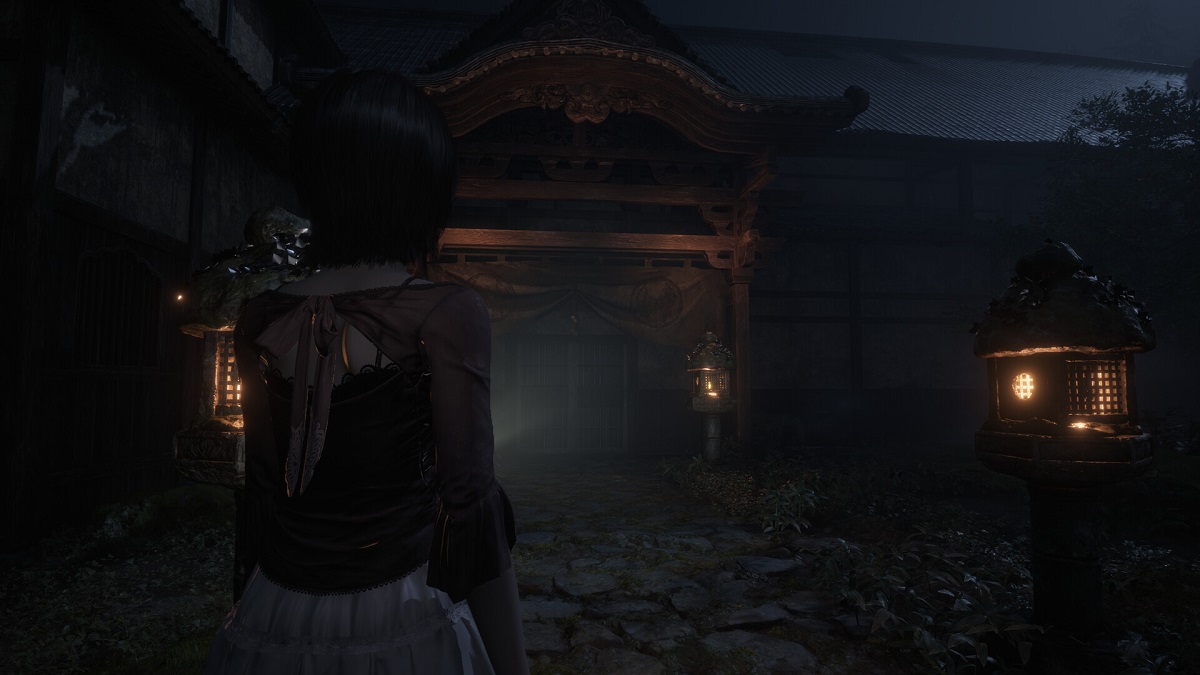
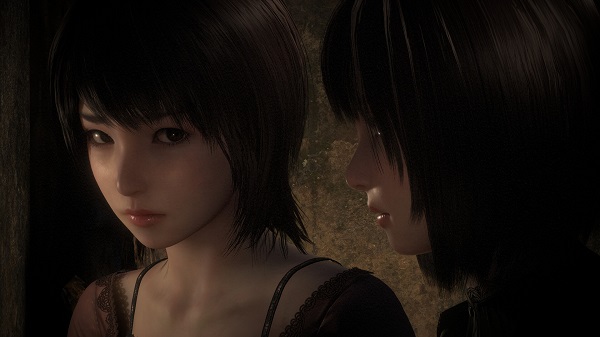
Koei Tecmo’s Fatal Frame II: Crimson Butterfly Remake revisits one of the most revered entries in Japanese horror gaming, rebuilding it for modern hardware while attempting to preserve the suffocating dread that defined the original. Set in the abandoned Minakami Village, the story follows twin sisters Mio and Mayu as they become trapped in a ritualistic nightmare shaped by loss, memory, and lingering spirits. The narrative remains one of the series’ strongest assets, weaving emotional vulnerability into its horror, though its deliberately slow pacing and cryptic storytelling can occasionally distance players who prefer more direct exposition.
The remake leans heavily into atmosphere, and in that regard it largely succeeds. The village feels more tangible than ever, with reworked lighting and environmental detail amplifying its oppressive tone. Shadows stretch unnaturally, interiors feel claustrophobic, and the interplay between light and darkness becomes a constant source of tension. At the same time, the visual overhaul, while effective, doesn’t fully escape its roots, with occasional stiffness in animations and character models betraying the game’s origins.
Central to the experience is the Camera Obscura, a mechanic that continues to define Fatal Frame’s identity. Combat unfolds through a blend of timing, positioning, and risk-reward decision making, as players must frame spirits at the last possible moment for maximum damage. The remake expands on this with additional features like filters and enhanced camera controls, adding a layer of tactical flexibility. These additions enrich encounters, but they can also tip the balance slightly toward repetition, especially as similar ghost encounters begin to recur over the course of the game.
Exploration and puzzle-solving remain tightly interwoven with the horror elements, encouraging players to carefully navigate the village while uncovering fragments of its tragic history. The slower pacing works in the game’s favor when building tension, but it can also lead to stretches that feel overly drawn out, particularly when backtracking through familiar areas. New side content and expanded areas offer more context and longevity, though not all additions feel equally meaningful in terms of narrative impact.
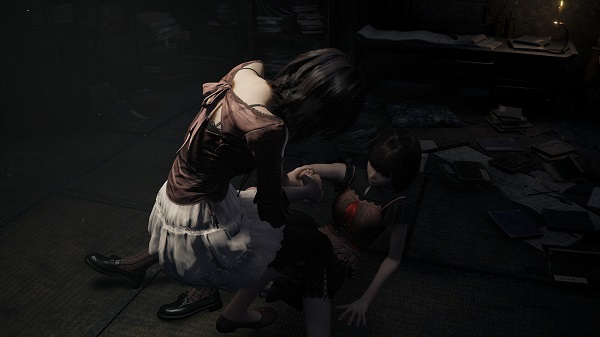
One of the more notable additions is the emphasis on the bond between Mio and Mayu, particularly through mechanics that reinforce their connection. This adds emotional weight to the journey, strengthening the story’s themes, but it can also introduce moments where gameplay flow is interrupted for the sake of narrative beats. While this won’t be an issue for players invested in the story, it may feel restrictive for those more focused on pacing and interactivity.
From an audio perspective, the remake excels. The use of spatial sound design enhances the sense of vulnerability, with distant whispers, footsteps, and sudden audio cues creating constant unease – especially with a surround sound setup. This auditory layer works hand-in-hand with the visuals to sustain tension even in quieter moments. However, while the sound design is effective, it occasionally leans too heavily on predictable cues, slightly diminishing its long-term impact.
On PlayStation 5, the overall experience benefits from smoother performance and modernized controls, making the game more accessible than its predecessor. That said, the control scheme still carries a degree of intentional stiffness, which, while contributing to the horror, can feel at odds with contemporary expectations and other modern remakes of horror games. This tension between modernization and preservation is at the heart of the remake – it succeeds in retaining the identity of the original, but not without inheriting some of its limitations.
Fatal Frame II: Crimson Butterfly Remake ultimately stands as a careful reimagining rather than a radical reinvention. Its strengths lie in its atmosphere, emotional narrative, and unique combat system, all of which remain compelling even years later. At the same time, its pacing issues, occasional repetition, and lingering mechanical rigidity prevent it from fully reaching the heights of modern horror design. For fans of the genre and the series in particular, it remains a haunting and memorable experience – one that proves its core design still has the power to unsettle, even in a more contemporary form.
Score: 7.6/10
 Press Play Media