Indie releases continue to be a space where experimentation and iteration collide, and this latest roundup reflects that. From the wave-based, progression-driven combat of Royal Revolt Survivors to the tactile, contemplative puzzle design of Interlocked: Puzzle Islands and the tightly scoped psychological horror of File Destined, these are projects that each hone in on a specific idea rather than sprawling ambition. What ties them together is a clear focus on core mechanics and atmosphere, whether that’s through cooperative chaos, meditative problem-solving, or slow-building tension. At the same time, they also highlight a familiar challenge within the indie space – strong concepts that don’t always fully sustain their momentum – resulting in a trio of experiences that are engaging in bursts, even if they occasionally struggle to leave a lasting imprint.
Royal Revolt Survivors review (PS5)
Royal Revolt Survivors positions itself firmly within the now-crowded “bullet heaven” subgenre, building on the legacy of its mobile strategy roots while pivoting toward a more action-focused, roguelite structure. The premise is straightforward – defend your realm against encroaching darkness – but the game leans less on narrative ambition and more on creating a loop-driven experience centered around incremental progression and escalating combat encounters. While the setup is serviceable rather than memorable, the inclusion of recognizable characters from the broader Royal Revolt universe helps give the game a bit more identity than many of its peers, even if it never fully capitalizes on that potential.
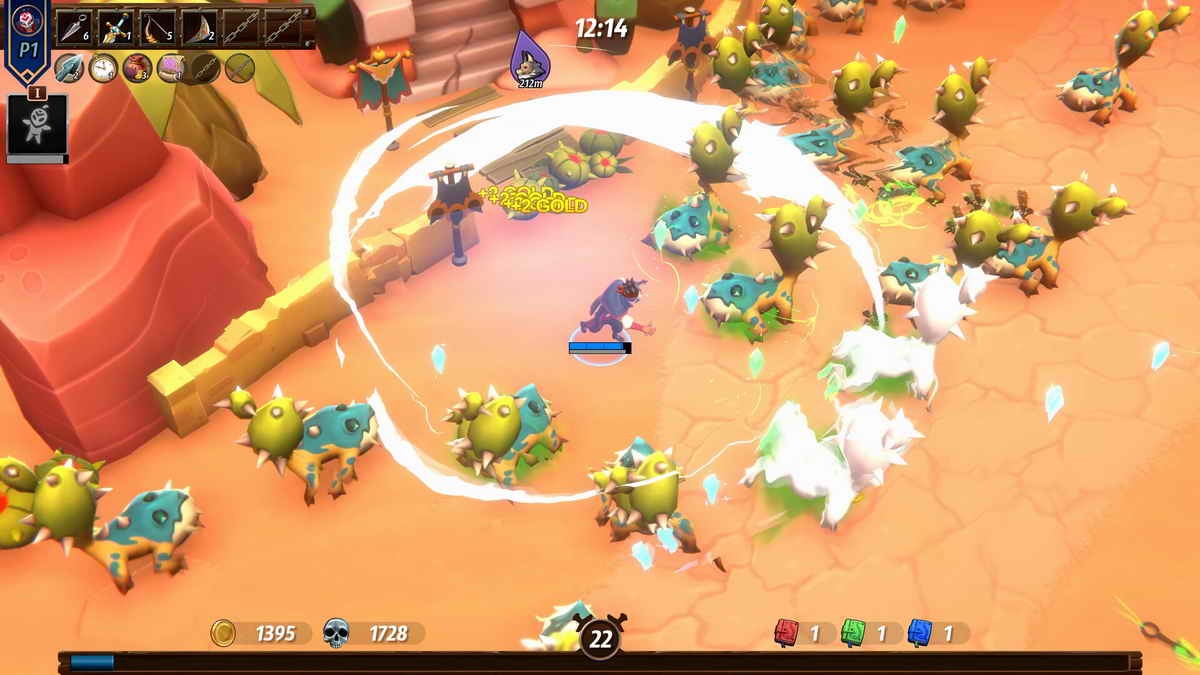
Gameplay is where Royal Revolt Survivors both distinguishes itself and reveals its limitations. The core loop – fending off waves, leveling up, and selecting upgrades – will feel immediately familiar, but the hybrid combat system introduces a welcome layer of nuance. Players can rely on auto-attacks, manual aiming, or a mix of both, which adds a degree of agency often missing in the genre. Combined with character variants, weapon evolutions, and flexible upgrade respec options, there’s a solid foundation for experimentation. However, that depth isn’t always matched by pacing and balance, with runs often starting off sluggish and overly forgiving before spiking sharply in difficulty toward the end, which can make earlier stages feel inconsequential.
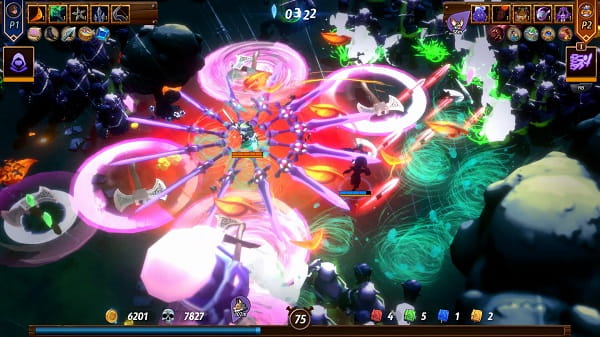
Controls on PS5 are generally smooth and responsive, supporting the more active combat approach without friction, and the game’s accessibility makes it easy to pick up for newcomers. This approachability extends to its co-op mode, which allows up to four players to tackle runs together. Cooperative play stands out as one of the game’s strongest features, transforming what can feel like a repetitive solo loop into a more dynamic and social experience. That said, multiplayer doesn’t fundamentally evolve the mechanics, and some sessions can feel easier rather than more strategically engaging, limiting its long-term appeal.
Visually, the game opts for colorful, stylized 3D environments that are clean and readable even during chaotic encounters, a practical strength in a genre that can easily become visually overwhelming. While the presentation is polished and charming, it lacks the distinctive flair needed to stand out. Audio design does its job without leaving a lasting impression, supporting the action without elevating it. Ultimately, Royal Revolt Survivors is a competent and approachable entry in the genre, offering solid co-op fun and some mechanical twists, but it struggles to maintain momentum over longer play sessions or to truly distinguish itself from stronger competitors.
Interlocked: Puzzle Islands review (Quest)
Interlocked: Puzzle Islands sees developer PuzzleDev revisit its long-running puzzle concept with a VR-focused overhaul, published by Armor Games Studios for Meta Quest. Building on a formula that has already engaged millions of players across earlier versions, this iteration shifts the experience into a fully three-dimensional, interactive space where its intricate burr puzzles can be handled more directly. The framing is intentionally light, introducing a small bird companion and a loose narrative thread that unfolds across a series of tranquil island environments, adding a touch of charm without ever distracting from the core puzzle-solving focus.
At its core, Puzzle Islands is built around carefully dismantling complex wooden structures by sliding, rotating, and removing interlocking pieces in the correct sequence. In VR, this process becomes far more tactile, allowing players to physically manipulate each element in a way that closely mirrors real-world puzzle handling. The controls are generally intuitive, relying on natural gestures that make experimentation feel fluid and rewarding, and the growing complexity across the 30-plus puzzles ensures a steady sense of progression. At the same time, that reliance on trial-and-error can occasionally slow the pacing, particularly in later stages where solutions become more obscure and the game offers limited guidance.

The presentation leans heavily into a calm, almost meditative tone. Soft, colorful environments and a gentle soundtrack create a relaxed atmosphere that encourages players to take their time, reinforcing the idea that this is as much about the journey as it is about solving each puzzle. The addition of challenge sets provides some extra longevity for those looking to push further, though the overall experience remains deliberately low-pressure. The small narrative beats and evolving bird companion add a sense of continuity, even if they remain fairly understated in terms of depth.
That minimalism is both a strength and a limitation. While the focused design ensures that the puzzles themselves remain the clear highlight, the lack of variety outside of that core loop means the experience can feel repetitive over longer sessions. Similarly, while the VR implementation enhances immersion, features like more advanced interaction options could have pushed the tactile aspect even further. Even so, Interlocked: Puzzle Islands succeeds in delivering a thoughtful and well-crafted puzzle experience, translating a classic concept into VR with care and precision while offering a soothing, mentally engaging escape that will particularly appeal to patient and methodical players.
File Destined review (PS5)
File Destined positions itself as a slow-burning psychological horror experience, placing players in the role of an investigator unraveling a high-profile murder case that gradually hints at something far more sinister beneath the surface. Its narrative leans heavily on environmental storytelling and tension rather than exposition, and while the premise is intriguing, it doesn’t always have the time to fully develop its ideas. What is here, however, is effective in bursts – delivering a sense of unease that steadily builds as the line between grounded investigation and supernatural interference begins to blur.
Gameplay is deliberately minimalistic, focusing on careful exploration, object inspection, and light puzzle-solving rather than mechanical depth. Movement is restricted to a slow pace without sprinting, reinforcing the methodical tone but also occasionally making progression feel drawn out. The lighter mechanic is central, adding a layer of resource management and vulnerability that works well in principle, though in practice it rarely evolves beyond a simple on-off tension device. As a result, the experience can feel mechanically thin, with most interactions boiling down to walking, examining, and triggering the next event.
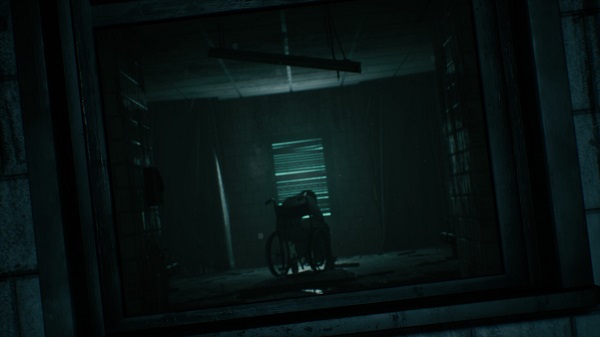
Where File Destined excels is in its presentation. The lighting system is a standout, casting deep shadows and creating a constant sense of dread that complements the game’s confined environments. This is reinforced by strong sound design, with well-timed audio cues and jump scares that land effectively without feeling overly cheap. Visually, the game punches above its weight for an indie project, though occasional rough edges – such as stiff animations or immersion-breaking voice delivery – can momentarily pull players out of the experience.
The biggest drawback is its brevity and limited scope. With a runtime that can be completed in a single sitting, File Destined often feels more like a proof of concept than a fully realized game. Technical shortcomings, including interface limitations and inconsistent support for certain setups, further highlight its rougher edges. Still, for players who prioritize atmosphere, audio design, and tightly controlled horror pacing over mechanical complexity, it offers a focused and memorable experience – albeit one that is best approached with tempered expectations.
 Press Play Media