Indie releases rarely arrive in neat, uniform packages, and this latest batch is a good reminder of just how wide the spectrum can be. From the freeform, nostalgia-driven sandbox of The Coin Game to the stripped-back survival loops of Living Dead House and the high-speed precision of Retro Drive: Revamped, each title leans hard into a specific arcade-inspired identity while approaching it from a very different angle. What ties them together is a shared focus on immediacy – games built around quick engagement and repeatable loops – but the way they sustain that engagement varies significantly. Some rely on atmosphere and authenticity, others on challenge and score-chasing, and not all of them strike that balance equally well, making this a particularly varied lineup in both tone and staying power.
The Coin Game review (PS5)
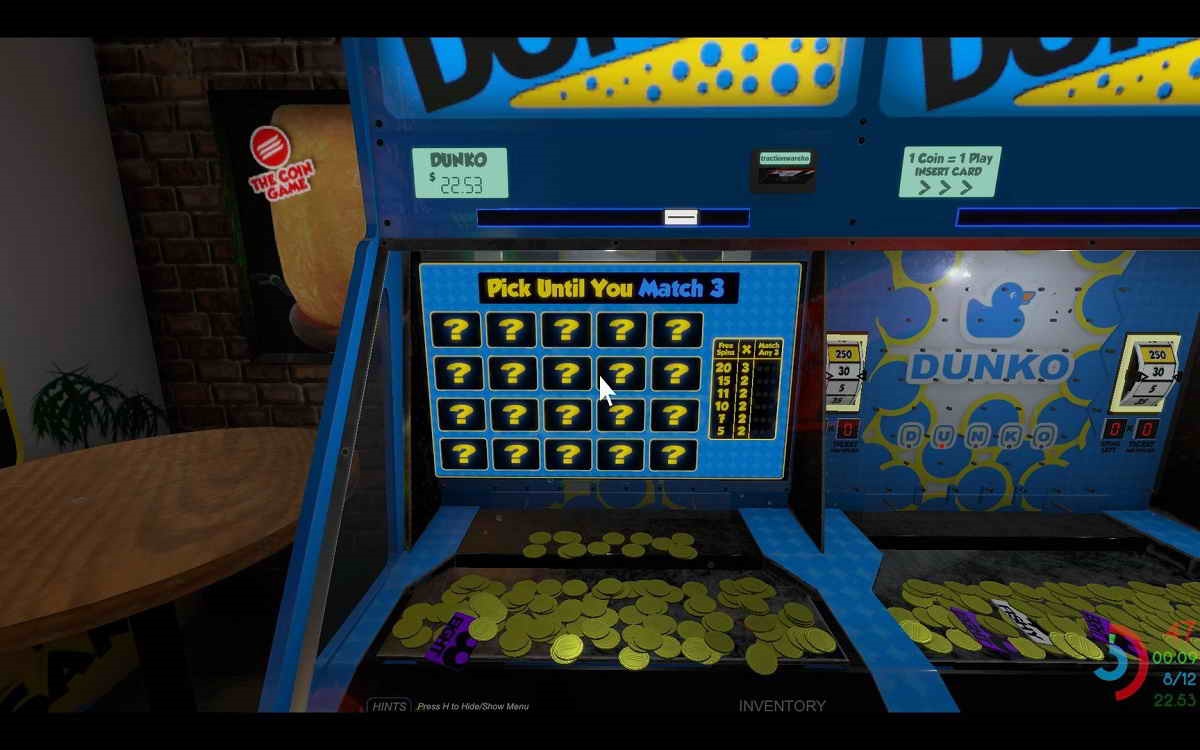
The Coin Game arrives on consoles via Kwalee, bringing devotid’s long-evolving arcade sandbox to PS5 with a premise that leans more into nostalgic escapism than structured storytelling. Set across a lively island filled with arcades, side activities, and oddball NPCs, it’s less about narrative progression and more about carving out your own rhythm within its systems. That open-ended design works in its favor when you’re simply soaking in the atmosphere of ticket machines and seaside attractions, but it also means the experience can feel aimless at times, lacking a strong sense of direction or payoff beyond self-made goals.
Gameplay revolves around recreating the tactile feel of modern arcade machines, and that’s where The Coin Game is at its strongest. There’s a surprising level of authenticity in how machines operate, from timing-based ticket games to physics-driven coin pushers, capturing that familiar loop of spending, winning, and reinvesting. Survivor Mode adds a layer of structure by tying your progress to money management, hunger, and exploration, but it can feel grind-heavy when funds run dry and you’re pushed into side hustles like scavenging or deliveries. By contrast, the more relaxed Birthday Mode strips away those pressures entirely, but also removes much of the tension that makes the gameplay loop engaging in the first place.
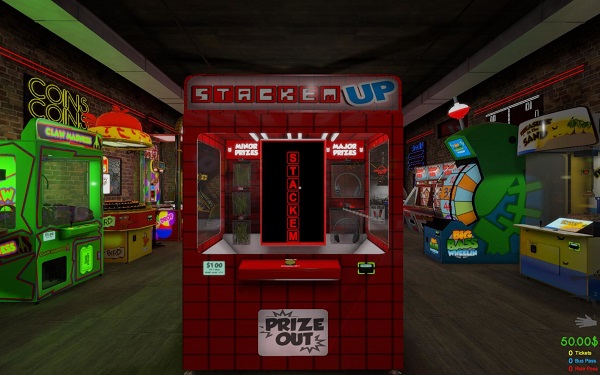
On PS5, controls generally translate well to a controller, though the interface still carries traces of its PC origins. Navigating menus and interacting with machines can feel slightly clunky, particularly when precision is required, and not all activities feel equally well-optimized for console play. That said, once settled into the rhythm, the controls rarely get in the way of enjoying individual games. The broader island traversal – whether by foot or vehicle – adds variety, though it can feel a bit unwieldy and underdeveloped compared to the more focused arcade interactions.
Visually, The Coin Game strikes an unusual balance between realism and stylized oddity. Its environments – especially the arcades themselves – are convincingly detailed, filled with blinking lights and layered audio that evoke the chaotic charm of real-world amusement spaces. At the same time, character models and certain world elements lean into a more awkward, almost surreal aesthetic that can either enhance its quirky identity or break immersion depending on perspective. The sound design does much of the heavy lifting, with a constant hum of machines, music, and ambient noise that sells the illusion of a bustling arcade hub, even if the overall presentation lacks the polish expected from a full console release.
Living Dead House review (Switch)
Living Dead House is a deliberately stripped-down arcade throwback from Deprecated Games, published on consoles by Flynn’s Arcade, and it wastes no time getting to the point. The premise is as barebones as they come – hold out in a zombie-infested house until sunrise – but that simplicity works in its favor, channeling the immediacy of classic coin-op design. There’s little in the way of narrative framing beyond that setup, which means atmosphere has to do the heavy lifting. While it succeeds in creating a pulpy, B-movie horror vibe, it also leaves the experience feeling somewhat thin for players hoping for progression or context beyond survival.
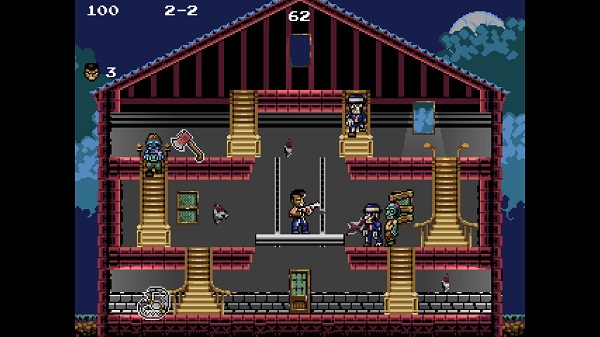
That arcade sensibility extends directly into the gameplay loop, which revolves around surviving timed stages rather than methodically clearing enemies. This creates a steady sense of pressure, forcing constant movement and quick decision-making as zombie waves escalate. The structure is easy to grasp but not always as varied as it could be, with repetition creeping in across its 20 stages despite the addition of unlockables and score-chasing incentives. Co-op play adds a welcome layer of chaos and coordination, often elevating the experience beyond what solo runs can offer, though the limited arsenal and enemy behaviors mean the game rarely evolves in meaningful ways over time.
Controls are generally responsive and well-suited to the game’s pick-up-and-play design, reinforcing its arcade DNA. Movement and combat feel tight enough to support the increasing intensity, though some encounters can feel overwhelming in ways that seem more chaotic than skill-based. That tension between challenge and readability is part of the game’s identity, but it can occasionally tip into frustration when enemy swarms or positioning feel unfair. Still, for short bursts, the immediacy of the controls keeps the action engaging, particularly when chasing leaderboard scores or optimizing runs.
Visually, Living Dead House leans heavily into its retro inspirations with chunky 16-bit pixel art and exaggerated animations that give the undead a surprising amount of personality. The presentation is consistently strong, especially when paired with CRT-style filters that enhance the nostalgic tone. Audio follows suit with a chiptune soundtrack that balances eerie undertones with an energetic rhythm, though its looping nature can become repetitive during extended sessions. Together, the audiovisual package does a lot of the heavy lifting in maintaining the game’s identity, even when the underlying mechanics begin to show their limits. The result is a compact but enjoyable arcade experience – one that thrives in short sessions and co-op play, but struggles to sustain long-term engagement without deeper variety.
Retro Drive: Revamped review (PS5)
Retro Drive: Revamped is a stripped-back arcade racer that trades traditional circuit racing for high-speed survival runs through a neon-soaked cityscape. Narrative ambitions are minimal, with only a light framing device tying together its synthwave-inspired world, and it’s clear early on that storytelling takes a back seat to moment-to-moment gameplay. That works to its advantage in keeping the pacing tight, though it also means there’s little contextual motivation beyond chasing better times and higher scores, leaving the experience feeling somewhat abstract despite its strong aesthetic identity.
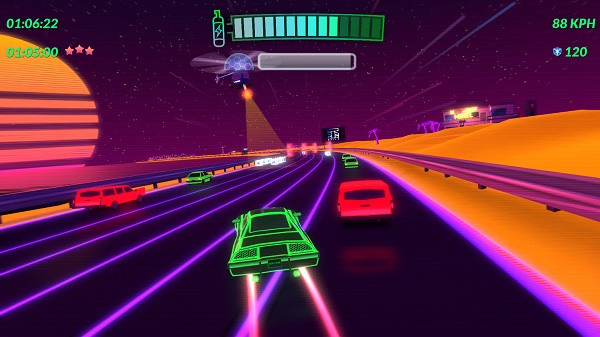
At its core, the game revolves around threading through dense traffic, avoiding hazards, and managing speed while racing against strict time limits. The mechanics are easy to grasp – boosting, dodging, and collecting points – but quickly become demanding as obstacle density increases and reaction windows shrink. A points-based system feeds directly into progression, unlocking faster cars and enabling defensive tools like shields, which adds a layer of risk-reward decision-making mid-run. However, the difficulty curve is notably steep, with later stages requiring near-perfect execution and memorisation of track layouts, which can feel punishing rather than encouraging for less dedicated players.
Controls are responsive and well-suited to the game’s high-speed demands, giving players the precision needed to weave through hazards at pace. Still, the margin for error is so small that even minor misjudgments can abruptly end a run, which may lead to frustration during longer sessions. Compounding this are occasional design quirks, such as repetitive hazard warnings that persist well beyond their usefulness and some ambiguity around how certain defensive mechanics behave under pressure. These elements don’t break the experience, but they do interrupt the otherwise clean arcade flow the game aims for.
Where Retro Drive: Revamped truly excels is in its audiovisual presentation. The neon-drenched visuals and bold colour palette capture the essence of retro-futuristic design, while the synthwave soundtrack provides a driving pulse that complements the relentless pace of the gameplay. This cohesion between sound and visuals elevates even its most punishing moments, helping to sustain engagement despite repeated failures. Ultimately, this is a game that thrives on mastery and repetition, rewarding persistence but demanding patience – an appealing proposition for players who enjoy high-difficulty arcade challenges, though one that may prove too unforgiving for others.
 Press Play Media