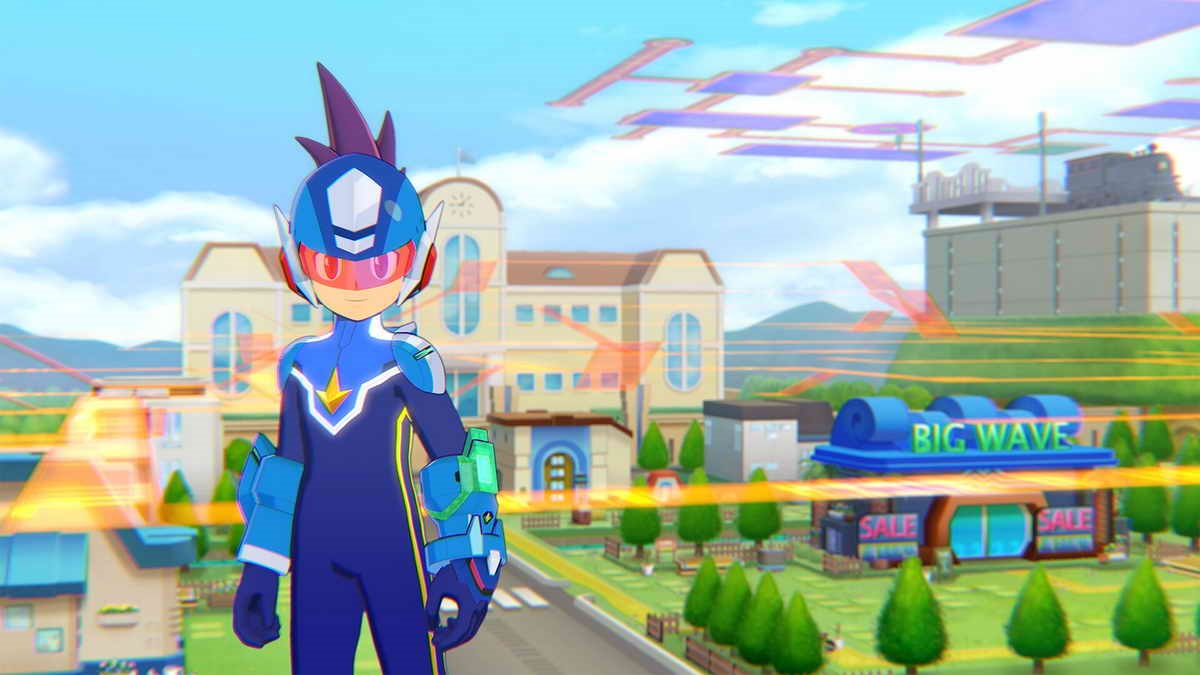
Mega Man Star Force Legacy Collection sees CAPCOM revisit one of the more experimental branches of the Mega Man franchise, bundling together seven Nintendo DS-era RPG hybrids that leaned heavily into narrative and transformation mechanics. Originally conceived as a successor to the Battle Network series, Star Force shifts its perspective both literally and figuratively, placing players in a 3D battlefield grid while telling a more introspective story centered around loss, isolation, and connection. As a preservation effort, the collection is comprehensive and respectful, but it also highlights the uneven legacy of a subseries that never quite reached the same heights as its predecessor.
At the heart of the experience is Geo Stelar, a protagonist whose emotional arc – coping with the disappearance of his father – grounds the otherwise sci-fi-heavy premise. The narrative’s focus on loneliness and gradual personal growth is one of the trilogy’s strengths, lending the games a more character-driven tone than typical Mega Man entries. That said, the storytelling can feel inconsistent across versions and sequels, with pacing issues and repeated structural beats diminishing the overall impact, especially when playing multiple entries back-to-back. The branching versions, while adding replay value, also introduce redundancy that feels more dated than compelling today.
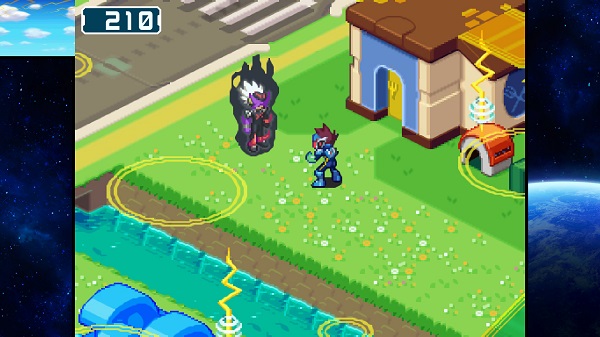
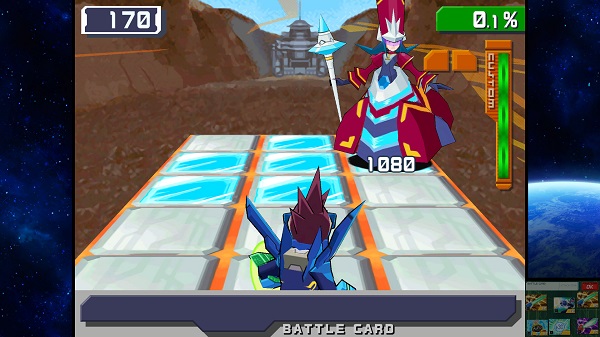
Gameplay remains the defining feature, blending action and card-based mechanics into a hybrid system that still feels distinct. Battles unfold on a simplified grid compared to Battle Network, emphasizing timing, positioning, and deck-building strategy. This streamlined approach makes combat more accessible, but it also reduces some of the tactical depth that was appreciated in the earlier games. Over time, encounters can become repetitive, particularly given the frequency of random battles, though the collection’s customization options – such as encounter rate adjustments and speed boosts – help mitigate these issues and modernize the experience.
Controls translate well to modern platforms, with responsive inputs that preserve the original feel while benefiting from quality-of-life enhancements. The added features, including autosaving and adjustable difficulty parameters, make the games far more approachable than their original DS counterparts. However, not all legacy elements have aged gracefully, and some design quirks – like menu navigation and pacing between exploration and combat – still reflect their handheld origins in ways that can feel clunky on a larger screen.
Visually, the collection offers a clean presentation, with optional filters smoothing out the original pixel art and 3D models. While these enhancements help unify the experience across modern displays, they don’t fully mask the limitations of the original assets, which can appear quite simplistic by today’s standards. On the audio side, the inclusion of both original and rearranged soundtracks is a welcome addition, giving players flexibility in how they experience the games’ energetic battle themes and atmospheric tracks. The music remains one of the standout elements, even if repetition becomes noticeable over extended play sessions.
Beyond the core games, the collection includes a substantial gallery and online functionality, though the latter comes with limitations such as the absence of cross-platform play. The gallery itself is a highlight, offering a deep dive into the series’ artwork and design history, appealing particularly to longtime fans. Still, the extra content doesn’t fully compensate for missing features from the original releases, such as certain event-based bonuses, leaving the package feeling slightly incomplete despite its breadth.
Ultimately, Mega Man Star Force Legacy Collection is both a celebration and a reminder – a celebration of a unique and ambitious subseries, and a reminder of its uneven execution. For newcomers, it offers an accessible entry point into a lesser-known corner of the Mega Man universe, bolstered by modern conveniences that smooth over many of its rough edges. For returning fans, it’s a nostalgic revisit that preserves the essence of the originals while exposing their flaws more clearly than ever. It may not redefine the legacy of Star Force, but it ensures that its place within it remains firmly intact.
Score: 7.8/10
 Press Play Media