When we visit trade shows, one of the best things for us are the opportunities to meet with some of the developers who have helped shape our industry. It’s incredibly rare to get two legends in a room together, but that’s what happened this year at Gamescom, where we talked to Takaya Imamura and David Wise. Imamura-san is current working on OMEGA 6 The Triangle Stars, whereas David Wise did the music on the recently released Gimmick! 2. To video game fans, they’re of course known for their legendary work on series like Donkey Kong Country, Star Fox and F-Zero. Here’s what we learned about their thoughts on game development, creativity, and how their experience is shaping the work they do today.
As veterans in the industry, what are your thoughts on how the video game landscape has changed, especially in terms of the creative side of things?
David: It still is challenging to create, but we’ve got a wider palette of things that we can use. For me it started off on the 8-bit systems, where it was a challenge trying to not make things sound like a doorbell, because you had three notes and that was it. Then in the 16-bit era you obviously have a bit more scope, but a very limited amount of memory to work with, whereas now you can use the whole orchestra if you wanted to. The challenge still is to make it sound interesting and relevant, and hopefully fun to accompany a game. So it’s the same, but different.
Imamura-san: This is more for games in general, but the main thing I can say is that games have become far more popular and commonplace than they were back then. It’s been a while, so maybe people won’t remember, but when Iwata-san joined Nintendo one of his big scale projects was to build the gameplay populace, and he did that through the Wii and the DS, making games a lot more popular as a pastime. And thanks to smartphones being a commonplace thing, I think games in general have just become a lot more popular and commonplace since when we joined the industry.
How do the tools and processes available today compare to those you used earlier in your careers?
David: When I first started I had an assembler, and I’d type things in hex code, typing subroutines and making it as efficient as possible. That took a long time, and everything had to add up – if you had even one number out of place, you’d be out of sync, so there was a lot of ball juggling and making sure it all added up. You’d put a few notes in, assemble it, and wait about a minute before you’re able to hear it back. These days, at the touch of a button I can have these amazing sounds instantly. So, for a developer, I can concentrate more on actually creating music than getting the music to work.
People actually still use those old tools, but after I’d done all the 8-bit systems and certainly the 16-bit systems I can’t go back and use anything like that, because it’s just too much, even though I can still reflect on it.
Imamura-san: I think it has become so much easier for anybody to create graphics. At Nintendo we had hardware-specific tools for graphics and we were drawing with those. But then you had 3D, as well as other tools we used, and creating 3D animation models back then was really, really tough. Now it’s become a lot easier, and almost anybody can just jump in and start making stuff, so I think that’s the main change from when I started, compared to now.
David: The bit to add to the fact that anybody can make stuff is that that means there’s a real challenge for people to stand out above anybody else, so it’s almost harder and easier at the same time now – though what stands out doesn’t have to come from games either. In my earlier days I actually didn’t even listen to any video game music, and it was bands like The Police that stood out to me as trailblazing artists.
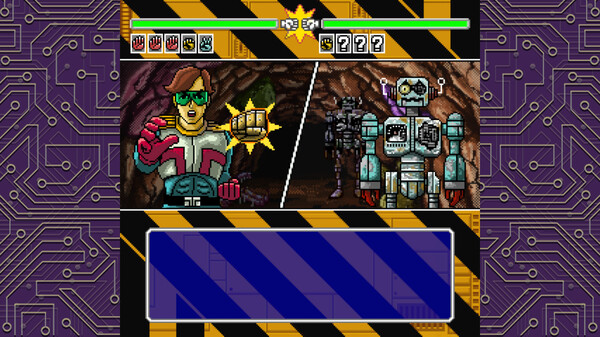
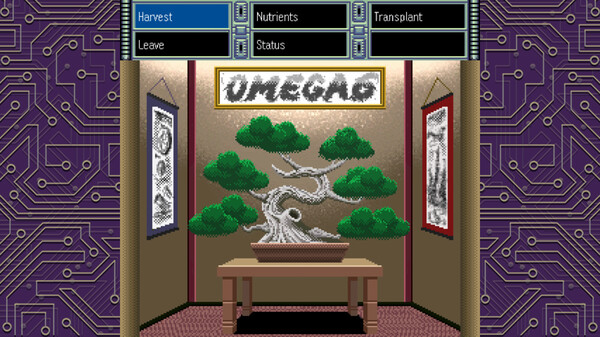
Retro 16-bit graphics play a significant role in OMEGA 6 The Triangle Stars. What inspired you to return to this art style?
Imamura-san: I think that whether it’s a 2D pixel art game or a full 3D game doesn’t really matter to a younger player now, because they don’t have any preconceptions about what a game *should* be – everything’s new to them. If it’s a game and it’s fun, they’ll play it, so that’s why I’ve come back to my roots.
Your latest projects, Gimmick! 2 and OMEGA 6 The Triangle Stars, both draw from retro influences while introducing new elements. How do you balance nostalgia with innovation in your work?
David: For me, I use some of the original themes, blending them into the music, and sometimes I’m using 8-bit sounds within a modern way, using them as flavors. It’s a bit as if you’re making a dish of food, and sometimes it’s nice to add different flavors just to enhance the dish. That’s how I’m doing it, really concentrating on the core of the music rather than trying to get back to the 8-bit style – I just want influences of it.
Imamura-san: The easiest way to sum it up is that I’ve made sure that the visuals may look close to what the 16-bit era would have looked like, but for the gameplay itself I’m thinking of what a modern player is looking for in terms of mechanics, playability, usability and quality of life aspects – that’s where the balance comes in for me.

What’s a good example of a modern gameplay mechanic in this context?
Imamura-san: One example would be that now it’s really matter of fact that you can save anywhere you want, whereas in the past you’d have one save slot or two save slots and you could only save in certain places in the game. Another one would be more an under the bonnet thing, but back in the day the amount of memory you could use for the game was really limited. Now there’s pretty much no real limit, depending on the hardware you’re working with, and you can put in as much or as little as you want, which impacts what you can do.
The original Gimmick! was partly known for its memorable music. How did you approach composing for Gimmick! 2 to maintain a similar spirit while appealing to a modern audience?
David: I’ve discreetly put the themes into my music, rather than being very overt and making it obvious that I’ve woven them into the stuff I’ve done myself. I just made it subtle, but wanted to keep that kind of connection there. The soundtrack for the first game was excellent , and it had the extra sound chip on it for extra voices and sounds I couldn’t possibly use, so I’ve kind of used modern versions of it in there as well.
You’ve created and shaped some of Nintendo’s most beloved franchises. How did your experience with games like F-Zero and Star Fox influence your vision for OMEGA 6 The Triangle Stars?
Imamura-san: Probably ease of play, because that’s one of the core tenets of a Nintendo game, where it’s gotta be something that anybody can just jump into and play, enjoy and grasp the mechanics of. I think that’s what comes out most in OMEGA 6.
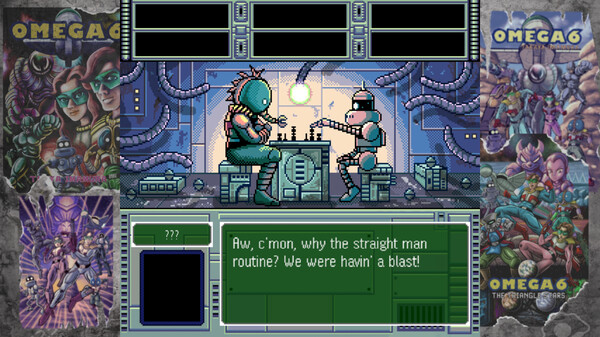
As a manga artist and video game designer, how do you merge storytelling and gameplay in OMEGA 6 The Triangle Stars to create a cohesive and engaging experience?
Imamura-san: I’m really conscious of the medium I’m working in, so when it’s manga or comics, the visuals might be the same, but the story and the scenario might be a little bit more serious. At the same time, when we look at game development I’m thinking more about what a game should be, and we add comic-like elements last to add a bit of entertainment. So, depending on the medium, it’s really picking and choosing.
Your music often evokes a sense of emotion, thus also adding to the storytelling in a way. What specific themes or feelings are you aiming to capture with the soundtrack of Gimmick! 2?
David: It certainly does, and we’re using some Japanese instruments and some Swedish instruments in this one. They’re being used to evoke the feeling of the game, and one example is an early sequence on a boat. There, I decided to use very Swedish instruments like the nyckelharpa and the flute, which just sets up a Swedish vibe of being on a boat and floating along nicely. I’ve enhanced that with some Japanese instruments like the koto and the shakuhachi, just to bring it all together.
If you could collaborate on a project together, combining your talents in music and art direction, what kind of game would you create?
Imamura-san: Maybe an action game with a gorilla or something? *everybody laughs* But we’re about the same age, and are probably on the same page in terms of what we like, with similar cultural background in a way, as we lived through our industry with roughly the same timing. I think that whatever game I made, if David was the composer, he’d come up with some great music for it.
David: I would love to work on a game with Imamura-san if the opportunity ever presented itself, and I’m sure we could create something that is epic. Imamura-san has created timeless graphics, that everybody’s going to recognize and see forever now. It’s part of video gaming culture and history, isn’t it?
Lastly, what advice would you give to aspiring game developers and composers who look up to your work and want to make their mark in today’s industry?
David: Find what you’re really excited or passionate about. Maybe cliche, but whatever it is, just go straight for that and focus on what excites you. Forget everything else, have a long vision, and go for it. If the retro style like in OMEGA 6 excites you, then that’s the way to go. But don’t do everything, focus on one area – it’s too big of a world to do everything these days, so focus on the area you want to excel at.
How solo indie developers fit into that? I think that with indie games they often do hone in on just one particular area, because they’re trying to find something innovative, something different, rather than be the big game to everybody. This is what excites me about indie development, and I have a few projects coming up where they’ve been like that – they’re very innovative, and I’m very excited to be working on those.
Imamura-san: I think it’s about, and this is something I frequently say, finding something unique in what you’re making. And then about bringing that uniqueness to the audience. I think that while you’re working towards that creative vision, the important thing is to stop and think. Take a step back and look at it objectively, and think to yourself “is this really unique?” and “what is the unique point of view that I’m trying to get across?”. I think that’s the most important thing.
If that could be anything? Yeah, for example it could look like an average action game at face value, but when someone plays it, that’s where the unique point comes across, and you might think “whoa, this is not what I thought it was at all”. So yeah, it could be the visuals, it could be the sound, it could be the mechanics. And that uniqueness is where Nintendo really excels, at finding and building that, and also getting what is unique across to the audience – so that’s the advice I would give.
 Press Play Media
One thought on “Developer interview: David Wise & Takaya Imamura”