Today’s roundup of recently ported games looks at three markedly different interpretations of arcade-inspired design, each rooted in nostalgia yet shaped by modern expectations. From the uncompromising platforming legacy of Montezuma’s Revenge – The 40th Anniversary Edition, through the exuberant bullet-hell spectacle of Trouble☆Witches FINAL! Episode 01: Daughters of Amalgam, to the stripped-back racing thrills of Speed Factor, these releases highlight how classic genres continue to evolve – or resist evolution – on contemporary hardware.
Montezuma’s Revenge – The 40th Anniversary Edition review (PS5)
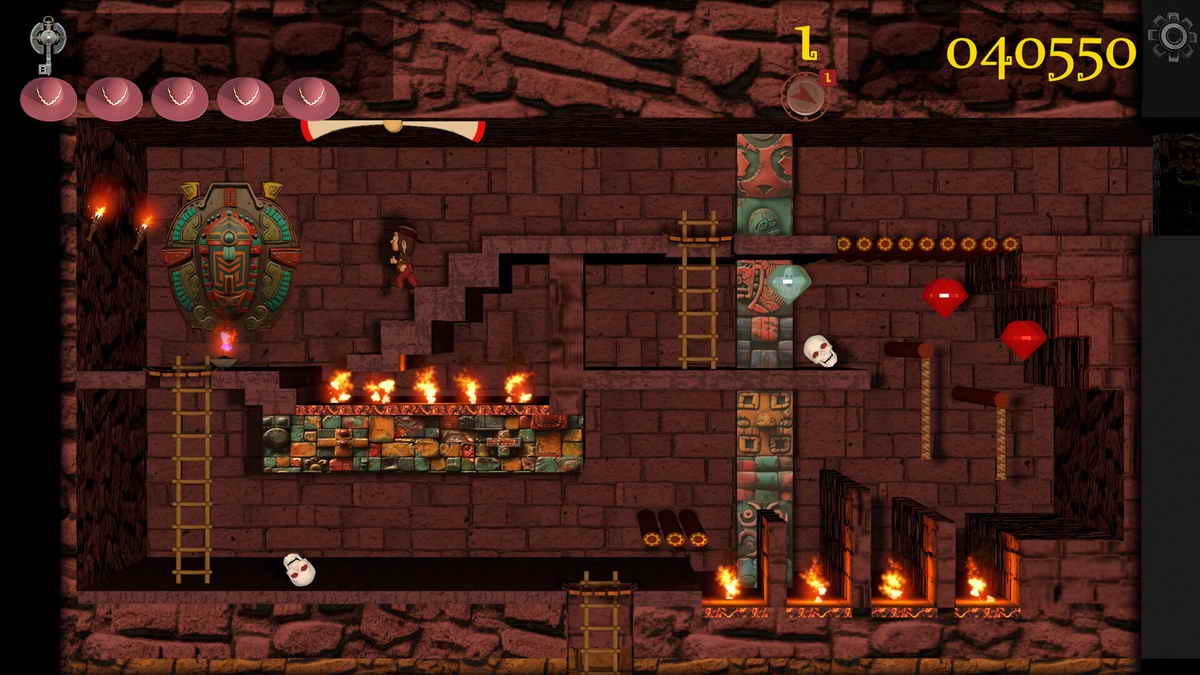
For its 40th anniversary, Montezuma’s Revenge – The 40th Anniversary Edition aims to bridge a formative era of platforming history with a modern audience, and on PS5 this latest version delivers a faithful and often nostalgic trial through Aztec ruins. The narrative premise remains simple – you guide treasure hunter Pedro or his sister Rosita through labyrinthine chambers filled with perilous traps and roaming fiends, hunting keys and riches while evading instant death at every turn. This expanded package completes Robert Jaeger’s original vision with 100 rooms of exploration and danger, preserving the sense of discovery that made the classic memorable.
The core gameplay retains the punishing platform logic of the original, with each chamber demanding precision and careful timing to avoid an instant demise. There’s satisfaction in mastering a tricky sequence, and the inclusion of difficulty settings and a continue feature helps tame the relentless learning curve for more casual players. Yet the very elements that make each tiny triumph feel earned – unforgiving fall damage, rigid movement, and trial-and-error progression – will be off-putting for players accustomed to contemporary design sensibilities. The lack of meaningful quality-of-life enhancements beyond modest comforts means much of the modern polish is superficial when the underlying mechanics still feel stubbornly old-school.
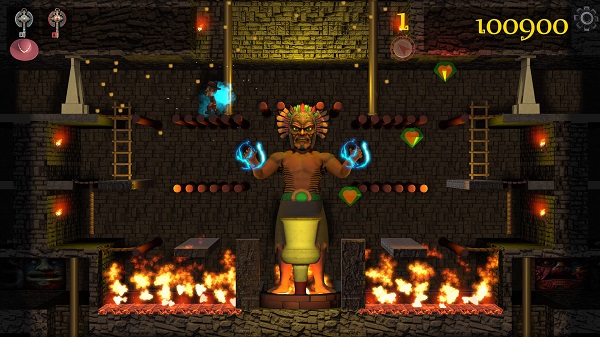
Visually, the transition to 2.5D gives this edition a vibrant polish that helps the ancient tomb setting feel more atmospheric than its 8-bit predecessor, with Aztec-themed colors and detailed backdrops lending personality to each room. This graphical uplift is a high point of the remake, elevating the game’s look while retaining its spatial clarity on high-definition displays, even though discerning hazards amid decorative elements can be tricky. On the audio side, the soundtrack and ambient effects aim to reinforce tension, but repetitive music loops and frequent voice taunts become grating over extended play, prompting many to mute them quickly.
Ultimately, Montezuma’s Revenge – The 40th Anniversary Edition on PS5 plays like a history lesson in platform design: rich with retro DNA and rewarding for those who revel in mastering unforgiving challenges, but less compelling for players seeking a fluid, modern action experience. Its faithfulness to the original is both its strength and its Achilles’ heel – preserving the grit and glory of a 1980s classic, yet offering few concessions that could have made it more accessible without sacrificing spirit. For aficionados of the original and those curious about the genre’s evolution, this edition is a compelling, if rugged, tribute. For everyone else, the nostalgia may not fully overcome its roots.
Trouble☆Witches FINAL! Episode 01 Daughters of Amalgam review (PS5)
Trouble☆Witches FINAL! Episode 01: Daughters of Amalgam arrives on PS5 as a vibrant and whimsical reimagining of the cult classic arcade bullet-hell, marrying manic shoot-’em-up mechanics with anime-infused aesthetic flair. Studio SiestA’s original design gains a fresh lease on life under ININ Games’ publishing, with an updated visual palette, refined controls, and a wide array of content that makes the most of the genre’s charm. Rather than lean heavily on its narrative, the game uses its story as a light frame that introduces a dozen distinct witches and their magical journeys, offering bite-sized vignettes that embellish but never overshadow the core gameplay experience.
At the heart of Trouble Witches is its deceptively simple yet strategic combat loop. Players weave past dense patterns of enemy fire while threading shots through tight corridors of projectiles; this is classic bullet-hell in its purest form, but amplified by the series’ signature “Magic Circle” mechanic. Activating this ability slows nearby enemy fire and, when used ingeniously, converts defeated foes’ bullets into useful currency – a risk-reward system that injects exhilarating decision-making into every skirmish. Across its six stages, this mechanic, paired with purchasable magical cards and unlockable abilities, gives each run an addictive rhythm that rewards both mastery and experimentation.

The diversity of playable witches and modes further distinguishes the experience. Each character brings unique stats and playstyles to the table, encouraging players to revisit the adventure with different tactics and approaches. Alongside the standard story and arcade modes, there are score attack challenges, an endless mode for endurance runs, and bonus variations that elevate replay value well beyond the main campaign. Still, a few of the extra modes feel like modest permutations rather than wholly fresh directions, and for players who crave narrative depth, the dialogue sequences can slow the otherwise tight pacing of the action.
Visually and sonically, the game makes a strong impression. The colorful sprite work and flamboyant spell effects make every encounter feel alive, and while the sheer volume of on-screen activity occasionally verges on overwhelming for newcomers, the visual language remains clear even when the chaos peaks. The soundtrack complements this with energetic themes that underscore the arcade spirit, though the audio presentation itself can feel serviceable rather than standout when compared with the game’s high-octane visuals. Controls on PS5 are responsive and intuitive, striking a solid balance for both newcomers and seasoned shoot-’em-up veterans, though mastering the game still requires patience and practice.
In sum, Trouble☆Witches FINAL! Episode 01: Daughters of Amalgam on PS5 is an engaging celebration of bullet-hell play that pairs bold, kawaii aesthetic sensibilities with tight, rewarding mechanics. Its strengths lie in its replayability, character variety, and inventive systems like the Magic Circle, while its weaknesses show in uneven content pacing and moments where the novelty of extra modes undercuts their depth. For fans of arcade shooters and anyone seeking a lively, high-energy experience with a distinctly magical twist, this is a refreshing and spirited entry worthy of attention.
Speed Factor review (PS5)
Speed Factor’s PS5 debut is a compact homage to retro arcade racers, blending 2D pixel visuals with a kinetic sense of motion that evokes 80s and 90s driving games while grounding itself in modern convenience and customisation. From the outset, the game’s straightforward premise – race across 50 tracks in five distinct areas, earn currency, and tune up classic cars – feels both familiar and deliberately unfussy, targeting players who want immediate racing thrills without complex systems. The absence of a narrative arc is by design, and while that limits emotional engagement, it reinforces a pure arcade focus that many fans of old-school racers will appreciate.
In practice, the gameplay loop delivers mixed results. The racing itself is accessible and quick to grasp, with adjustable difficulty and traction assist options allowing newcomers to ease in and seasoned players to crank up the challenge. Earning money through wins and collecting on-track pickups gives a modest sense of progression as you unlock upgrades and vehicles, though these additions never dramatically alter handling or introduce new tactical layers. A few touches – such as an overworld interface where you guide an avatar to choose races – add character but feel ancillary to the core racing experience rather than transformative.

The controls are simple and serviceable, but omissions become apparent over time. Without features like a radar to gauge your position relative to rivals or meaningful power-ups, the races tend toward repetition after the initial excitement fades. Some mechanics, like fuel pickups, feel underutilised because they never present real urgency, and the variety in track backgrounds and conditions does little to offset the fundamental sameness of each lap. Yet there remains a comfortable balance here – races are rarely frustrating, and the accessibility settings help keep the experience enjoyable rather than punishing.
On the audiovisual front, Speed Factor punches above its weight. The pixel art conveys motion and speed effectively, and while the overall aesthetic is deliberately retro, there’s a satisfying clarity and charm to how sprites shift across the screen. The punk-leaning soundtrack injects energy into each race and keeps the momentum feeling lively, even if the audio loops occasionally grow familiar. In conclusion, Speed Factor on PS5 is a tight, nostalgia-tinged racer that delivers good value for its modest price, though its limited depth may leave more demanding players craving additional layers of challenge and innovation.
 Press Play Media