This latest roundup brings together a strikingly varied cross-section of recent releases, spanning genres, platforms, and design philosophies, yet united by a shared tension between legacy and evolution. From the refined strategic sprawl of a long-running RTS finding new definition, to the archival resurrection of a pinball relic, alongside VR expansions and minimalist downhill journeys released for new hardware, each of these titles grapples with how much to preserve and how much to adapt. What emerges is a collection that highlights both the enduring appeal of well-established ideas and the friction that arises when they are reframed for new audiences, offering a snapshot of how modern releases continue to negotiate nostalgia, innovation, and expectation.
Northgard Definitive Edition review (PC)
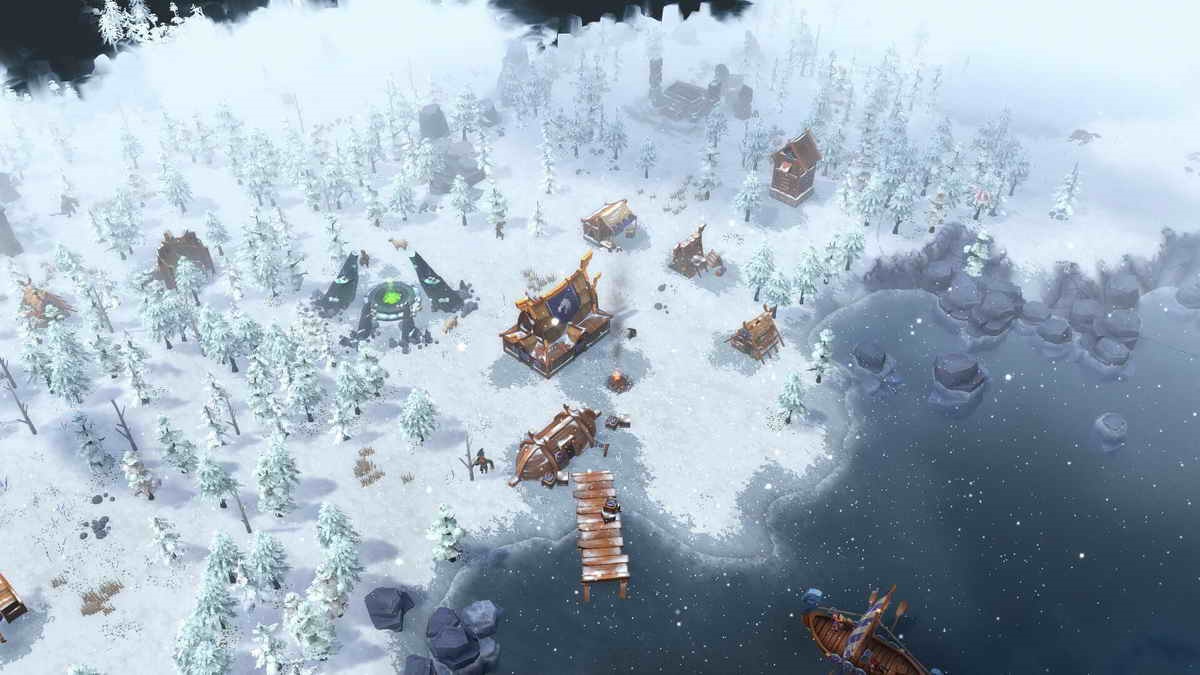
Shiro Games’ Northgard has always been a distinct take on real-time strategy, and the new Definitive Edition solidifies that identity by integrating years of improvements into the base package. The core premise – leading a Viking clan to build, survive and conquer on a hostile new continent – remains compelling, with each clan’s unique mechanics offering meaningful strategic variety that rewards both methodical planning and adaptation. The narrative underpinning the campaign isn’t the driving force of the experience, but it provides enough thematic cohesion to thread multiple gameplay archetypes together without ever feeling gratuitous.
Gameplay mechanics in Northgard are approachable yet layered. Resource management, territorial expansion, and seasonal challenges demand a careful balance that can feel intuitive for veterans and a bit daunting for newcomers. This gradual ramp in complexity is a strength, though it also contributes to pacing that can feel slow in early phases and occasionally uneven in flow – especially when winter’s demands stretch your economy thin or when micromanagement becomes a necessary evil rather than a joy. Controls and interface on PC generally serve this style well, though the absence of tactical pause or speed controls means strategic moments can feel less deliberate than they should.

Visually, Northgard leans into a stylized aesthetic that suits its mythic Norse theme. The art direction accentuates clarity and atmosphere over raw graphical fidelity, which makes long campaigns easier on the eyes even if individual model details aren’t breathtaking. The sound design and score echo the same design philosophy – thematic and mood-driven, but occasionally repetitive over extended play sessions. These elements combine to create a presentation that feels cohesive, even if it rarely surprises. Multiplayer and late-game modes demonstrate the real breadth of value here, and the Definitive Edition’s inclusion of some previously premium content under one roof strengthens the package for both new and returning players – though not all DLC is included here.
Not all aspects of Northgard have aged as well as the core gameplay, as some balance choices and AI behaviors remain uneven. Nonetheless, what might have once felt like a niche RTS with a unique aesthetic now stands as a mature, robust strategy title. The Definitive Edition feels like a fitting capstone, offering depth without unnecessary complication and rewarding thoughtful play over frantic action.
Dino Land review (PS5)
Dino Land’s premise is rooted in retro creativity: a prehistoric hero rolls himself into a pinball to battle dinosaurs and rescue his companion across land, sea and sky, a structure that once felt novel in 1991 but lands unevenly in 2025. The narrative framework is lean, bordering on obscure, and while its three distinct tables hint at elemental variety, the lack of clear objectives or guidance often leaves players guessing at their next goal. This can undercut what should feel like an engaging arcade journey, forcing some reliance on external guides or modern quality-of-life features just to make meaningful headway.
Mechanically, Dino Land is a pinball game in the loosest sense, retaining the core bounce and flipper action of the original while exposing its age through rigid physics and inconsistent responses. The unusual control mapping on PS5 – where the d-pad and face buttons handle flippers in unconventional ways – never feels fully resolved, and attempts to tweak inputs through menus fall short of establishing finesse. Coupled with a ball that seldom exhibits nuanced motion and table layouts that prioritize randomness over skillful navigation, the experience is at once faithfully nostalgic and frustratingly blunt.
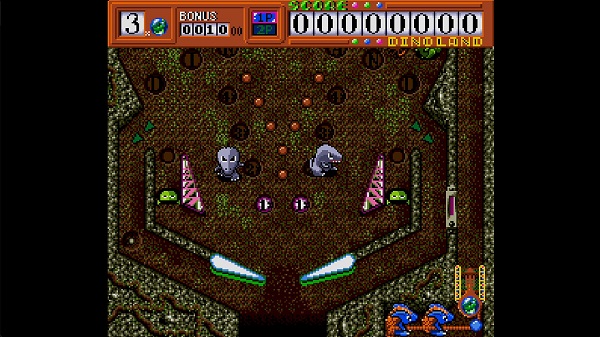
Graphically, Dino Land wears its 1991 heritage on its sleeve: pixelated environments and sprite work retain a certain charm, and each table carries its own aesthetic identity. Yet this visual throwback is a double-edged sword, as cluttered backgrounds and noisy elements – notably on the aerial table – can strain the eyes and obscure key gameplay cues. The audio follows a similar pattern: period-appropriate soundtracks and effects are present, but nothing stands out as memorable beyond the novelty of hearing it in a modern context. Even the built-in jukebox mode, while a thoughtful inclusion, reinforces that appreciation of these assets may be more archival than enjoyable.
Where Dino Land finds its footing is in its commitment to resurrection and accessibility: the inclusion of rewind, turbo speed, save states and cheats demonstrates an understanding of modern sensibilities, and these tools can ease the steep learning curve for those willing to invest time. For retro enthusiasts or completionists curious about an obscure corner of early pinball history, there is modest reward in mastering its quirks. However, for a broader audience seeking polished design and intuitive flow, the experience too often feels like a relic, charming in concept but hampered by obtuse design and technical roughness at launch when compared to today’s alternatives.
Maestro – All Aboard DLC review (Quest)
Maestro’s All Aboard DLC arrives as a buoyant expansion that leans into cinematic familiarity without losing the core rhythm-conducting charm that has quietly made the base Meta Quest game a standout VR experience. Set against the nautical theatrics of a pirate-themed stage and anchored by five memorable pieces, including two instantly recognizable themes from Pirates of the Caribbean, the update delivers an accessible entry point for newcomers while enriching the catalogue for returning conductors. The visual shift to ship-deck concert halls and cannon-accented props adds a playful spectacle that reinforces the DLC’s thematic identity, though the spectacle doesn’t fundamentally alter the base gameplay’s measured pace or expressive rhythm mechanics. This blend broadens the appeal, lowering the barrier for players who might have found purely classical pieces less immediately engaging.
The gameplay remains quintessentially Maestro: a standing, gesture-based rhythm experience that prioritizes musical interpretation over button-mashing. In All Aboard, familiar tunes give players a confidence boost, but the experience still demands sustained visual focus and steady motion tracking throughout each performance. The DLC doesn’t simplify the core conducting task – if anything, the thematic set and lighting shifts highlight how much the game leans on steady attention to tempo and dynamic cues. For Meta Quest players accustomed to quick-reaction VR rhythm titles, the deliberate nature of Maestro’s pacing continues to be both its greatest strength and occasional challenge.
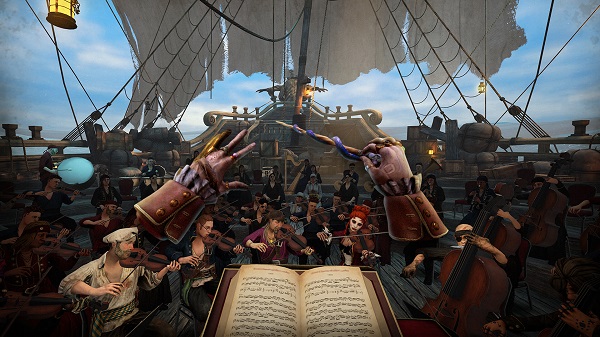
Controls and interface retain the intuitive feel that has become a hallmark of the Maestro experience, with responsive hand tracking and clear gesture prompts that make learning new pieces straightforward. That said, extended sessions – typical for full orchestral works – can reveal limitations tied to headset comfort and visual clarity, especially in more demanding lighting and environmental conditions created by the new pirate set. While this is less a flaw of the DLC itself and more a reflection of the genre’s physical demands, it underscores how sustained visual engagement can sometimes outstrip hardware comfort during longer pieces.
Sonically, All Aboard’s use of iconic melodies is a double-edged cutlass: it invites broad accessibility and playful immersion, but it also sets a high bar for musical fidelity that the current audio presentation only partially meets. The thematic additions are compelling and well chosen for the tone the DLC aims to strike, yet the overall audio mix occasionally feels constrained by technical limitations inherent to standalone VR platforms – though a good headset helps. Visually and mechanically, however, the update succeeds in extending Maestro’s rich orchestral fantasy, offering both veterans and new players a lively new chapter in the virtual conducting journey that feels both familiar and fresh.
Lonely Mountains: Snow Riders review (PS5)
Lonely Mountains: Snow Riders, now out on PlayStation 5, marks a compelling evolution of Megagon Industries’ downhill formula, transplanting the deliberate challenge of the original into snow-blanketed terrain that oscillates between meditative and demanding. From the moment you push off the peak, the game’s low-poly aesthetic and minimalist soundscape frame the mountain as both adversary and playground. The core physics-driven descent mechanics remain intuitive yet precise – you feel the momentum shift under your skis, and there is genuine satisfaction in chaining a clean run together – but mastery doesn’t come without patience, as tight turns and hidden obstacles routinely punish overconfidence.
The transition from strictly being a solo experience to online multiplayer is one of Snow Riders’ boldest gambits. The PS5 edition inherits the cooperative modes that let up to eight players share checkpoints and carve lines in shared descents, as well as competitive races that unfold into chaotic, laughter-tinged scrambles to the bottom. When these sessions click, there’s a rare democratic thrill in synchronised chaos that mirrors the game’s single-player ethos, particularly for players without a consistent group.
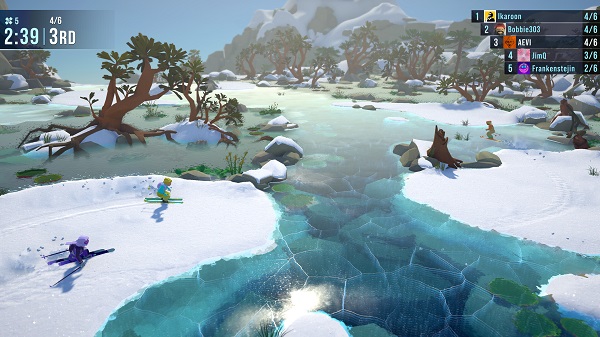
Mechanically, Snow Riders strikes a nuanced balance between accessibility and precision. The controls are responsive and rewarding once internalised, with an emphasis on reading terrain and modulating speed that makes every descent feel like a puzzle as much as a race. That said, certain camera perspectives – sometimes distant or oddly framed – can sharpen the challenge to an unnecessary edge, complicating visibility at critical moments and turning promising runs into sudden wipeouts. Audio design follows a similarly dual-edged philosophy: the ambient wind and snow compression underfoot anchor the game’s serene aesthetic, but some players may miss a more dynamic soundtrack to accentuate key moments, leaving long sessions feeling quieter than they should in the absence of environmental variety.
The recently released Highlands DLC also makes it to the PS5 and further extends the base experience with new trails, subtle visual flourishes, and expanded leaderboards, giving veterans fresh terrain to explore and new targets to chase. These additions enhance the longevity without reinventing the wheel, though players eager for still greater depth may feel the overall scope remains modest compared to other winter sports titles. The core of Snow Riders on Sony’s hardware remains a gratifying blend of serene exploration and dexterous challenge. In its best moments, it’s not merely a game about getting down the mountain, but about the quiet joy of perfecting that descent again and again.
 Press Play Media