Darts VR 2: Bullseye is the next attempt to translate one of the most straightforward pub pastimes into a fully interactive VR experience, and in many ways it succeeds by leaning into authenticity rather than spectacle. Developed by Gamitronics Studio and published by Evolution Publishing, the game strips away any need for narrative framing and instead builds its appeal around competitive play, varied modes, and a simulation-driven approach to dart throwing. While that premise inherently limits its scope compared to more elaborate VR titles, it also gives the game a clarity of purpose that works in its favor – provided the underlying mechanics hold up.
At the core of the experience is a physics system that aims to replicate the nuance of real-world darts, and this is where the game finds its strongest footing. Throws rely heavily on natural motion, with wrist angle, release timing, and follow-through all playing a role in determining accuracy. When it clicks, the sensation is convincing enough to create a satisfying rhythm, especially during longer sessions or competitive matches. That said, consistency can be an issue, as slight tracking inconsistencies or sensitivity quirks occasionally disrupt the otherwise grounded feel, particularly on more demanding throws.
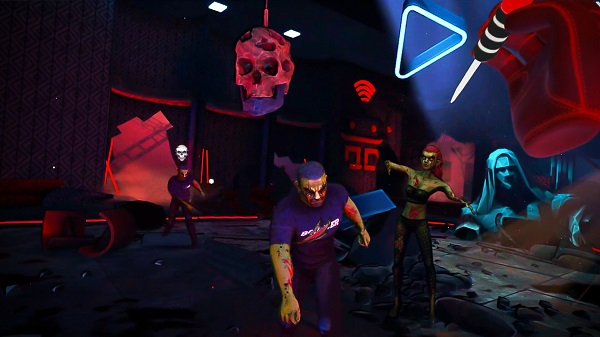
The selection of game modes adds welcome variety, expanding beyond traditional 501 rules into more arcade-like diversions such as Around the World and even zombie-themed survival scenarios where your darts become weapons. These additions help break up the repetition that could otherwise set in quickly, though not all modes feel equally fleshed out. The more experimental options can come across as novelties rather than fully developed alternatives, lacking the depth needed to sustain long-term engagement. Still, the inclusion of online multiplayer, tournaments, and leaderboards gives the game a competitive backbone that could extend its lifespan significantly.
Control schemes differ slightly between Meta Quest and PlayStation VR2, but both versions lean into motion-based input with generally intuitive results. The PSVR2’s enhanced haptics and controller feedback add a subtle but noticeable layer of immersion, giving throws a bit more tactile presence. However, both platforms occasionally struggle with calibration or precision edge cases, particularly for players – like experience real-life players – expecting pinpoint accuracy. While these issues rarely break the experience outright, they do highlight the fine balance required when simulating such a precision-based activity in VR.
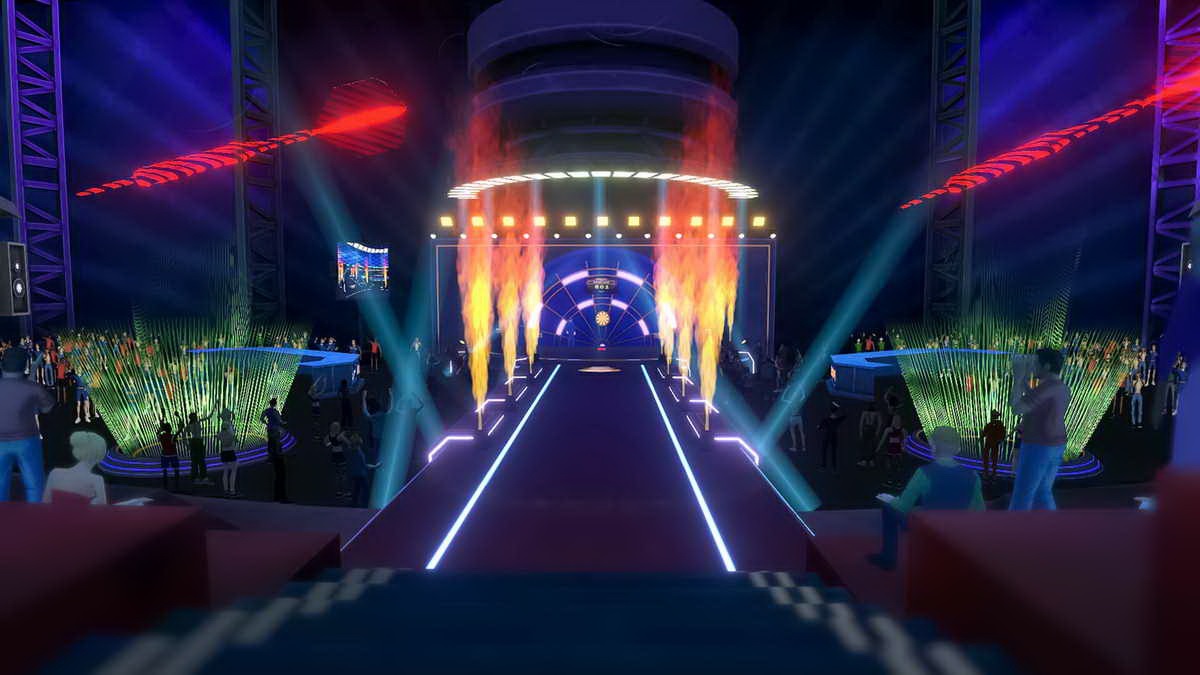
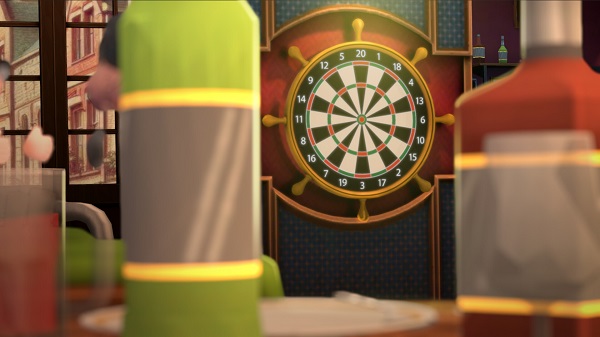
Visually, Darts VR 2: Bullseye opts for clean and functional environments rather than pushing technical boundaries. The venues – ranging from standard pub settings to more stylized backdrops – are serviceable and clear, ensuring that the dartboard remains the focal point at all times. While this approach keeps performance stable across both platforms, it also means the game lacks visual flair, with environments that can feel somewhat static over extended play sessions. Audio follows a similar trajectory, delivering solid ambient effects and satisfying dart impacts without standing out as a defining feature.
Where the game ultimately finds its footing is in its ability to replicate the social and competitive aspects of darts, particularly through its online features. Matches against other players introduce unpredictability and tension that the solo modes can’t fully replicate, and the ability to create or join tournaments adds a layer of structure that encourages repeat play. However, the longevity of these systems will depend heavily on the player base, and early impressions suggest that while functional, the online ecosystem may not always feel densely populated – bringing a friend is a good tactic here.
Taken as a whole, Darts VR 2: Bullseye is a competent and occasionally compelling VR simulation that thrives on its core mechanics but struggles to build enough depth around them. Its realistic throwing system and variety of modes provide a solid foundation, particularly for players looking to recreate the feel of darts at home, but limitations in presentation, mode depth, and occasional control inconsistencies hold it back from truly standing out. For enthusiasts of the sport or those seeking a casual competitive VR experience, it delivers enough authenticity to be worthwhile – but it stops short of becoming essential.
Score: 7.1/10
 Press Play Media