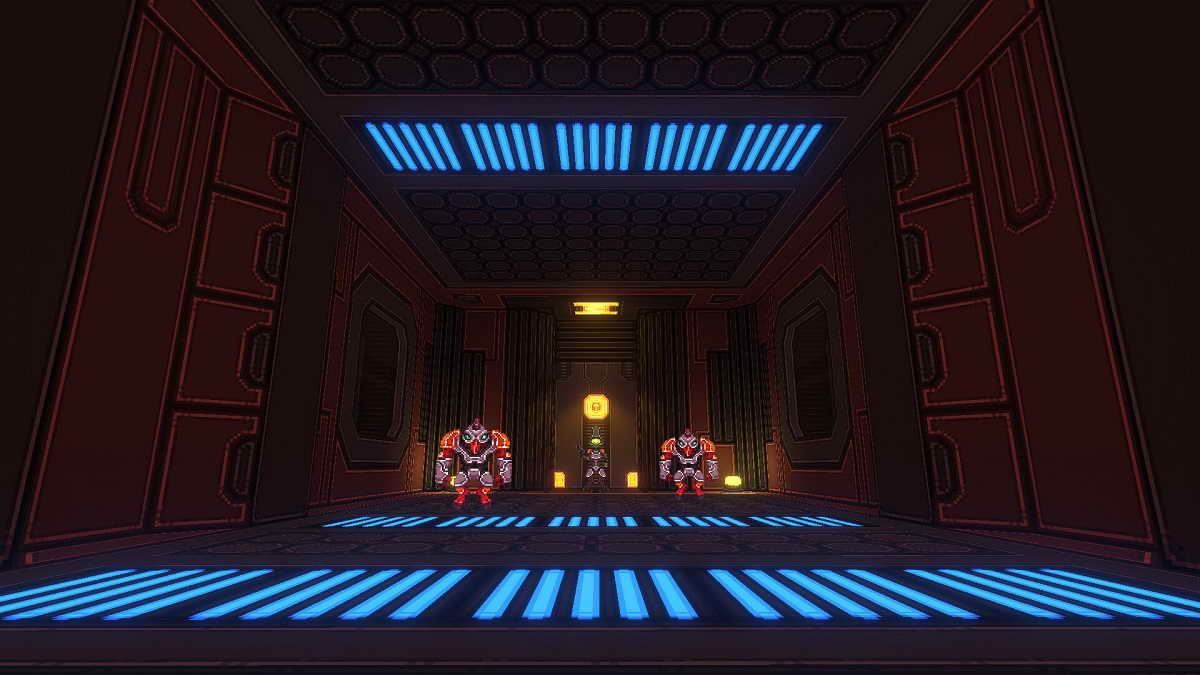
Porting games to new platforms is rarely a straightforward technical exercise, and this latest batch of console arrivals highlights just how varied the outcomes can be. From the uncompromising, high-octane chaos of retro-inspired shooters to the quiet charm of cozy management sims and the introspective tension of narrative-driven experiments, these ports bring distinctly different experiences to PlayStation and Xbox audiences. What they share, however, is the challenge of translating mechanics, pacing, and presentation in a way that feels at home on console hardware – sometimes successfully refining what was already there, and other times exposing design choices that feel less comfortable outside their original context.
Viscerafest review (PS5)
Viscerafest leans fully into its identity as a chaotic, retro-inspired arena shooter, pairing a deliberately absurd premise with relentless, high-speed carnage. Players step into the boots of Caroline, a psychotic bounty hunter whose motivation – earning enough for an engagement ring – sets the tone for a campaign that is equal parts irreverent and excessive. The narrative rarely slows things down, instead functioning as a loose framework for the action, but Caroline’s constant stream of quips gives the experience a distinctive personality, even if her chatter can become grating over extended sessions.
Gameplay is where Viscerafest both excels and stumbles. Its movement system encourages aggressive play, built around dashing and bunny hopping to maintain momentum, and when everything clicks, it delivers a satisfying rhythm of speed and destruction. However, that same reliance on advanced movement can feel more mandatory than optional, especially as difficulty ramps up. Combat is similarly divisive: the weapon roster is inventive and punchy, but strict ammo scarcity and enemies with specific resistances often force players into rigid playstyles rather than empowering improvisation. The added emphasis on melee for survival and resource recovery is an interesting twist, though not always as enjoyable in practice.
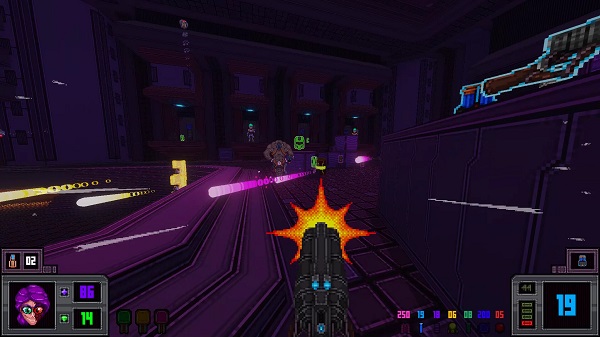
Level design follows classic boomer shooter principles, with sprawling, maze-like maps filled with keys, secrets, and backtracking. There’s a clear appeal in exploring these spaces and uncovering hidden upgrades or modifiers, which add replay value and allow for some customization of the experience. At the same time, navigation can become frustrating due to visually repetitive environments and unclear progression triggers, occasionally leaving players wandering without a clear objective. The lack of generous checkpoints further amplifies the challenge, making mistakes feel punishing rather than motivating.
Visually, Viscerafest embraces a bold, neon-drenched pixel aesthetic that captures the spirit of classic shooters, even if it sometimes sacrifices clarity for style. Enemies and environments can blur together during high-speed movement, and the constant motion combined with screen effects may not sit well with everyone. The audio design follows suit with an aggressive, high-energy soundtrack that reinforces the intensity, though it can feel overwhelming when paired with the already chaotic action. Taken as a whole, Viscerafest is a fiercely niche experience – thrilling for players willing to master its demanding systems, but equally capable of pushing others away with its uncompromising design choices.
Tiny Bookshop review (PS5/Xbox)
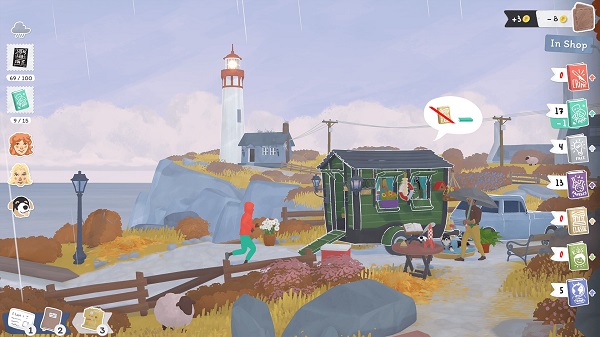
Tiny Bookshop, now out on consoles, positions itself as a cozy management sim with a narrative backbone, inviting players to step into the role of a traveling bookseller in the seaside town of Bookstonbury. Its premise leans heavily into atmosphere and character-driven storytelling, with a relaxed structure that prioritizes discovery and connection over traditional progression systems. That said, while the setting is undeniably charming and filled with personality, the narrative can feel somewhat lightweight at times, with character arcs and mysteries that hint at greater depth but don’t always fully capitalize on it.
Gameplay revolves around curating inventory, organizing displays, and matching customers with books that suit their tastes, creating a loop that is both intuitive and satisfying early on. The added layer of decorating the shop – where items subtly influence customer behavior and unlock new mechanics – introduces a welcome strategic angle. However, repetition does begin to creep in as the game progresses, particularly when the core loop doesn’t evolve significantly beyond its initial ideas. While experimenting with different genres and locations keeps things fresh for a while, the lack of deeper systemic complexity may limit long-term engagement.
Controls on PS5 and Xbox are generally straightforward and well-suited to the game’s laid-back pace, making inventory management and navigation feel accessible without being overly simplified. Still, there are occasional friction points in menu navigation and item placement that can disrupt the otherwise smooth flow, especially when juggling multiple systems at once. These minor usability issues don’t derail the experience, but they do stand out more in a game that thrives on comfort and ease of play.
Visually, Tiny Bookshop excels with its soft color palette and storybook-inspired aesthetic, perfectly complementing its cozy premise. The environments feel warm and inviting, and the character designs add a layer of charm that reinforces the game’s tone. Audio follows suit with a gentle, unobtrusive soundtrack that enhances the relaxing atmosphere, though it can lack variety over extended sessions. Altogether, Tiny Bookshop delivers a heartfelt and soothing experience that succeeds in capturing the joy of small-scale storytelling and management, even if its simplicity occasionally holds it back from leaving a more lasting impression.
Inhuman Resources review (PS5)
Inhuman Resources: A Literary Machination positions itself somewhere between an interactive novel and a psychological horror game, and it leans heavily into that hybrid identity. Set within the unsettling corporate labyrinth of SMYRNACORP, the narrative explores moral compromise, workplace anxiety, and the slow erosion of personal ethics in a system designed to exploit them. The premise resonates because it taps into familiar fears – job insecurity, power imbalance, and the quiet dread of toxic environments – before amplifying them into something far more sinister. Its writing is consistently strong, delivering a branching storyline filled with uneasy tension and meaningful choices, though the abstract nature of some plot elements can occasionally feel opaque rather than intriguingly ambiguous.
Gameplay is deliberately restrained, emphasizing reading, decision-making, and light puzzle-solving over traditional interaction. Choices carry significant weight, often forcing uncomfortable decisions with long-term consequences, and the inclusion of traits, items, and skill-based options adds a subtle layer of RPG-like progression. There’s a satisfying sense of agency in how routes diverge and endings unfold, encouraging replayability to uncover different outcomes. However, that same design can also create friction – mechanics aren’t always clearly communicated, and interaction can feel limited compared to the sheer volume of text, occasionally making the experience feel more like navigating a book than actively playing a game.
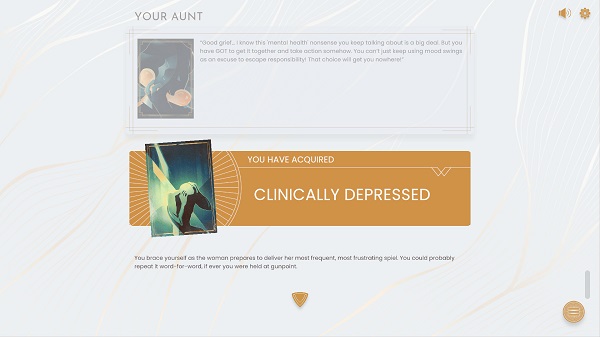
Presentation is minimalist to a fault, relying on sparse visuals and text descriptions to carry the experience. Environments are largely imagined rather than shown, with only occasional illustrations or visual cues to reinforce key moments. While this approach successfully amplifies the psychological horror and allows the writing to take center stage, it inevitably narrows the game’s appeal, especially for players expecting a more visually driven experience. Audio, on the other hand, proves far more effective – subtle sound design and restrained music work together to build tension and atmosphere, even if the use of limited voice samples feels underdeveloped and somewhat disconnected from the narrative.
Ultimately, Inhuman Resources succeeds because of its writing and thematic focus rather than its mechanical depth. It delivers a compelling and often unsettling narrative that lingers, supported by meaningful choices and strong worldbuilding, but it does so at the cost of interactivity and visual variety. For players willing to embrace its text-heavy design, it offers a memorable descent into corporate horror; for others, the lack of traditional gameplay systems may make it harder to fully engage. Either way, it’s a distinctive experiment that confidently blurs the line between literature and interactive storytelling.
 Press Play Media