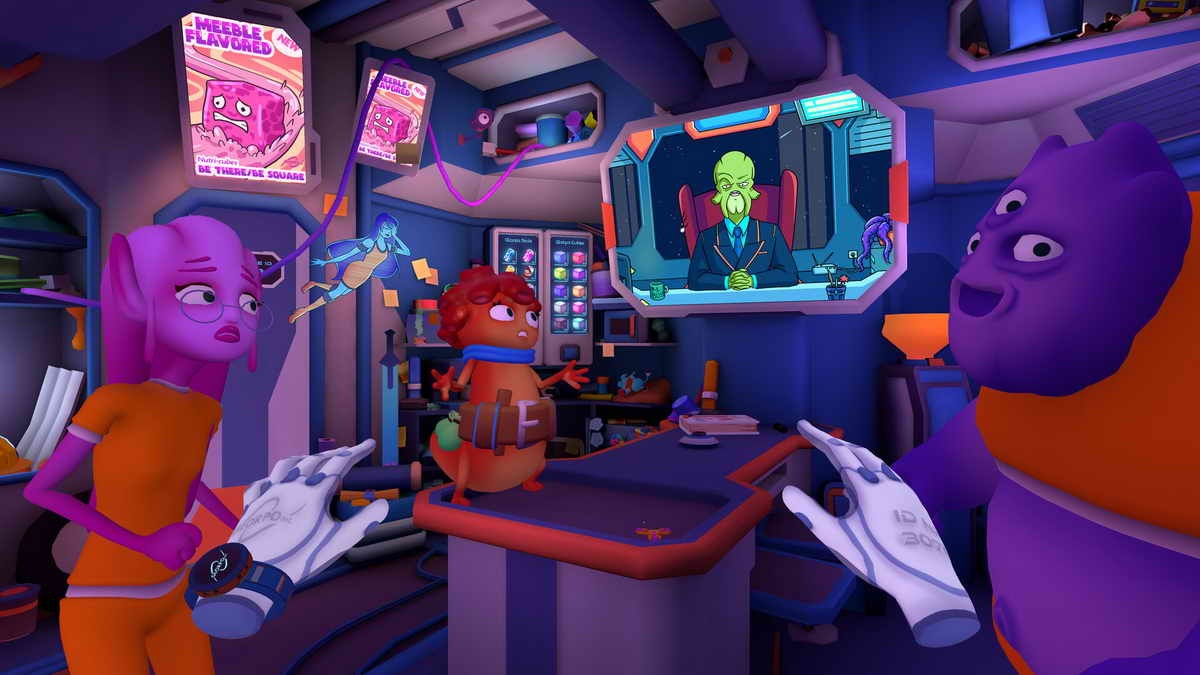
Space Control positions itself as a comedic, physics-driven VR adventure wrapped in a loosely dystopian corporate sci-fi setting, and it largely succeeds by leaning into personality over complexity. Developed and published by MoonMonster Studios for PCVR and Meta Quest, the game casts players as an unwilling recruit in a bizarre alien workforce, bouncing between odd jobs and episodic scenarios that prioritize humor and interaction over traditional progression systems. It’s a premise that thrives on absurdity, and while it doesn’t always deliver mechanical depth, it consistently finds ways to entertain through its writing and character work.
That writing is arguably the game’s strongest asset. Across its episodic structure, Space Control delivers a steady stream of crude, irreverent humor that lands more often than it misses, drawing clear inspiration from adult animated sci-fi without feeling entirely derivative. The cast of alien co-workers adds a surprising amount of charm, with distinct personalities and strong comedic timing elevating even the simplest of tasks. While some jokes lean heavily on shock value, the overall tone remains engaging thanks to a cohesive narrative thread that ties the episodes together more effectively than expected.
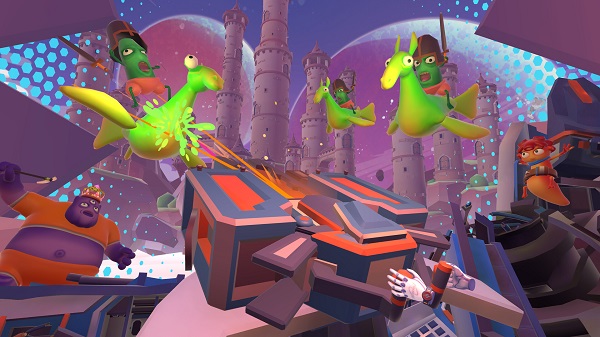
Gameplay revolves around physics-based interactions, and here Space Control embraces the strengths of VR. Nearly every object can be grabbed, tossed, prodded, or otherwise manipulated, turning even mundane objectives into playful sandboxes. Whether handling strange alien creatures or tinkering with bizarre gadgets, the tactile feedback and responsiveness help maintain immersion. That said, the underlying gameplay loops remain relatively simple, often boiling down to light task completion without much escalation in complexity. For players seeking deeper systems or meaningful challenge, the experience can feel somewhat shallow despite its interactivity.
The control scheme plays a crucial role in making these interactions satisfying, and fortunately, it performs reliably. Hand tracking and motion inputs feel intuitive, with few issues in responsiveness or accuracy. This contributes to a smooth overall experience that avoids many of the technical frustrations that can plague VR titles. However, some minor usability quirks – such as camera framing concerns for content capture – highlight areas where refinement could further improve accessibility for a broader audience.
Visually, Space Control adopts a colorful, cartoon-inspired aesthetic that aligns well with its comedic tone. The environments are lively and filled with interactive elements, reinforcing the sense of a reactive world. While the art direction carries the experience, there are limitations in character detail and overall fidelity, likely tied to the hardware constraints of standalone VR. These shortcomings don’t significantly detract from the experience, but they do prevent the game from reaching the visual sharpness seen in higher-end and first party VR titles.
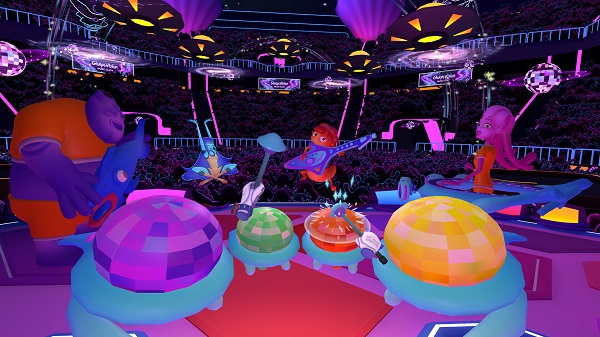
Audio design is another standout element, particularly in its voice acting. Performances across the cast are energetic and well-delivered, adding significant weight to the humor and helping define each character’s identity. The dialogue flows naturally, supporting both scripted moments and incidental interactions, while the sound design complements the chaotic environments without becoming overwhelming. Together, these elements create a cohesive audiovisual package that enhances immersion and reinforces the game’s comedic ambitions.
Where Space Control ultimately falters is in its longevity. The episodic format works well structurally, but the overall playtime leaves a noticeable gap, with many players likely finishing the experience wanting more. Some episodes also feel less tightly paced than others, occasionally stretching simple concepts longer than necessary. Still, the game very effectively delivers on its core promise: a humorous, highly interactive VR experience with memorable characters and a distinct identity.
In the end, Space Control is best understood as a “job simulator with personality” – a lighthearted, polished VR title that prioritizes charm and interactivity over depth. It may not satisfy those looking for complex gameplay systems or long-form progression, but for players seeking a comedic, engaging, and well-crafted VR experience, it delivers consistently. Its biggest flaw is simply that it ends too soon, leaving a strong case for future episodes or expansions to build on an already solid foundation.
Score: 7.5/10
 Press Play Media