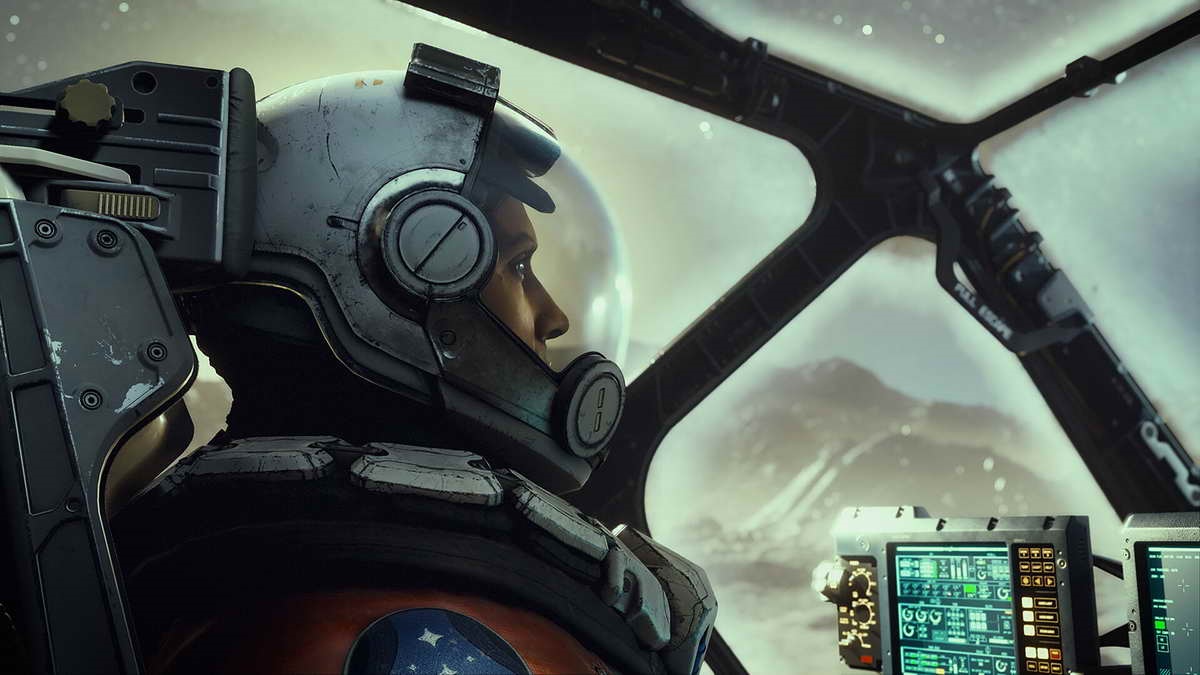
With its long-awaited arrival on PlayStation 5, Starfield finally completes its transition from a divisive Xbox exclusive into a broader, more refined RPG experience, and in doing so, it feels closer than ever to the game Bethesda always intended it to be. Developed and published by Bethesda, this sci-fi epic now lands alongside the Terran Armada story expansion and the Free Lanes update, both of which significantly reshape the experience. The result is a package that feels more cohesive, more reactive, and – crucially – more respectful of the player’s time, even if some of its foundational design choices remain unchanged.
At its core, Starfield still revolves around exploration and self-directed storytelling in a vast interstellar sandbox. The premise of joining Constellation and hunting down mysterious artifacts remains intact, but the added Terran Armada DLC introduces a more focused narrative thread, centering on a rogue militarized faction seeking to impose order through force. This storyline injects a stronger sense of urgency and cohesion than the base game’s often fragmented questlines, offering more deliberate pacing and higher narrative stakes. While the writing still fluctuates between compelling and somewhat sterile, the DLC’s more concentrated arc helps offset the base game’s tendency to feel narratively diffuse.
Gameplay remains a blend of first-person shooting, RPG progression systems, and open-ended exploration, though the current PS5 version benefits from a number of refinements over the 1.0 launch on Xbox. Combat feels tighter and more responsive than before, with improved feedback and smoother performance contributing to a more satisfying moment-to-moment experience. The addition of new weapons and technologies in Terran Armada adds welcome variety, particularly in how encounters can be approached. However, the underlying systems – loot management, inventory friction, and occasionally rigid AI – can still act up, occasionally breaking immersion or slowing the pacing.
The Free Lanes update arguably has an even broader impact, addressing one of the most persistent criticisms of Starfield: its disjointed exploration flow. By streamlining travel between key locations and reducing reliance on menus and fast travel interruptions, the update makes the galaxy feel more interconnected and less like a series of isolated instances. While it doesn’t fully eliminate the segmented structure that defines the game’s design, it does make exploration feel more organic and less cumbersome, encouraging players to engage more naturally with the world rather than constantly navigating UI layers.
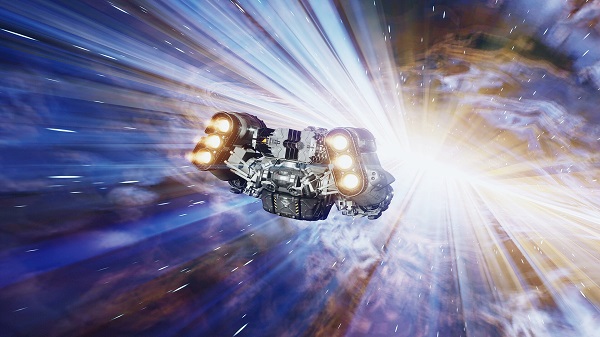
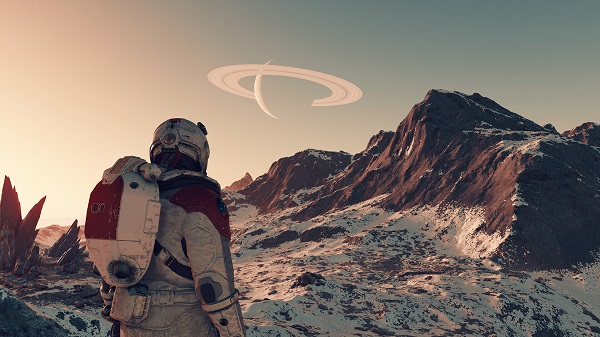
Shipbuilding and space traversal continue to be standout features, with the PS5 version maintaining the depth and flexibility that made these systems so compelling at launch. Customizing a ship, assembling a crew, and engaging in dogfights remains satisfying, though space combat still lacks the dynamism and tactical depth seen in more specialized titles. The new content adds some variation here, but doesn’t fundamentally reinvent these mechanics. On the ground, planetary exploration is still a mixed bag – visually impressive in places, but often procedurally repetitive, with long stretches of traversal that can feel devoid of meaningful interaction.
From a technical standpoint, the PS5 version represents a clear step forward. Performance is more stable, load times are reduced, and the overall presentation benefits from improved lighting and sharper textures. That said, the game’s Creation Engine roots are still evident, particularly in character animations and occasional physics quirks. Audio design remains strong, with a sweeping score that reinforces the sense of scale and isolation, though voice performances vary in quality and emotional impact. These elements combine to create an experience that is immersive in bursts, but not always consistently so.
Ultimately, Starfield on PS5 feels like a more complete and considered version of an already ambitious game. The Terran Armada DLC adds narrative focus and gameplay variety, while the Free Lanes update meaningfully improves the flow of exploration. Yet, even with these enhancements, the game doesn’t entirely escape the structural limitations and design philosophies that defined its original release. It remains a vast, often impressive RPG that rewards patience and curiosity, but one that still asks players to meet it halfway. For newcomers on PlayStation, however, this is undoubtedly the best version of Starfield to date – and perhaps the most compelling argument yet for losing oneself among its stars.
Score: 8.5/10
 Press Play Media