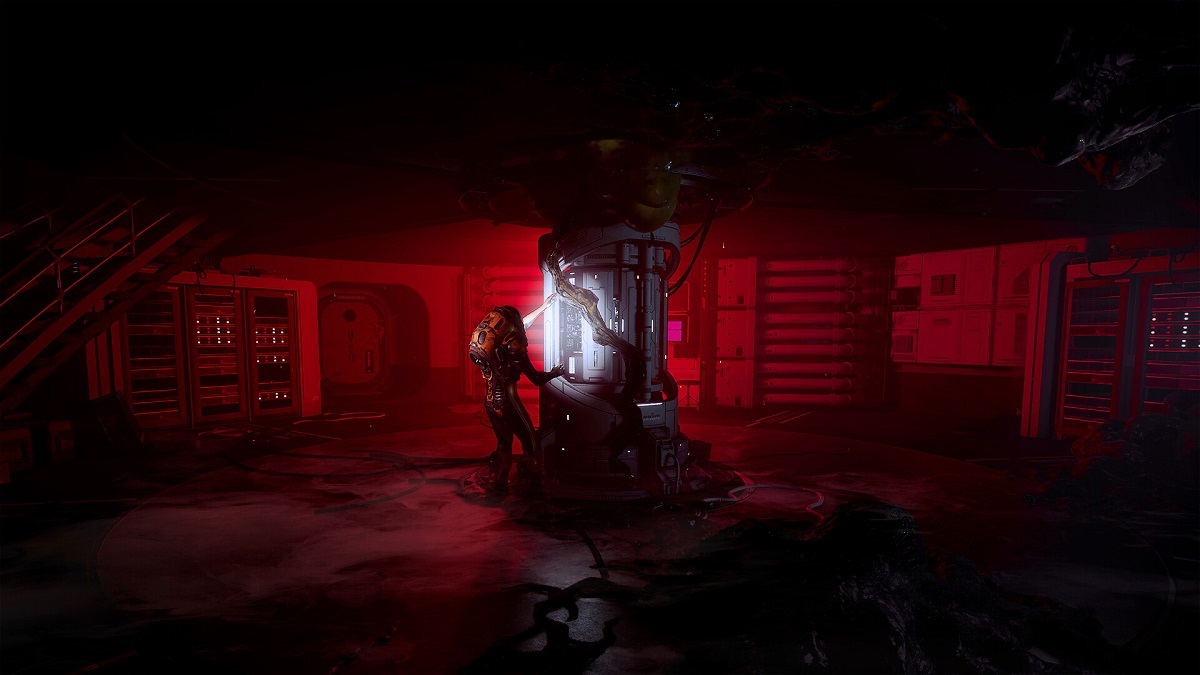
Cthulhu: The Cosmic Abyss continues Big Bad Wolf’s fascination with narrative-driven design, placing players in a near-future world where corporate overreach and cosmic horror intersect beneath the ocean’s surface. As investigator Noah, the descent into a submerged, impossible city becomes both a literal and psychological journey, blending detective work with Lovecraftian themes in a way that feels more modern than most adaptations. The setup is effective, gradually layering unease through environmental storytelling and fragmented clues, though the broader narrative occasionally leans on familiar genre tropes that make some of its later revelations easier to anticipate than they should be.
What stands out most is the game’s commitment to investigative gameplay. Rather than relying on combat or scripted scares, progression hinges on gathering evidence, interpreting clues, and making logical deductions. The inclusion of tools like sonar scanning and a sprawling “mind map” system gives structure to what could otherwise become overwhelming, allowing players to connect threads in a way that feels both tactile and cerebral. This design creates moments of genuine satisfaction when solutions click into place, but it also introduces friction. Interacting with objects – rotating, examining, and placing them precisely – can feel overly finicky, and puzzles occasionally cross the line from challenging into unnecessarily obtuse.
The AI companion Key plays a central role in guiding the experience, offering prompts and helping organize the growing body of evidence. While this adds a helpful layer of direction, it also contributes to the game’s density. There’s a constant influx of information, documents, and environmental details to process, which can feel mentally taxing over longer sessions. For players who enjoy deep, methodical gameplay this density is a strength, but others may find the pacing uneven as the game slows to accommodate its more complex deduction sequences.
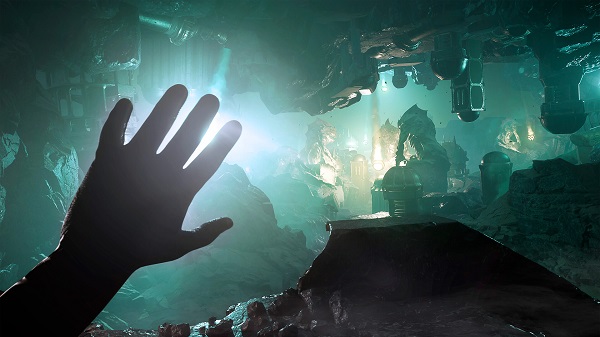
Narratively, The Cosmic Abyss succeeds most in its atmosphere rather than its plot twists. The descent into R’lyeh is portrayed as increasingly disorienting, with environments that bend logic and physics in ways that reinforce the theme of creeping madness. There’s a deliberate restraint in how horror is presented, often favoring suggestion and unease over explicit confrontation, which aligns well with its source material. However, the story doesn’t always maintain that momentum, with later chapters occasionally losing some of their initial mystique as the structure becomes more predictable.
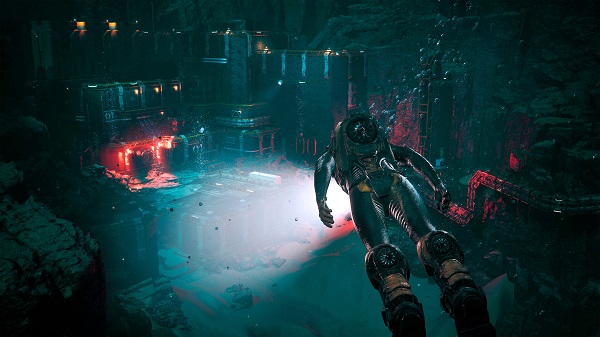
Visually, the game benefits from its use of Unreal Engine 5, delivering environments that range from claustrophobic underwater facilities to vast, alien architecture that feels convincingly otherworldly. Lighting and environmental detail do much of the heavy lifting in building tension, though the presentation is inconsistent. Performance issues on PlayStation 5, including frame drops and texture loading problems, can disrupt immersion at inopportune moments. It’s a game that looks striking at its best, but doesn’t always maintain that standard across its full runtime.
Audio design reinforces the oppressive tone effectively, with ambient soundscapes and subtle cues doing more to unsettle than any overt musical stings. Voice acting, however, is more uneven. While some performances sell the gravity of the situation, others come across as stiff, which slightly undermines the emotional weight of key narrative moments. Combined with occasionally awkward dialogue delivery, it creates a contrast between the game’s strong atmospheric intent and its less consistent execution in character portrayal.
Ultimately, Cthulhu: The Cosmic Abyss is an ambitious and often compelling blend of investigative gameplay and cosmic horror, one that prioritizes intellect and atmosphere over action. Its strengths lie in its intricate puzzle design and oppressive world-building, but those same systems can become cumbersome due to clunky interactions, technical shortcomings, and a tendency toward narrative predictability. For players willing to engage deeply with its mechanics, it offers a distinctive and thoughtful take on Lovecraftian horror – but it’s equally clear that its deliberate pacing and complexity won’t appeal to everyone.
Score: 7.3/10
 Press Play Media