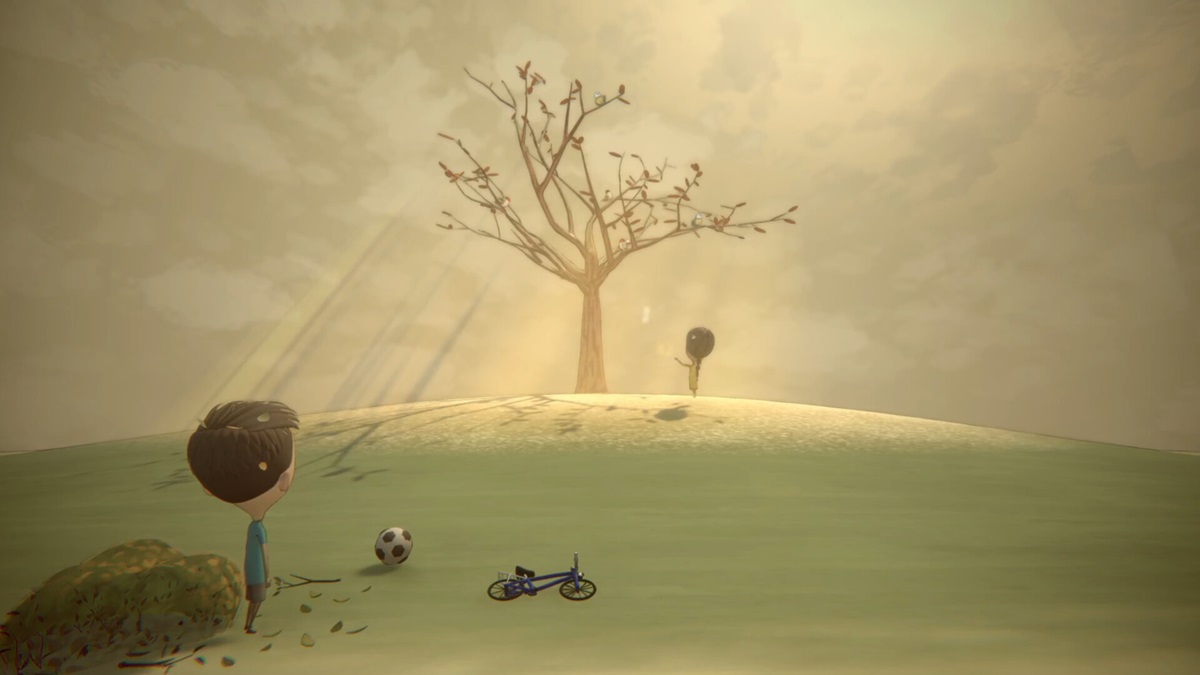
The Day I Became a Bird is a narrative-driven adventure from Hyper Luminal Games, published by Numskull Games, that leans heavily into its whimsical premise and storybook presentation and origins. Framed as a nostalgic recollection of childhood infatuation, the game follows young Frank as he attempts to connect with a classmate by quite literally immersing himself in her world – one populated by birds. It’s a concept that immediately stands out for its sweet sincerity, and while it risks veering into overly saccharine territory, it largely succeeds thanks to a grounded emotional core that captures the awkwardness and earnestness of first love.
That emotional authenticity is where the narrative finds its strength. Frank’s journey is less about grand storytelling beats and more about small, relatable moments – quiet observations, tentative interactions, and the internal logic of a child trying to make sense of feelings he doesn’t fully understand. The bird motif, while whimsical, becomes a lens through which these emotions are filtered, sometimes effectively reinforcing the themes of identity and expression, though at times it can feel a little on-the-nose in how directly it communicates its symbolism. The pacing reflects this intimate scope, occasionally to a fault, as certain segments linger longer than necessary and risk dulling the story’s otherwise gentle momentum.
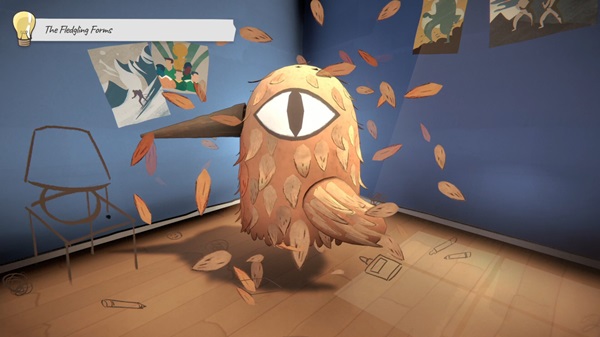
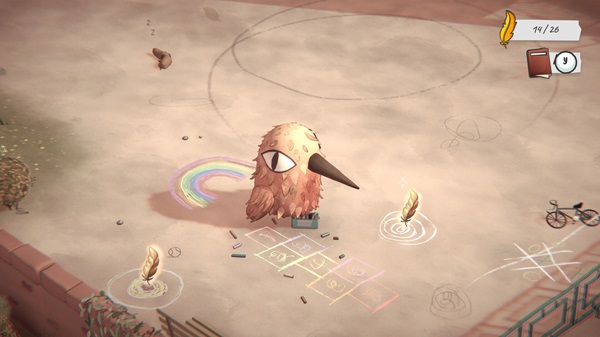
Gameplay follows a similarly understated approach, built around light exploration, environmental interaction, and simple puzzle-solving. Tasks such as collecting items, engaging in small activities, and navigating semi-open spaces serve primarily as vehicles for storytelling rather than as mechanically engaging challenges. This works well when the narrative and atmosphere are in sync, but it also means that players looking for deeper or more varied gameplay systems may find the experience lacking in complexity or challenge. Some puzzles offer clever, context-sensitive solutions that tie into the narrative, though others feel more like routine busywork than meaningful engagement.
Controls on the PlayStation 5 are functional and accessible, reinforcing the game’s approachable design philosophy. Movement and interaction are straightforward, rarely getting in the way of the experience, though there are occasional moments where responsiveness feels slightly imprecise, particularly during more timing-sensitive interactions. These issues are minor but noticeable, especially in a game that relies on maintaining story immersion through its gentle pacing and emotional tone.
Visually, the game adopts a handcrafted aesthetic that mirrors its bedtime story framing. The art style is soft and expressive, with a muted color palette that evokes a sense of nostalgia and warmth. Character animations and environmental details contribute to the feeling of stepping into a child’s imaginative perspective, though technical limitations are apparent in simpler textures and occasional stiffness in character movement. Still, the overall presentation is cohesive, and its artistic direction carries much of the experience even when other elements fall short.
Audio design further reinforces the game’s tone, with a delicate soundtrack that complements the emotional beats without overpowering them. The use of subtle soundscapes and musical cues helps elevate key moments, while the absence of voice acting places more emphasis on visual storytelling and player interpretation. This minimalist approach works in favor of the narrative’s intimacy, though it may also create a sense of distance for players who prefer more explicit character expression.
Ultimately, The Day I Became a Bird is a modest but heartfelt experience that prioritizes emotional resonance over mechanical depth. Its strengths lie in its sincerity, visual charm, and ability to capture a specific slice of childhood with genuine warmth. However, its limited gameplay variety and occasionally uneven pacing prevent it from fully spreading its wings. For those willing to embrace its slower rhythm and story-first design, it offers a gentle and memorable journey – one that doesn’t aim to soar high, but instead lingers quietly in its own carefully crafted space.
Score: 7.3/10
 Press Play Media